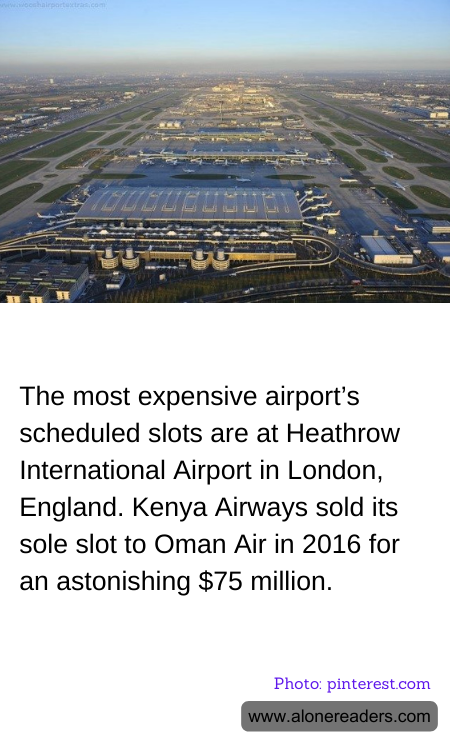
The trading of airport slots at large, congested airports can be a significant business strategy for airlines, especially at some of the world’s most prominent and busiest airports like Heathrow International Airport in London, England. Renowned for its steep slot costs amid overwhelming demand and limited capacity, Heathrow consistently tops the list when it comes to slot trading prices.
The sale of airport slots—essentially permissions granted to an airline by an airport regulator that allows them to schedule a landing or departure during a specific time—can help airlines maximize their operational efficiencies and financial returns. The slots at Heathairthow are particularly valuable due to the airport’s pivotal role in international transit and its proximity to major business markets.
For instance, Kenya Airways made headlines in 2016 when it chose to cash in on its lucrative Heathrow airport slot. In a strategic move, the national carrier sold its early morning arrival slot to Oman Air for an astonishing $75 million. This transaction underscored the extreme values that slots at major airports can reach, driven by the growing demand for better and more frequent connections at business-critical airports.
This sale also highlights the often difficult financial decisions airlines must face. For Kenya Airways, selling its Heathrow slot was part of a broader strategy to ease financial pressure. Despite the high revenue generated from this sale, losing a slot at such a crucial hub also meant reducing its service footprint in a key market, which could impact long-term competitive positioning.
The dynamics of the Heathrow slot market are influenced by a myriad of factors including airport capacity constraints, the strategic importance of maintaining a presence at prominent hubs, and fluctuating market conditions. Airports like Heathrow operate at near capacity and are often unable to expand quickly enough to accommodate growing traffic, making existing slots increasingly valuable.
As the global aviation landscape continues to evolve, the trading and pricing of slots will remain a critical element in the strategic planning of airlines worldwide. For now, Heathrow's slots, like the one sold by Kenya Airways, will likely continue to fetch premium prices, serving as both a strategic asset and a potential financial lifeline.
