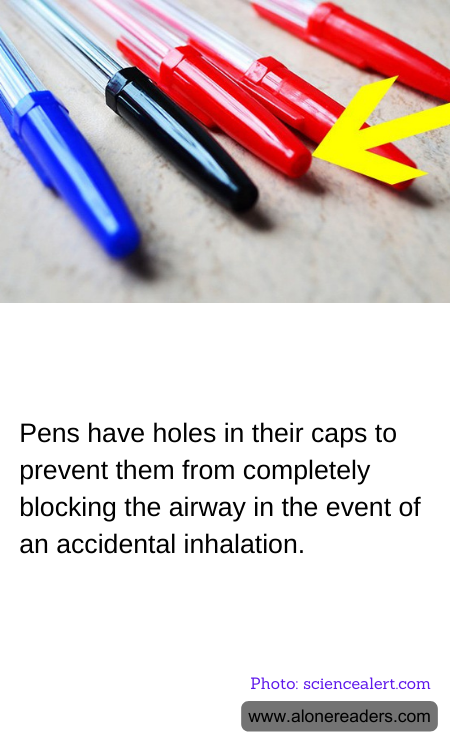
Ballpoint pens, particularly the caps, often feature a small hole at the top, which can seem like a curious design feature at first glance. However, this element of design is far from just aesthetic or a manufacturing default. It is, in fact, a critical safety feature. The hole in the cap of many pens serves an important purpose: reducing the risk of suffocation if the cap is accidentally swallowed.
The reason behind this is based on simple physics. If a pen cap were to be swallowed and became lodged in the throat, the hole allows air to pass through and helps maintain the ability to breathe. This small passage of air can be lifesaving while medical intervention is sought. Without this hole, the cap could create an airtight seal against the trachea, not allowing any air to pass through and potentially leading to fatal consequences.
This safety feature was added to many pens in response to past incidents where children, in particular, choked on pen caps. Manufacturers then redesigned pen caps with this ventilation system to comply with safety standards and reduce the risk of choking hazards. It is a testament to how product design can evolve not just for functionality or aesthetics, but for safety considerations as well.
Additionally, while the primary benefit of the hole in the pen cap is indeed its role in preventing suffocation, it also has secondary benefits such as helping to prevent the pen cap from cracking due to changes in air pressure. This feature also allows easier handling and removal, providing a slightly less rigid structure to the cap.
Understanding the purpose of such a small feature in everyday objects serves as a reminder of the intricacies of product design and the importance of safety in such designs. It illustrates how manufacturers must consider numerous potential scenarios during the design process of even the simplest items. Even a regular pen has undergone considerations for usability, safety, and functionality, portraying such humble objects in a new light.
