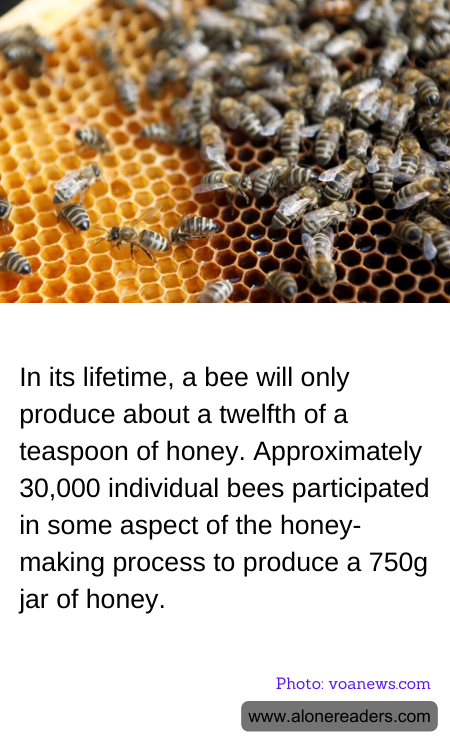
Bees are some of the most industrious creatures on the planet, and yet, despite their hard work, a single bee produces only about a twelfth of a teaspoon of honey in its entire lifetime. This fascinating fact underscores the incredible collaboration and tireless efforts of the bee community, where teamwork is essential for survival and productivity. It takes roughly 30,000 bees, each performing different roles, to produce just a 750-gram jar of honey. The process of honey production begins when forager bees collect nectar from flowers and bring it back to the hive. Here, 'house bees' take over, converting the nectar into honey by adding enzymes and reducing the moisture content by fanning their wings to increase air circulation and speed up evaporation. Once the honey is ripe, it is stored in the honeycomb and sealed with a wax cap by 'wax-producing' bees, keeping it safe for consumption later.
This complex system is not only fascinating from a biological point of view but also highlights the bees' critical role in our ecosystem. Apart from producing honey, bees are vital pollinators, supporting the growth of trees, flowers, and other plants, which serve as food and shelter for creatures large and small. In fact, about a third of the food we consume relies on pollination mainly by bees. This makes their role in our food chain irreplaceably crucial. Despite their importance, bees face numerous threats, including pesticides, habitat loss, and diseases. Colony Collapse Disorder, for instance, has been a significant problem in recent years, decimating bee populations.
The plight of bees and the understanding of their intricate processes not only help us appreciate the natural world's complexity but also highlight the interconnectedness of its many inhabitants. Each small action, like a bee visiting a flower, contributes to a larger system that sustains various life forms, including humans. Thus, protecting bees and their environment is essential, not just for preserving future honey supplies but for maintaining the biodiversity that keeps our planet thriving. This relationship between bees, honey production, and ecosystem support is a powerful reminder of nature's balanced and interdependent structure.
