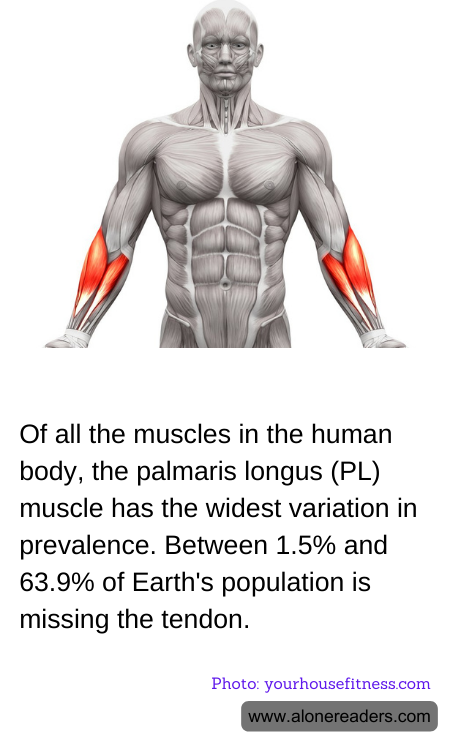
The palmaris longus (PL) muscle, a slender muscle found in the human forearm, exhibits significant variability among individuals and populations. This muscle extends from the elbow to the palm and is most well-known for its role in wrist and palm movements. Interestingly, the PL muscle is absent in a considerable proportion of the population, ranging from 1.5% to 63.9% across different studies. This wide range suggests substantial genetic and evolutionary influences at play.
The absence of the palmaris longus does not significantly affect the strength or functionality of the hand or wrist, as other muscles largely compensate for its roles. This might explain why the muscle can be missing in such a high percentage of people without any detrimental effects. It is often used as a tendon graft source for various reconstructive surgeries because its absence or presence does not greatly impact the body's overall function.
The intriguing variability in the prevalence of the PL muscle across different ethnic groups points to evolutionary dynamics. For instance, studies have shown higher absence rates in Asian and African populations compared to European populations. Some anthropologists and evolutionary biologists speculate that genetic drift or selective pressures might have influenced the prevalence of this muscle in different populations, perhaps relating to differing uses of the hand and wrist in various environmental contexts.
The palmaris longus is also a muscle of interest to those in the medical field, particularly in diagnosing certain conditions. Its presence or absence can be easily checked by attempting a simple physical gesture, which involves touching the thumb to the pinky while flexing the wrist. The tendon, if present, typically becomes more prominent in the midline of the wrist.
Overall, while the palmaris longus muscle's functional contribution may be minor, its evolutionary and clinical significance offers interesting insights into human anatomy and variability. It underscores the complex interplay of genetics, evolution, and functionality in the shaping of our physical bodies.
