More About This Card
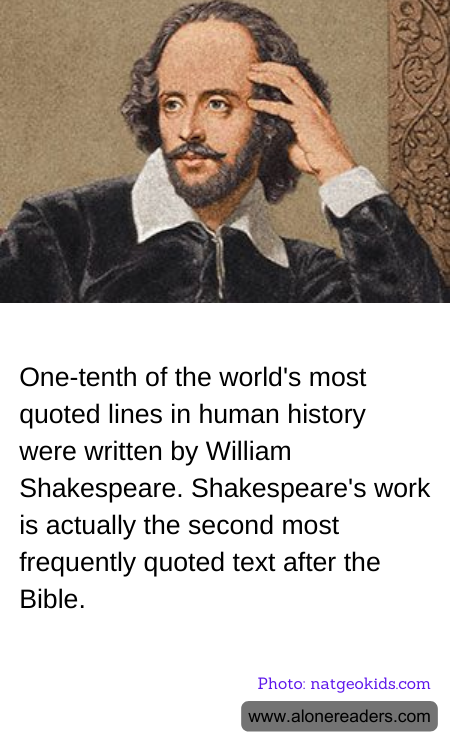
William Shakespeare, often hailed as the greatest playwright in the English language, has left an indelible mark on literature and culture with his eloquent prose and insightful understanding of human nature. It's a testament to his genius that one-tenth of the most quoted lines in human history come from his works. From pithy expressions like "To be, or not to be" and "All the world's a stage" to poignant assertions such as "What's in a name? That which we call a rose by any other name would smell as sweet," Shakespeare's phrases have transcended time and literary boundaries, embedding themselves into everyday language and discourse.
The breadth of Shakespeare’s influence is only surpassed by the Bible, a foundational text that informs much of Western thought and culture. While the Bible's teachings have permeated a broad range of discussions and ethical debates over centuries, Shakespeare's works have universally captured the complexity of the human condition through a myriad range of emotions, plots, and characters. These works are not just confined to literature classes or theater performances; they also surface in legal arguments, political speeches, and popular media, showing the Bard's ability to communicate universal truths that remain relevant across generations.
Shakespeare’s ability to rank so prominently next to the Bible in terms of quotation frequency underscores not just his literary skill but also his profound understanding of human emotions and societal nuances. His works explore themes of love, power, jealousy, betrayal, and ambition, topics that are timeless in their relevance. Each line he penned holds potential meanings that can be interpreted in multiple ways, making them fitting for various contexts and eras.
The enduring legacy of Shakespeare's writing demonstrates the power of language and storytelling. His mastery in weaving complex characters and intricate plots is as instructive as it is entertaining. As society continues to evolve, the insights offered through Shakespeare's works provide a valuable lens through which to view both the past and the present, making him a perpetual pillar of not just English literature, but of global cultural heritage. His prolific output ensures that his voice remains a vital part of conversations about human motivation, morality, and the broader social condition, securing his place at the heart of literary and popular discourse.