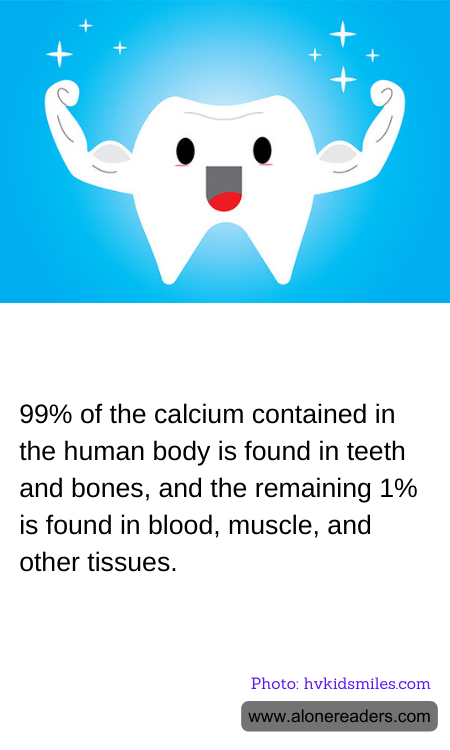
Calcium is a critical mineral in the human body, vital not only for building and maintaining strong bones and teeth but also for several other functions. Indeed, about 99% of the calcium in the body is stored in the bones and teeth. This storage serves a dual purpose: it provides structural strength to bones and teeth and serves as a reservoir to release calcium into the bloodstream when it's needed elsewhere.
The remaining 1% of calcium in the human body, though smaller in quantity, plays a crucial role in various physiological processes. In the bloodstream and muscle tissues, calcium is essential for mediating vascular contraction and dilation, muscle function, nerve transmission, and intracellular signaling. This small percentage of calcium is vital for maintaining the necessary electrical gradients in nervous tissue and muscle tissue, which is required for proper functionality.
Calcium in the blood is also critically involved in the clotting process since it helps in the activation of various clotting factors. This mineral has roles in enzyme function and is essential for the activation of certain enzymes that aid in digestion and metabolism.
This distribution of calcium also represents a delicate balance maintained by the body. Homeostasis mechanisms, including hormonal feedback systems, regulate calcium levels in the blood, ensuring they remain sufficient and steady to support its vital functions while preventing excessive accumulation that could be harmful.
Therefore, while most of the body’s calcium supports structural roles in bones and teeth, the remainder is no less essential, underpinning a number of critical physiological functions that are vital for life. This is why maintaining a balanced diet rich in calcium along with vitamin D, which aids in calcium absorption, is essential for overall health.
