More About This Card
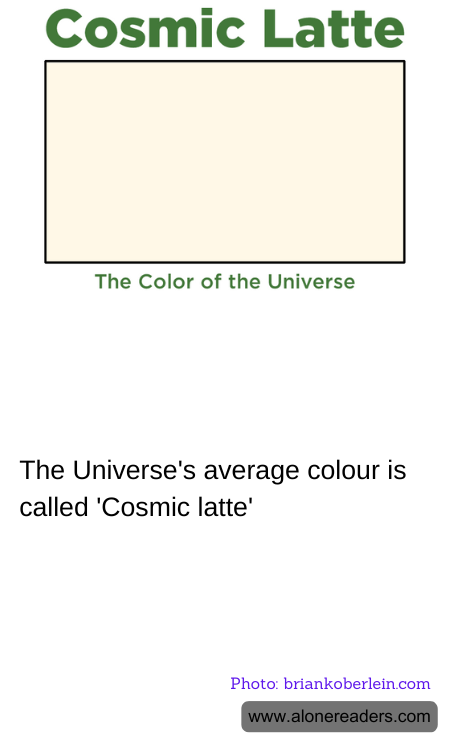
The term "Cosmic Latte" describes a unique shade of beige that represents the average color of the universe. This intriguing concept originated from a study conducted by astronomers from Johns Hopkins University. In 2001, Karl Glazebrook and Ivan Baldry endeavored to aggregate the light from over 200,000 galaxies within the observable universe. Their initial aim was to study the cosmic star formation history by analyzing galaxy colors, which indicate the age and types of stars they contain and therefore, aspects of their evolutionary state.
The researchers collected extensive data on the light emitted by these galaxies. Each galaxy's color is influenced by its star composition: younger, hotter stars emit bluer light, whereas older, cooler stars emit redder light. By combining these colors, Glazebrook and Baldry were effectively blending the light emitted from various parts of the observable universe. The result of this blend surprisingly trended towards a whitish beige, which had popularly been misinterpreted as a pale turquoise in their initial announcement. Later recalculations corrected this oversight, leading them to suggest the color was more beige than blue.
This blend's distinction as Cosmic Latte is not just an interesting piece of trivia; it reveals crucial insights into the nature of the universe. The color is predominantly influenced by the large number of old stars that make up the majority of visible objects in space, highlighting the maturity of visible galaxies. The overall pale shade suggests the presence of younger, hotter stars is less predominant, potentially pointing to a slowdown in new star formation as the universe ages.
Since Cosmic Latte represents an average across billions of light-years, it also serves to showcase the vast scale and composite nature of the universe. As the universe expands and ages, the color could potentially change. Future studies might reveal a shift towards the redder end of the spectrum as older stars dominate the observable universe even more fully.
The idea that the universe has a color is a fascinating reminder of the complexities and wonders of space. Cosmic Latte is a result of human curiosity mingling with sophisticated scientific methodology—a reminder that our understanding of the universe continues to evolve with each observational stride we make. As astronomers continue to refine their techniques and expand our cosmic horizons, who knows what other colorful secrets the universe might reveal? Such investigations bring science and poetic observation together, expanding not only our knowledge but also the breadth of our awe and wonder.