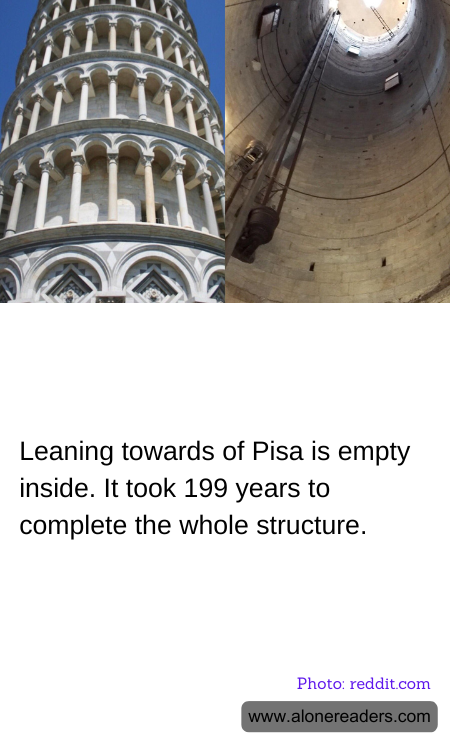
The Leaning Tower of Pisa, an architectural anomaly and a symbol of resilience and beauty, has captivated the imaginations of many. Located in the Italian town of Pisa in Tuscany, the tower is famed not only for its unintended tilt but also for its striking blank interior. Contrary to many of the world's famous towers that boast ornate interiors, the Leaning Tower of Pisa stands empty, with no furnishings or decor within its cylindrical stone walls. This emptiness might be surprising to some, but it adds to the mystique of the tower, emphasizing its architectural and historical significance over decorative elements.
The construction of the Leaning Tower of Pisa is a tale of endurance, spanning nearly two centuries. The tower's foundation was laid in 1173, but the completion of the structure did not occur until 1372. The prolonged construction period was marred by wars, debts, and most crucially, the unstable foundation that led to its iconic lean. Originally intended as the bell tower for the nearby cathedral, the tower began to lean to one side shortly after the commencement of construction due to the soft ground composed of clay, fine sand, and shells.
The lean became worse during the construction period, causing a significant engineering challenge. This led to the builders implementing various methods to compensate for the tilt, including adjusting the upper levels to make them taller on one side. This adaptive construction method is one of the reasons why the tower has stood through the ages, despite its precarious inclination.
Throughout its history, the Leaning Tower of Pisa has faced numerous threats to its stability, yet meticulous conservation efforts in recent decades have stabilized the structure. Engineers have used techniques such as soil extraction from underneath the foundations and securing the base with lead counterweights to correct the tilt and ensure the tower’s survival.
The tower is one of the most recognized and photographed architectural landmarks in the world, beckoning millions of tourists annually. Visitors are often intrigued not just by its lean but also by the stark simplicity of its internal structure. By preserving its hollow insides, the Tower offers a unique echo both literally and metaphorically, allowing the voices and sounds to emphasize its grandeur and historical depth.
Standing resolute through adversities, the Leaning Tower of Pisa serves as a testament to human ingenuity and the rich cultural heritage of medieval European architecture. Its empty chambers resonate with centuries of history, echoing tales of its construction, survival, and eventual emergence as a beloved icon of Italy.
