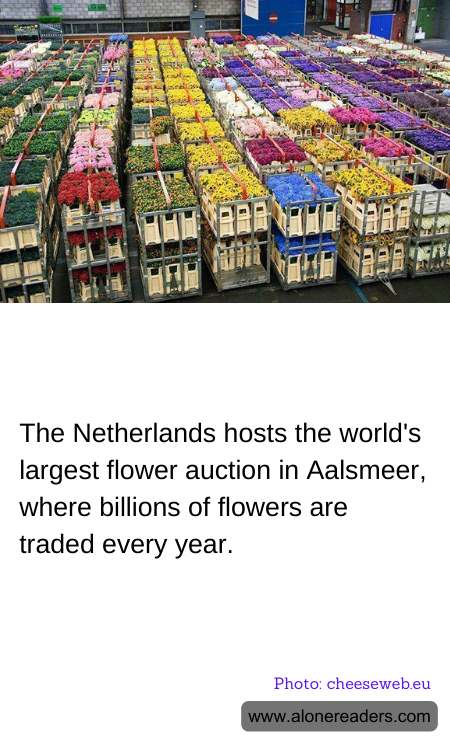
Located a stone's throw from Amsterdam, Aalsmeer, a small town in the Netherlands, is home to the largest and busiest flower auction in the world. This vast floral market, often referred to as the "Wall Street for flowers," operates in a building that covers the equivalent of 166 football pitches, making it one of the largest commercial buildings by floor area in the world. Every day, millions of flowers and decorative plants sourced from all corners of the globe converge here, transforming the space into a colorful sea of botanical diversity.
The auction at Aalsmeer is a spectacle of logistics and efficiency. It commences early, often before dawn, as traders from around the world partake in a complex dance of bidding on blooms through a system known as the "Dutch auction." In this system, the price starts high and rapidly drops until a buyer stops the clock with a bid. This method is not only thrilling but ensures a quick turnover, which is crucial for preserving the freshness of the flowers.
Millions of transactions can be completed in mere hours, thanks to the highly efficient process facilitated by computerized systems and experienced auctioneers. After the sale, the flowers are rapidly processed, packed, and shipped to various destinations worldwide, sometimes reaching their final retail points within a day. The speed and scale of operations at Aalsmeer highlight the Netherlands' pivotal role in the global floral industry, a sector where it has been a leader for centuries.
The impact of the Aalsmeer flower auction extends beyond economics; it is also a cultural emblem of the Netherlands, a country renowned for its tulips and other floral marvels. The auction attracts thousands of visitors, including tourists and professionals who come to witness the bustling trade and the stunning array of flowers available. This fascination with flowers is deeply embedded in Dutch culture, with events like the annual Keukenhof flower display drawing visitors from across the globe.
Furthermore, sustainability initiatives have been increasingly integrated into the auction's operations. Efforts to reduce carbon footprints, promote responsible sourcing, and minimize waste are prioritized to mitigate the environmental impact of such a massive trade.
In summary, the flower auction in Aalsmeer is not just a hub of global trade but also a symbol of Dutch heritage and innovation in floriculture. It exemplifies how tradition can meet modernity and how a business can flourish while fostering a deeper appreciation of nature's beauty.
