More About This Card
Amsterdam is known for its innovative approaches to social and urban challenges, and one of the most unique initiatives has been the project that tackled both litter problems and provided a managed environment for alcoholics who otherwise struggle with employment and societal integration. This unconventional approach involved hiring alcoholics to clean the streets of Amsterdam, compensating them with beer alongside a small payment and tobacco.
Initiated by the Rainbow Foundation Project, the program aimed to give this segment of the population a sense of structure and responsibility. The participants would start their day with two beers and receive another two at lunch, followed by one more beer as a 'bonus' at the end of the day. The rationale was that controlled consumption throughout the day would prevent binge drinking episodes and street disturbances, thereby offering a safer and more regulated alternative to these individuals’ usual routines.
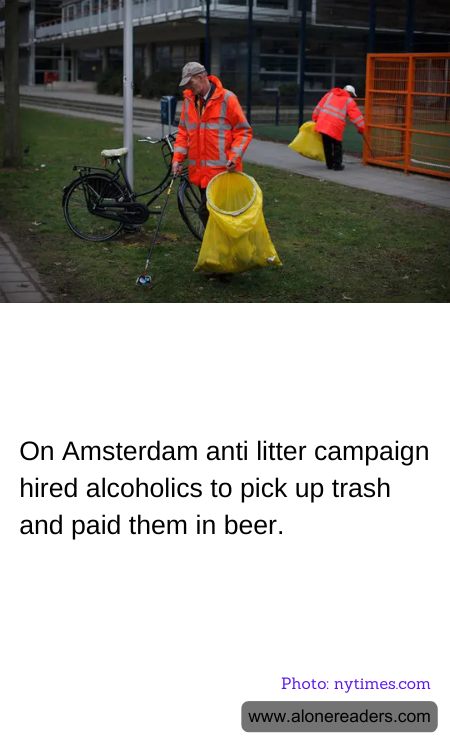
In addition to beer, each participant was paid 10 euros per day and provided with a warm meal. This approach not only tackled public intoxication in a non-punitive way but also addressed city cleanliness. Participants were equipped with bright orange vests and took to the parks and streets, picking up litter and helping maintain a cleaner urban environment. The visibility of their contribution also helped alter public perceptions, highlighting their ability to contribute positively to the community.
Critics of the program argued that it enabled addiction rather than providing a long-term solution. However, supporters pointed out the pragmatic approach of the initiative, as it dealt with the dual issues of urban cleanliness and the care of a vulnerable population in a dignified manner. Furthermore, for many participants, this structured daily activity provided a pathway to social reintegration, instilling a routine and reducing their overall alcohol intake compared to their lives prior to the initiative.
The Amsterdam project is a reflection of broader debates on harm reduction versus abstinence policies in addiction care. By offering controlled conditions, social contact, and an opportunity to work, the project provided a compassionate alternative to the often harsh realities faced by chronic alcoholics. It underscores a novel approach to urban management and social care, emphasizing practical outcomes and stability over idealistic, but often unreachable, goals. Whether viewed as controversial or commendable, the project undeniably sparked discussion and provoked thought on innovative methods to address complex social issues.