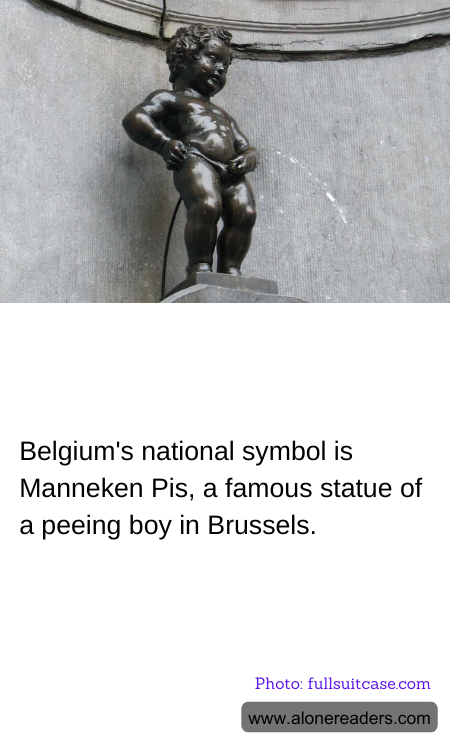
Belgium, known for its rich history and cultural heritage, boasts a particular national symbol that captures both the whimsy and the historical depth of its capital city. This symbol is the Manneken Pis, a small bronze statue depicting a little boy in the midst of relieving himself. Situated at the heart of Brussels, this famous fountain has not only become a major tourist attraction but also a beloved emblem of the Belgian spirit.
The origins of Manneken Pis are steeped in various legends, each adding layers to its significance and charm. According to one popular story, the statue commemorates the deed of a young boy who, by urinating on the fuse of a bomb, heroically saved the city from an explosion. Another tale suggests the statue is a tribute to a lost boy of Brussels, who was later found in this peculiar pose. Despite the uncertain historical foundations, these stories highlight the humor and resilience that characterize Belgian culture.
Designed by Jerome Duquesnoy and installed in 1619, the statue is notably small, standing just over two feet tall. Its size, however, does not diminish its sizable impact on the cultural landscape of Belgium. Throughout the years, Manneken Pis has been dressed in hundreds of different costumes, celebrating everything from major international events to local festivities. The changing of the costume is a ceremonial event that draws crowds and reflects the communal and inclusive spirit of Brussels.
Moreover, Manneken Pis has transcended local fame to become a symbol recognized around the world. Replicas of the statue can be found in cities globally, signifying the extensive cultural influence Belgium exerts far beyond its borders. The enduring appeal of this small statue speaks to a universal appreciation for humor and humanity, conveyed through a uniquely Belgian artistic expression.
In essence, Manneken Pis embodies the quirky, resilient, and open-hearted character of Belgium. More than just a statue, it is a national treasure that continues to delight and inspire, encapsulating the charm of Brussels in a way that few other symbols could.
