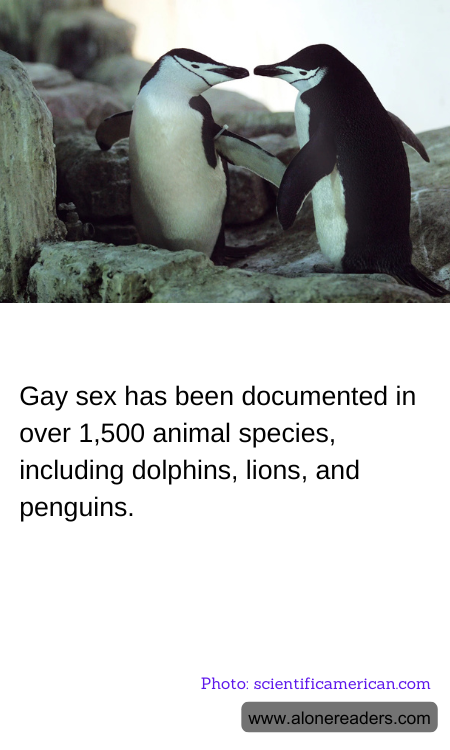
Homosexual behavior in animals is a natural phenomenon that has been observed and well-documented across a wide range of species. Researchers have found that same-sex interactions ranging from courtship, bonding, and sexual activity to co-parenting have occurred in over 1,500 animal species, highlighting the diversity and complexity of animal behaviors. This includes various mammals like dolphins and lions, birds such as penguins, and even insects.
In the animal kingdom, these behaviors can serve multiple functions. For example, in dolphins, homosexual behavior is often about strengthening social bonds and establishing social hierarchies. Dolphins are known for their high intelligence and complex social structures, and engaging in these interactions helps solidify connections within their groups, which can be crucial for survival. Similarly, lions exhibit same-sex behavior as a way to maintain alliances and social cohesion within their prides.
Penguins have been particularly noted for forming long-lasting, same-sex pairs. Occasionally, these pairs have been observed to engage in activities such as building nests together and even raising chicks, either from adoption or from taking turns egg-sitting. This indicates that such behaviors can sometimes fulfill similar reproductive and social roles as heterosexual pairings.
These observations challenge the often simplistic view of animal behavior as being driven solely by reproduction. Instead, it suggests that homosexual behavior in animals can also contribute to social stability and individual well-being. This serves as a reminder that the natural world is varied and complex, with behaviors that are influenced by a myriad of ecological and evolutionary pressures. Understanding these patterns not only enlightens us about the breadth of normal behavior in animals but also enriches our comprehension of the natural behaviors that occur in human societies as well.
