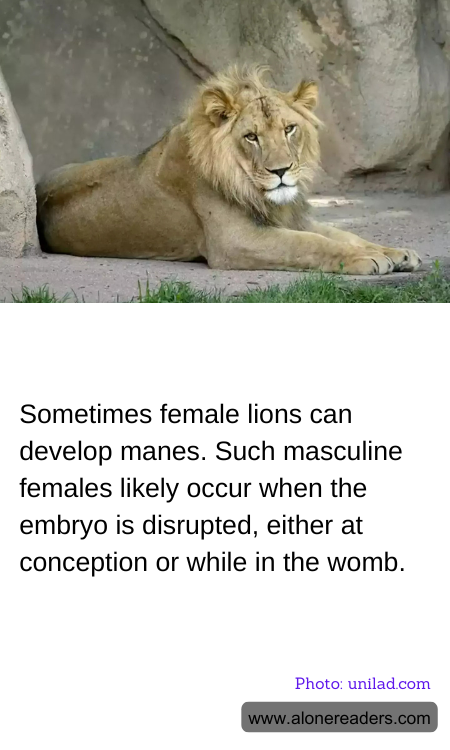
In the fascinating world of African wildlife, the iconic image of the lion with his majestic mane is one that many of us are familiar with. Typically, it is the male lion that sports this impressive feature, a symbol of strength and virility. However, there are intriguing exceptions to this rule where female lions develop manes, exhibiting traits that are conventionally considered masculine. These cases, while rare, provide insight into the complexities of animal biology and the role of hormones in development.
The occurrence of maned female lions can be traced back to specific disruptions in the normal development process, either during conception or at some stage while the lion is still an embryo. One prominent theory suggests that these anomalies are the result of hormonal imbalances. For instance, an excess of testosterone or other androgens can lead to the development of male characteristics, such as a mane. Hormonal imbalances can arise from various sources, including genetic conditions, environmental factors, or even dietary influences.
In some wildlife reserves and zoos, observers have documented female lions with manes behaving more like their male counterparts; they are often larger, more aggressive, and may even be seen taking on roles typically held by male lions, such as leading prides or defending territory. However, these maned females usually remain fertile, capable of mating and producing offspring. This indicates that while they exhibit external features and behaviors akin to males, their reproductive functions can remain typical of females.
The phenomenon also raises questions about the adaptive value of such traits. In the wild, having characteristics like a mane could confer certain advantages; for example, manes might make female lions appear larger or more intimidating to rivals or predators. However, the overall implications of this condition for the lions' social structure, reproductive success, and survival are still subjects of ongoing research.
Understanding why some female lions develop manes not only fascinates those interested in wildlife but also provides valuable information for biologists and conservationists aiming to preserve these magnificent creatures. It underscores the complexity of nature and reminds us of the delicate balance of ecosystems where such anomalies can have broader impacts.
