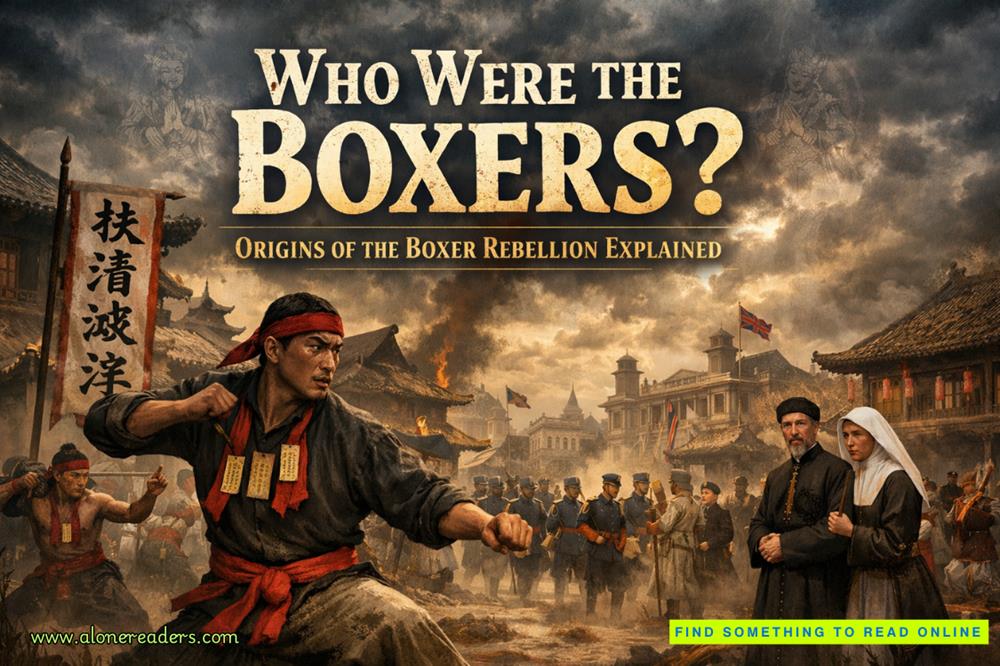
The men who came to be known to the outside world as the Boxers did not call themselves that name. They were members of a loose, secretive, and deeply traditionalist movement known as the Yihetuan, often translated as the Righteous and Harmonious Fists. The term “Boxer” emerged from Western observers who, seeing their ritualized martial exercises and combat drills, associated them with boxing or pugilism. Yet this label obscured far more than it revealed. The Boxers were not athletes or revolutionaries in the modern sense, but the product of a deep social, spiritual, and political crisis unfolding in late nineteenth-century China, where imperial decline, foreign domination, economic distress, and cultural humiliation collided with explosive force.
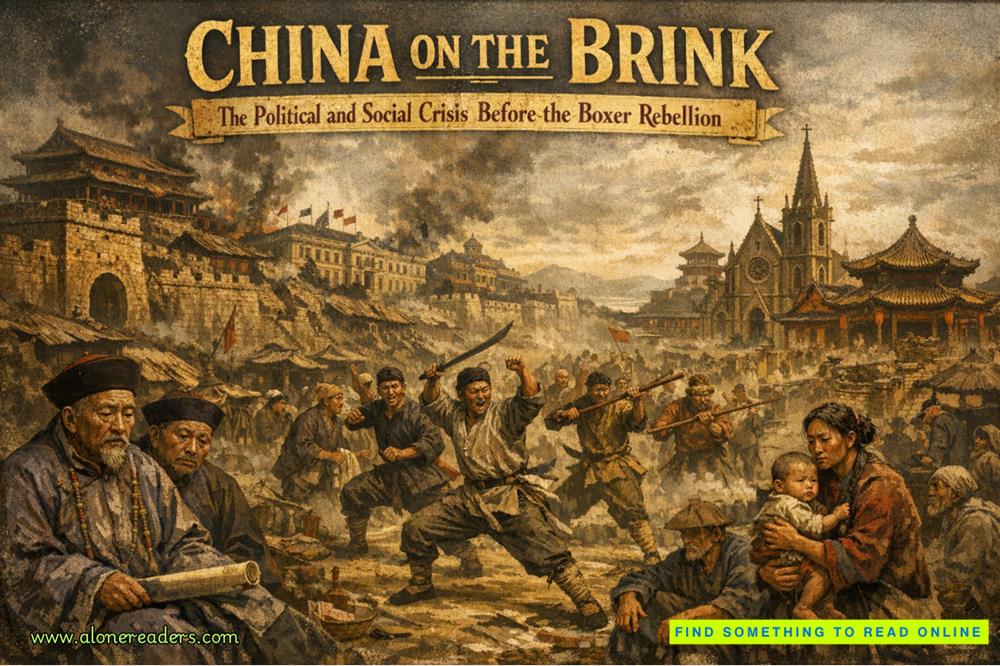
Northern China in the late Qing period was a land under immense strain. Repeated natural disasters—droughts, floods, and famine—had devastated rural communities, especially in Shandong and Zhili provinces. Peasant livelihoods collapsed under the combined weight of crop failures, rising taxes, banditry, and corrupt local officials. These hardships were not isolated misfortunes; they were interpreted by many villagers as cosmic signs of disorder, evidence that harmony between Heaven, Earth, and the human realm had been violently disrupted. In traditional Chinese cosmology, such imbalance demanded correction, and the Boxers emerged as one such attempt to restore moral and spiritual order through force.
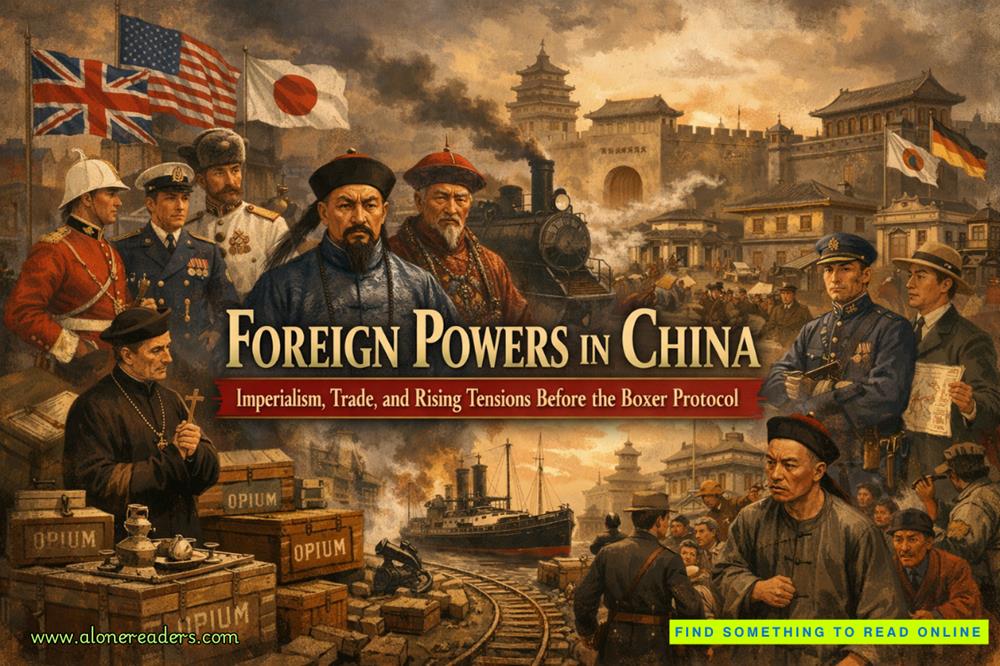
Foreign intrusion intensified these anxieties dramatically. Following China’s defeats in the Opium Wars and subsequent “unequal treaties,” Western powers and Japan carved the Qing Empire into spheres of influence. Foreign merchants, missionaries, soldiers, and engineers flooded treaty ports and penetrated inland regions with unprecedented freedom. Railways cut through ancestral lands, telegraph lines violated sacred geomantic principles, and foreign legal privileges placed outsiders beyond Chinese jurisdiction. To many villagers, these intrusions were not merely political or economic threats but profound spiritual violations, disrupting feng shui and angering local gods.
Christian missionaries became a particularly potent symbol of this foreign presence. While some missionaries provided education and medical care, their activities often clashed with local customs, beliefs, and social hierarchies. Converts to Christianity were sometimes exempted from traditional obligations, including temple rituals or village justice systems, creating resentment and suspicion. Rumors spread that missionaries kidnapped children, desecrated temples, or used human body parts for dark rituals. Such stories, though largely unfounded, thrived in an environment of fear and cultural dislocation, reinforcing the belief that foreign religion was poisoning China from within.
The Boxers fused martial traditions with folk religion, spirit possession, and millenarian belief. Through ritual chanting, breathing techniques, talismanic inscriptions, and trance-like ceremonies, they believed they could summon protective spirits and become invulnerable to bullets and blades. This conviction was not merely superstition but a psychological weapon, transforming desperate peasants into fearless fighters willing to confront modern armies. Their practices drew from older martial sects, Daoist traditions, and local religious cults, creating a hybrid ideology that promised both physical protection and moral purification.
Anti-foreignism lay at the heart of Boxer ideology, but it was inseparable from loyalty to the Qing dynasty. Unlike later revolutionary movements, the Boxers did not initially seek to overthrow the imperial system. Instead, they viewed the Qing state as weakened, misled, or temporarily compromised by foreign influence. Their rallying cry, often summarized as “Support the Qing, destroy the foreign”, reflected a belief that once foreign contamination was removed, imperial authority and cosmic harmony would naturally be restored. This paradoxical blend of rebellion and loyalty made the movement unpredictable and difficult for the Qing court to control.
The Qing government’s response was fragmented and deeply conflicted. Some local officials recognized the Boxers as a dangerous mob threatening order and foreign relations, while others saw them as a useful anti-foreign force that could be manipulated to resist Western pressure. This ambiguity reached the highest levels of the court, where conservative factions argued that foreign aggression justified extraordinary measures. As Boxer violence escalated—targeting missionaries, Chinese Christians, and foreign property—the line between spontaneous popular uprising and tacit state support grew increasingly blurred.
By 1900, Boxer activity surged toward the imperial capital. Armed with swords, spears, and an unshakable belief in divine protection, Boxer bands converged on Beijing, attacking churches, foreign businesses, and Chinese converts. Foreign legations were besieged, and violence spiraled beyond the control of both Boxer leaders and Qing officials. What had begun as a localized, rural movement transformed into an international crisis, drawing in the military forces of eight foreign powers determined to protect their nationals and interests.
The brutal suppression that followed revealed the stark asymmetry between traditional belief-driven militancy and industrialized modern warfare. Boxer fighters, despite their courage and conviction, stood little chance against machine guns, artillery, and coordinated foreign armies. The aftermath was devastating. Cities were looted, villages destroyed, and thousands executed or displaced. The Qing dynasty, already weakened, was forced to accept the humiliating terms of the Boxer Protocol, imposing massive indemnities and further eroding China’s sovereignty.
Yet to understand who the Boxers were is not merely to recount their defeat. They were the embodiment of a society pushed to its limits, reacting with the cultural tools and beliefs available to it. Their violence was real and often indiscriminate, but it emerged from conditions shaped by imperialism, economic exploitation, environmental catastrophe, and the collapse of traditional authority. In this sense, the Boxers were neither simple fanatics nor mindless mobs, but actors in a tragic historical moment when desperation, faith, and nationalism fused into destructive force.
The legacy of the Boxers has long been contested. Early Western accounts portrayed them as irrational savages opposed to progress, while later nationalist narratives reframed them as proto-patriots resisting imperial domination. Both interpretations flatten the complexity of the movement. The Boxers were simultaneously victims and perpetrators, resisting foreign domination while attacking fellow Chinese, defending tradition while accelerating the collapse of the old order they sought to protect.
In the broader sweep of Chinese history, the Boxer Rebellion marked a turning point. It exposed the inability of the Qing state to manage internal unrest or external pressure, shattered illusions of cultural invulnerability, and intensified calls for reform and revolution. The spiritual certainty that had sustained Boxer fighters could not withstand the realities of modern geopolitics, but the grievances that fueled their uprising did not disappear. Instead, they reemerged in new forms, shaping the revolutionary movements that would soon overturn imperial rule entirely.
To ask who the Boxers were is therefore to confront the human consequences of imperial decline and foreign domination. They were peasants, laborers, and displaced villagers seeking meaning and protection in a world that seemed to be collapsing around them. Their fists, raised in ritual defiance, were less a challenge to modernity itself than a cry of anguish from a civilization struggling to survive unprecedented upheaval.



 The Hundred Days Offensive: How the Allies Defeated Germany in World War I
 The Second Battle of the Marne: The Turning Point of World War I in 1918
 The Spring Offensive of 1918: Germany's Final Gamble to Win World War I
 The Treaty of Brest-Litovsk: How Russia Left World War I
 The Russian Revolution and World War I: How War Brought Down the Tsar
 The Zimmermann Telegram Explained: Germany's Secret Offer to Mexico in World War I