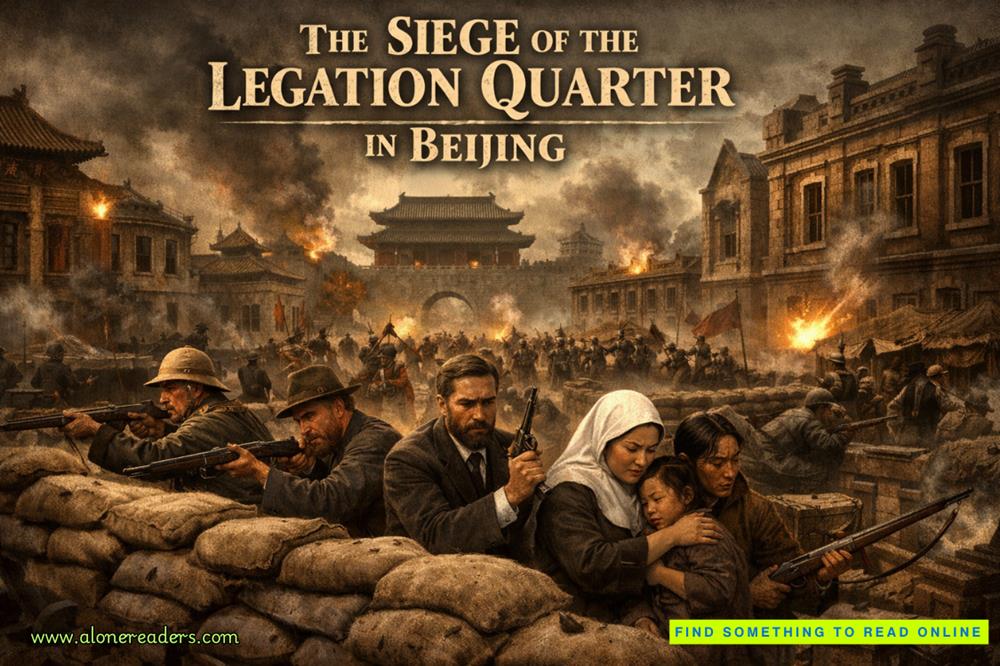
The Siege of the Legation Quarter in Beijing stands as one of the most dramatic and symbolically charged episodes of the Boxer Crisis, encapsulating the collision of imperial ambition, nationalist fury, religious conflict, and diplomatic paralysis at the dawn of the twentieth century. For fifty-five relentless days in the summer of 1900, a small enclave of foreign legations, missionaries, soldiers, and thousands of Chinese Christian converts found themselves encircled in the heart of China’s imperial capital, facing starvation, disease, artillery bombardment, and the constant threat of annihilation. The siege was not merely a military confrontation; it was a concentrated microcosm of global power imbalance, exposing the fragility of Qing sovereignty and the brutal consequences of imperial intrusion.
The Legation Quarter itself was a peculiar creation of nineteenth-century treaty diplomacy. Following China’s defeats in the Opium Wars, foreign powers secured permanent diplomatic residences inside Beijing, a privilege previously denied to outsiders. Over time, these legations expanded into fortified compounds with guards, arsenals, and self-contained communities, standing as visible symbols of foreign dominance embedded within the Qing capital. To many Chinese citizens, particularly in times of drought, famine, and social dislocation, the Legation Quarter represented humiliation, economic exploitation, and cultural desecration.
The social tensions that erupted into violence in 1900 had been building for decades. Northern China was gripped by recurring natural disasters, shrinking farmland, and growing resentment toward missionaries whose extraterritorial privileges placed them beyond local law. The Boxer movement, officially known as the Society of Righteous and Harmonious Fists, drew strength from rural discontent and traditional beliefs. Its members claimed spiritual invulnerability to bullets and preached violent resistance against foreign influence and Christian converts, whom they saw as collaborators undermining Chinese traditions. By the spring of 1900, Boxer violence had escalated from local attacks into an organized campaign, tolerated and increasingly supported by conservative factions within the Qing court.
Beijing became the focal point of this escalating crisis. Foreign diplomats, alarmed by reports of massacres in the countryside and the destruction of railways and telegraph lines, demanded increased military protection. Small detachments of foreign troops were dispatched to guard the legations, but their presence further inflamed anti-foreign sentiment. When the Qing government hesitated between suppression and accommodation of the Boxers, the situation deteriorated rapidly. By June, Boxer fighters flooded into Beijing, openly attacking Christians and foreigners, while sections of the Qing military began to side with the insurgents.
The siege formally began in mid-June 1900, following the killing of a senior foreign diplomat and the severing of all communication lines between Beijing and the outside world. Foreign residents, missionaries, and Chinese Christian refugees poured into the Legation Quarter, swelling its population to nearly four thousand people. Among them were women, children, elderly civilians, and unarmed laborers, all crammed into a space never designed to withstand a prolonged military blockade. Improvisation became the defining feature of survival, as diplomats turned into military organizers, missionaries became nurses, and civilians were pressed into construction and defense roles.
The defenders faced overwhelming odds. Boxer fighters, reinforced by Qing troops equipped with modern artillery, surrounded the Legation Quarter from all sides. Daily bombardments reduced buildings to rubble, forcing defenders to dig trenches, reinforce walls with furniture and sandbags, and create makeshift shelters underground. Food supplies dwindled alarmingly, and rations were reduced to near starvation levels. Horses, mules, and even pets were slaughtered for meat, while water had to be rationed under constant sniper fire.
Disease posed a threat as deadly as enemy bullets. Overcrowding, heat, and unsanitary conditions led to outbreaks of dysentery and other illnesses. Medical care was primitive, relying on limited supplies and improvised treatments. Despite these conditions, morale was sustained through strict organization, shared labor, and a sense of collective endurance. The Legation Quarter became a self-contained fortress of desperation, where survival depended on discipline as much as courage.
Chinese Christian refugees bore some of the heaviest burdens of the siege. Many had already lost family members and homes before reaching the legations. Inside the compound, they performed the most dangerous and exhausting tasks, including trench digging, wall repair, and ammunition transport, often under direct fire. Their loyalty to the defenders made them particular targets of Boxer hatred, and captured refugees were subjected to brutal reprisals. The siege thus revealed the tragic position of Chinese Christians, trapped between imperial aggression and nationalist violence.
Outside the Legation Quarter, Beijing descended into chaos. Churches were destroyed, foreign property was looted, and rumors of mass executions circulated daily. The Qing court issued contradictory edicts, alternately calling for protection of diplomats and endorsing Boxer actions. This ambiguity deepened the crisis, effectively transforming the siege into a state-sanctioned confrontation cloaked in plausible deniability. The inability or unwillingness of the Qing government to assert control exposed the internal fractures within the empire’s ruling elite.
For the besieged, hope rested on the arrival of a foreign relief force. An initial attempt to reach Beijing failed disastrously, reinforcing fears that the Legation Quarter would be abandoned to its fate. As days turned into weeks, psychological strain intensified. Artillery shells struck with terrifying unpredictability, and each dawn brought uncertainty about whether defenses would hold. Yet the defenders adapted continuously, developing counter-battery tactics, rationing systems, and rotating defense schedules to conserve strength.
The siege ended in mid-August 1900 with the arrival of a multinational relief army composed of troops from several imperial powers. Their advance on Beijing was swift and brutal, cutting through Boxer resistance and Qing defenses alike. When relief forces entered the Legation Quarter, they found a population emaciated, exhausted, and scarred by weeks of continuous combat. Casualties among the besieged were significant but far lower than many had feared, a testament to the defenders’ resilience and organizational ingenuity.
The aftermath of the siege was devastating for Beijing and profoundly consequential for China’s future. The relief forces looted large sections of the capital, exacting violent reprisals against suspected Boxers and civilians alike. The Qing government was forced into humiliating negotiations that culminated in the Boxer Protocol, imposing massive indemnities, permanent foreign military presence, and severe restrictions on Chinese sovereignty. The siege thus became both a justification and a catalyst for intensified imperial control, embedding foreign power even deeper into China’s political and economic structures.
Historically, the Siege of the Legation Quarter occupies a contested space between narratives of heroic defense and imperial aggression. In Western accounts, it was long portrayed as a dramatic stand of civilization against barbarism. In Chinese memory, it symbolizes the unbearable intrusions that fractured national dignity and accelerated imperial decline. Modern scholarship increasingly views the siege as a tragic convergence of miscalculation, fear, and structural inequality, where civilians on all sides paid the highest price.
The siege also marked a turning point in China’s internal trajectory. The humiliation suffered by the Qing court shattered confidence in traditional governance and emboldened reformist and revolutionary movements. Within a decade, the imperial system itself would collapse. In this sense, the Legation Quarter was not only a battlefield but a historical crucible in which the old order finally cracked.
Today, the Siege of the Legation Quarter remains a powerful reminder of how diplomacy can fail catastrophically when backed by coercion rather than mutual respect. It illustrates the dangers of cultural arrogance, the volatility of popular rage under foreign domination, and the human cost of geopolitical rivalry. More than a military episode, it was an event that reshaped China’s relationship with the world and left scars that would influence its national consciousness for generations.



 The Hundred Days Offensive: How the Allies Defeated Germany in World War I
 The Second Battle of the Marne: The Turning Point of World War I in 1918
 The Spring Offensive of 1918: Germany's Final Gamble to Win World War I
 The Treaty of Brest-Litovsk: How Russia Left World War I
 The Russian Revolution and World War I: How War Brought Down the Tsar
 The Zimmermann Telegram Explained: Germany's Secret Offer to Mexico in World War I










