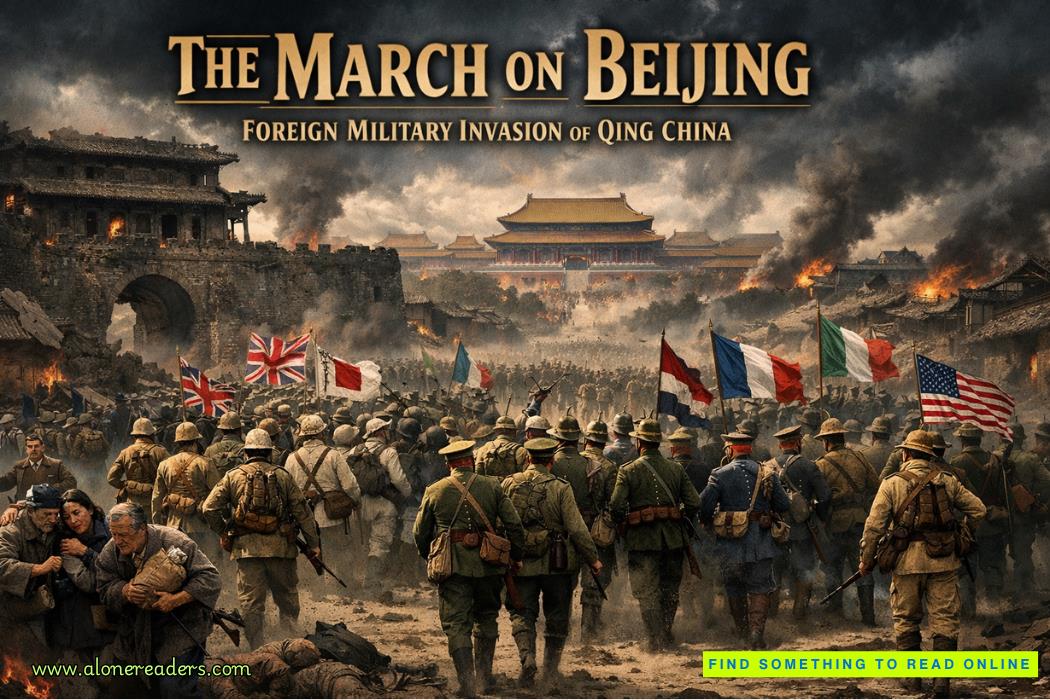
The march on Beijing in 1900 stands as one of the most traumatic episodes in modern Chinese history, a moment when the world’s great powers openly violated the sovereignty of Qing China and turned its ancient capital into a battlefield of foreign domination. What unfolded was not merely a military expedition but a brutal demonstration of imperial power, technological imbalance, and political decay. The road to Beijing was paved not only with gunfire and marching boots but with decades of humiliation, economic penetration, missionary conflicts, and the internal rot of a dying dynasty. When foreign troops finally entered the imperial city, it symbolized far more than a tactical victory—it marked the psychological collapse of the Qing state and the irreversible transformation of China’s relationship with the outside world.
At the heart of this catastrophe lay the Boxer Movement, a volatile fusion of rural desperation, anti-foreign rage, and spiritual nationalism. Known formally as the Society of Righteous and Harmonious Fists, the Boxers emerged from northern China’s impoverished countryside, where drought, famine, unemployment, and foreign economic intrusion had shattered traditional livelihoods. Railways destroyed feng shui lines, foreign-owned factories displaced artisans, and missionaries enjoyed extraterritorial protections that placed them above Chinese law. For ordinary villagers, foreign influence was not an abstract political concept—it was a daily humiliation. The Boxers promised divine invulnerability, believing spiritual rituals could make them immune to bullets, and their fury turned increasingly toward missionaries, Chinese Christian converts, and symbols of Western presence.
Initially, the Qing court attempted to suppress the Boxers, viewing them as dangerous rebels. But internal divisions paralyzed imperial decision-making. Conservative officials, especially those surrounding Empress Dowager Cixi, began to see the movement as a potential weapon against foreign encroachment. This fatal miscalculation transformed a local uprising into an international crisis. When Boxer violence escalated in 1900, foreign diplomats in Beijing demanded protection. Qing troops hesitated, regional commanders ignored imperial orders, and chaos spread across North China.
By June 1900, Beijing became a pressure cooker of fear and suspicion. Foreign legations—small diplomatic compounds clustered in the Legation Quarter—were suddenly isolated amid growing hostility. Railway lines were cut. Telegraph wires were destroyed. Mission stations burned across the countryside. When the German minister was assassinated in the streets of Beijing, the crisis exploded beyond repair. Soon after, the Qing court issued one of the most disastrous decisions in Chinese history: a declaration of war against all foreign powers.
This declaration did not unify China—it exposed its fragmentation. Many provincial governors outright refused to support the war, fearing destruction and recognizing the hopeless imbalance of power. Southern China effectively ignored Beijing’s command, while northern provinces descended into chaos. The Qing army itself was deeply divided between modernized units and outdated forces still relying on spears, swords, and obsolete artillery. Against them stood the industrialized militaries of the world.
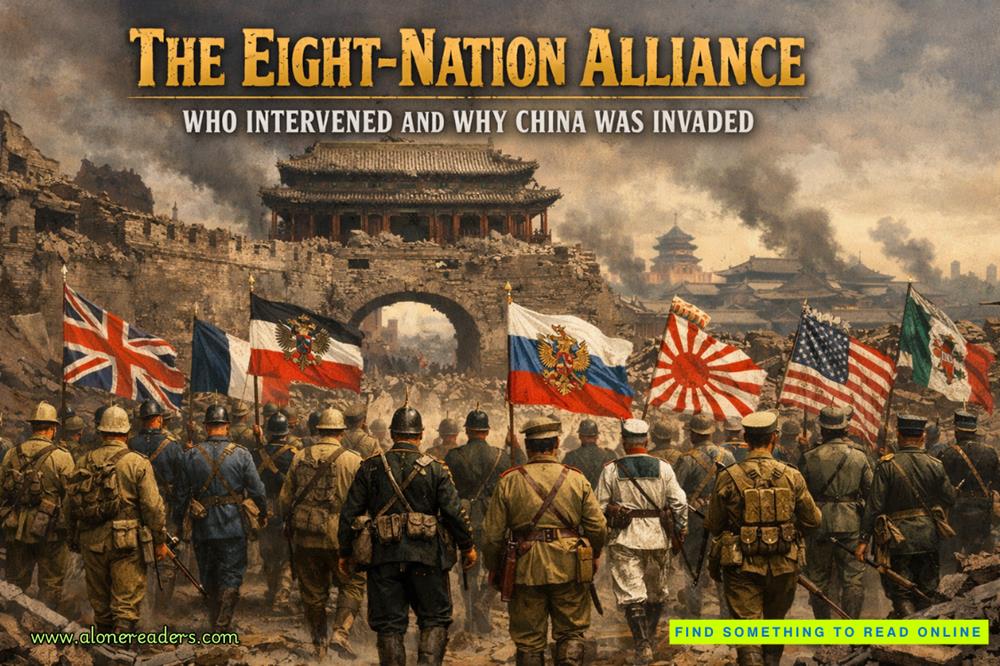
The response from abroad was swift and merciless. Eight nations—Britain, Japan, Russia, Germany, France, the United States, Austria-Hungary, and Italy—formed what became known as the Eight-Nation Alliance. Their objective was clear: rescue their besieged diplomats and punish Qing China decisively. What followed was not a defensive mission but an outright invasion.
The first attempt to reach Beijing came with the Seymour Expedition in June 1900. A hastily assembled multinational force advanced from Tianjin toward the capital by railway. At first, foreign commanders assumed resistance would be minimal. This assumption proved disastrously wrong. Boxers sabotaged tracks, ambushed columns, and forced the expedition into unfamiliar terrain. Qing troops, now openly hostile, joined the fighting. The expedition was surrounded, cut off from supplies, and nearly annihilated. Only a desperate retreat saved the force from complete destruction.
The failure of the Seymour Expedition hardened foreign resolve. What followed was a far larger, more organized invasion—one that would carve a violent path directly to Beijing. Tianjin became the staging ground for the full-scale campaign. After brutal fighting, foreign troops stormed and captured the city in July 1900. The battle revealed the staggering imbalance of modern warfare: machine guns, rapid-fire artillery, and disciplined infantry formations overwhelmed Qing defenses with devastating efficiency. Entire Chinese units collapsed under firepower they could not match.
From Tianjin, the alliance prepared its march north. Approximately 20,000 troops advanced toward Beijing in a multinational column that symbolized imperial arrogance and coordination. Japanese troops formed the largest and most disciplined contingent, earning reluctant respect from other powers due to their battlefield effectiveness. British and American units brought modern logistics and artillery. Russian forces moved aggressively along the northern flank, while German troops—enraged by the death of their diplomat—advanced with open calls for vengeance.
As the foreign armies advanced, devastation followed. Villages suspected of Boxer support were burned. Civilians were executed without trial. Looting became widespread. The distinction between combatant and non-combatant collapsed entirely. Soldiers from multiple nations participated in what later observers described as a campaign of terror. The march to Beijing became not only a military operation but a rolling catastrophe for northern Chinese society.
Meanwhile inside Beijing, the Legation Quarter endured a desperate siege lasting fifty-five days. Foreign diplomats, soldiers, missionaries, and Chinese Christian refugees barricaded themselves behind improvised defenses. Ammunition ran low. Food was rationed. Disease spread rapidly. Qing troops and Boxer fighters launched repeated assaults, but poor coordination and limited artillery prevented a decisive breach. Still, the psychological strain was immense. Every day brought fear of massacre.
Within the Forbidden City, panic gripped the imperial court. Empress Dowager Cixi oscillated between resistance and flight. Reports from the front grew increasingly grim. As foreign troops drew closer, the reality became undeniable: Beijing could not be defended. In a moment heavy with symbolism, the Qing court abandoned the capital. Disguised as peasants, the emperor and empress fled westward toward Xi’an, leaving behind the heart of imperial China undefended.
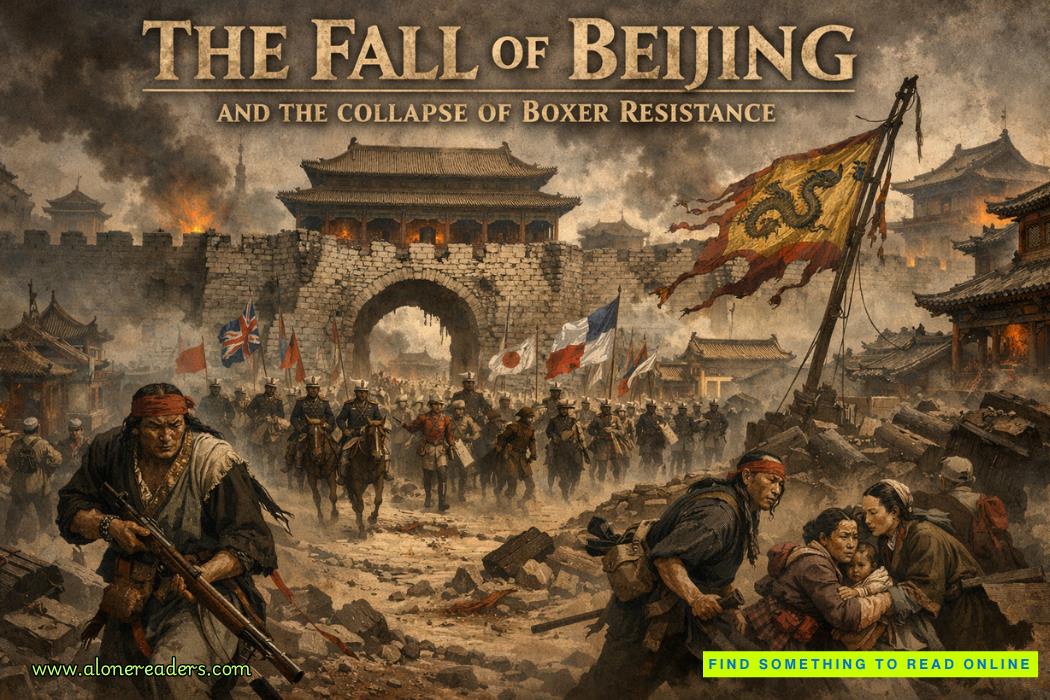
In August 1900, the alliance reached the outskirts of Beijing. What followed was swift and overwhelming. The city’s defenses crumbled under modern artillery. Within days, foreign troops entered the capital. The siege was lifted. The legations were relieved. But salvation for foreigners meant catastrophe for Beijing itself.
The occupation of the capital unleashed one of the darkest chapters of imperial violence in East Asia. Beijing was systematically looted, its palaces, temples, homes, and markets stripped of treasures accumulated over centuries. Artifacts were shipped to Europe, Russia, Japan, and America. Priceless scrolls, bronzes, jade carvings, and ritual objects vanished forever. Soldiers ransacked even the Forbidden City’s outer precincts, violating what had once been the most sacred space in the empire.
At the same time, reprisal killings became routine. Suspected Boxers were executed publicly. Innocent civilians were often swept into punishment raids. Entire districts were terrorized. No unified command restrained the violence; each army operated by its own rules, or lack thereof. What had begun as a rescue mission mutated into a spectacle of imperial dominance and racial contempt.
For the Qing dynasty, the consequences were catastrophic. The invasion shattered the last illusion of imperial authority. The emperor had fled. The capital lay occupied. Foreign troops patrolled Chinese streets at will. The dynasty survived only because the invaders preferred a weak, compliant government to outright colonization.
In 1901, the humiliation was formalized through the Boxer Protocol. The treaty imposed an enormous indemnity that crippled China’s finances for decades. Foreign troops were permanently stationed between Beijing and the coast. Fortifications were dismantled. Officials were executed or exiled. China was forced to apologize formally to foreign powers. Sovereignty became conditional, not absolute.
Yet the deeper impact was psychological. The march on Beijing destroyed the Confucian worldview that had sustained imperial rule for two millennia. The belief that China stood at the moral center of civilization collapsed under the boots of foreign soldiers. Intellectuals, students, and reformers drew radical conclusions: tradition had failed, isolation had failed, and survival now required transformation.
Ironically, the invasion planted the seeds of revolution. Military humiliation exposed the need for modernization. Educational reform accelerated. New armies were trained along Western lines. Revolutionary movements gained momentum. Within a decade, the Qing dynasty would fall, replaced by a fragile republic born from the ashes of imperial disgrace.
The march on Beijing was therefore not simply an episode of war. It was a turning point in world history. It marked the moment when China was fully absorbed into the violent global order of imperialism—not as an equal participant, but as a coerced victim. The city that had once symbolized eternal rule became proof that no empire, however ancient, could survive unchanged in the modern age.
In Chinese memory, this invasion endures not merely as defeat but as national humiliation—a lesson etched into collective consciousness. It explains the intensity of modern Chinese nationalism, the suspicion of foreign intervention, and the determination never again to allow outsiders to dictate China’s fate.
The march on Beijing was brief in duration, but its consequences stretched across generations. Guns fell silent, soldiers withdrew, treaties were signed—but the wound remained open. It reshaped China’s politics, identity, and relationship with the world, leaving behind a legacy that continues to influence global history long after the echoes of marching boots faded from the streets of the imperial capital.



 The Hundred Days Offensive: How the Allies Defeated Germany in World War I
 The Second Battle of the Marne: The Turning Point of World War I in 1918
 The Spring Offensive of 1918: Germany's Final Gamble to Win World War I
 The Treaty of Brest-Litovsk: How Russia Left World War I
 The Russian Revolution and World War I: How War Brought Down the Tsar
 The Zimmermann Telegram Explained: Germany's Secret Offer to Mexico in World War I