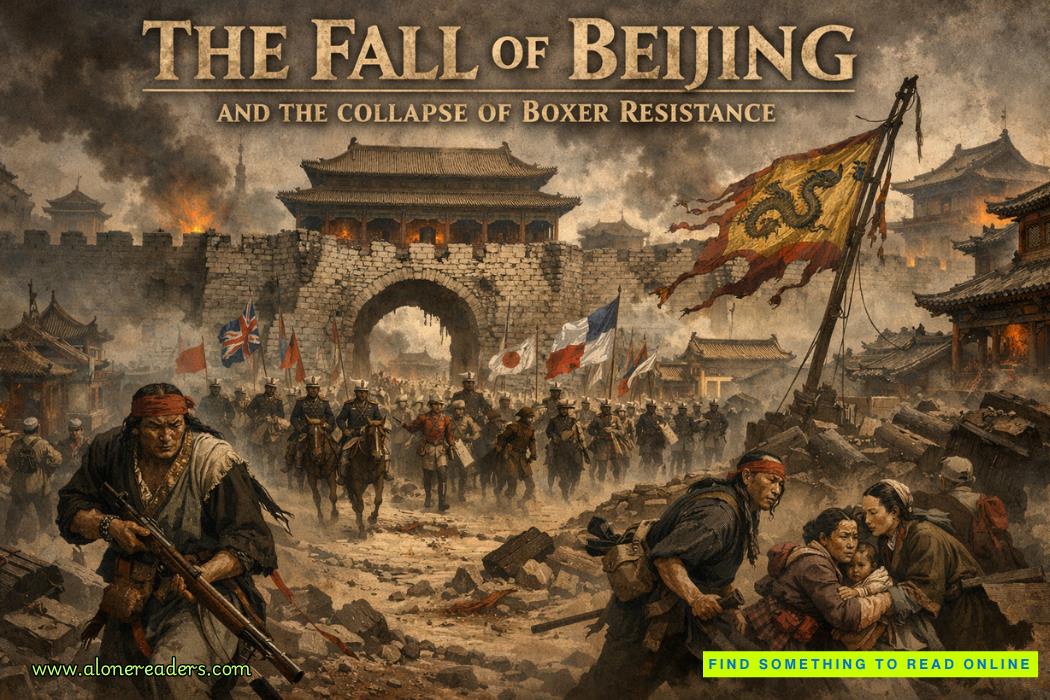
The summer of 1900 marked one of the most catastrophic turning points in Chinese history, when Beijing—seat of imperial authority for over five centuries—fell under foreign occupation, and with it collapsed the last organized resistance of the Boxer movement. What had begun as a rural, spiritual uprising fueled by resentment toward foreign domination ended in the heart of the Qing Empire, exposing the fragility of the dynasty and the irreversible imbalance between China and the industrialized world. The fall of Beijing was not merely a military defeat; it was a psychological and civilizational rupture that shattered the illusion of imperial invulnerability.
By the time foreign armies marched toward the capital, the Boxer movement had already transformed beyond its origins. Initially composed of impoverished peasants, martial artists, and secret-society members in northern China, the Boxers believed they were protected by ritual invincibility. Their slogan—“Support the Qing, destroy the foreign”—reflected a paradox that would ultimately doom them. They fought in the emperor’s name, yet their actions dragged the empire into a direct confrontation it could not survive. When the Qing court chose to align itself with the Boxers in June 1900, the fate of Beijing was effectively sealed.
Inside the capital, chaos reigned. Foreign legations were besieged, railways destroyed, missionaries killed, and Chinese Christian converts hunted through the streets. The Siege of the Legation Quarter became the symbolic center of the crisis, lasting fifty-five days and drawing global attention. Within the Forbidden City, the Qing leadership was fractured and fearful. Empress Dowager Cixi oscillated between confidence and panic, convinced by hardline advisers that spiritual nationalism could overpower modern artillery. This miscalculation proved catastrophic.
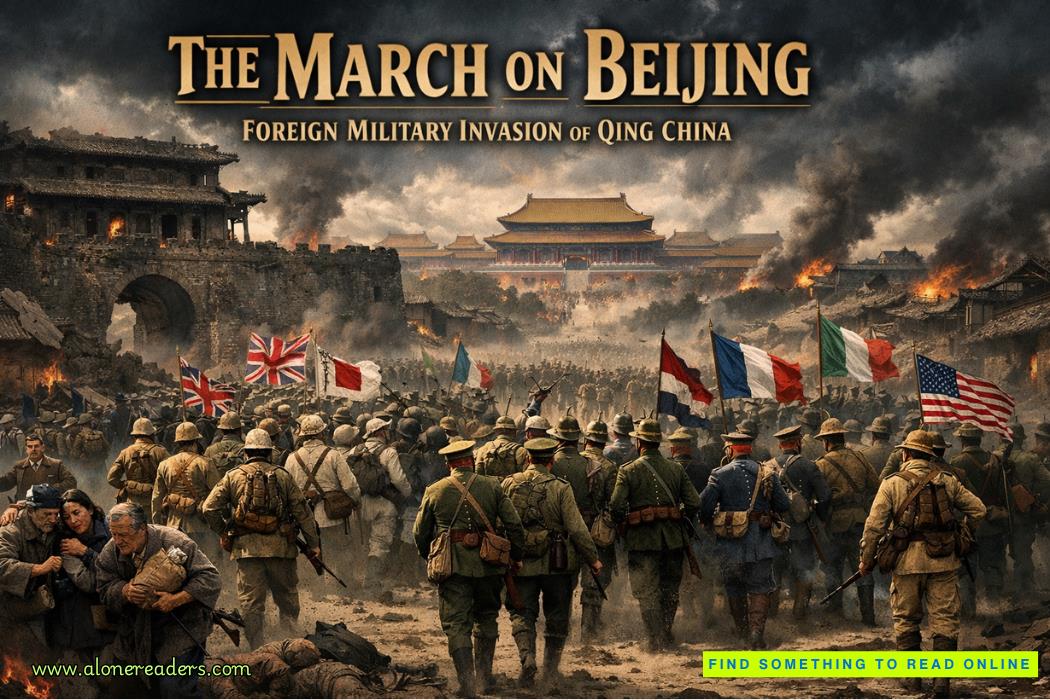
As the siege intensified, the Eight-Nation Alliance—Britain, Japan, Russia, France, the United States, Germany, Austria-Hungary, and Italy—mobilized a massive relief force. Their goal was explicit: break the siege, punish the rebels, and reassert foreign dominance. The first international expedition failed, humiliated by poor coordination and fierce resistance. But the second, far larger invasion force assembled with ruthless efficiency, advancing from Tianjin toward Beijing with modern rifles, machine guns, artillery, and naval support.
The Boxers, by contrast, fought with swords, spears, talismans, and faith. In villages along the route to Beijing, desperate resistance flared briefly before being obliterated. Entire communities were burned in reprisal. Chinese imperial troops, confused by contradictory orders, either fled or were annihilated. The myth of Boxer invulnerability collapsed under the thunder of Maxim guns, as bodies fell in numbers no spiritual belief could overcome.
When allied forces reached the outskirts of Beijing in mid-August 1900, the capital stood exposed. The city’s massive walls—once symbols of eternal security—proved meaningless against coordinated assaults. On August 14, foreign troops breached the defenses from multiple directions. Japanese forces entered first after intense fighting, followed by Russian, British, and American units. Beijing fell in a single day, a moment that reverberated across the empire like an earthquake.
Inside the city, panic consumed the population. Boxers scattered or discarded their symbols, suddenly ordinary men facing overwhelming retribution. Some tried to melt back into civilian life; others fought to the death. Qing soldiers abandoned posts. Officials fled in disguise. The imperial court, realizing the magnitude of the disaster, made its most humiliating decision: Empress Dowager Cixi and the Guangxu Emperor fled Beijing disguised as peasants, escaping westward toward Xi’an. The flight of the court was itself an admission of total collapse.
With the emperor gone, Beijing became a conquered city. Foreign troops occupied key districts, seized government buildings, and imposed military rule. What followed was not liberation but devastation. Looting spread rapidly, both sanctioned and unofficial. Palaces, temples, libraries, and private homes were stripped of treasures accumulated over centuries. Cultural plunder became a parallel campaign, with priceless artifacts shipped to Europe, Japan, and America, many never to return.
The collapse of Boxer resistance was swift and absolute. Deprived of leadership, belief, and popular support, remaining fighters were hunted down. Executions were carried out publicly to instill terror. Suspected sympathizers were punished regardless of proof. In many regions, retribution eclipsed justice. Villages accused of harboring Boxers were destroyed, and thousands of civilians perished in the aftermath rather than the uprising itself.
Perhaps most tragic was the disillusionment that followed. Survivors of the movement, once convinced of divine protection, now faced the horrifying realization that their faith had been exploited. The Qing court, which had encouraged resistance, abandoned its supporters without hesitation. The Boxers were transformed from patriots into scapegoats, blamed entirely for the catastrophe while imperial officials sought to preserve their own positions.
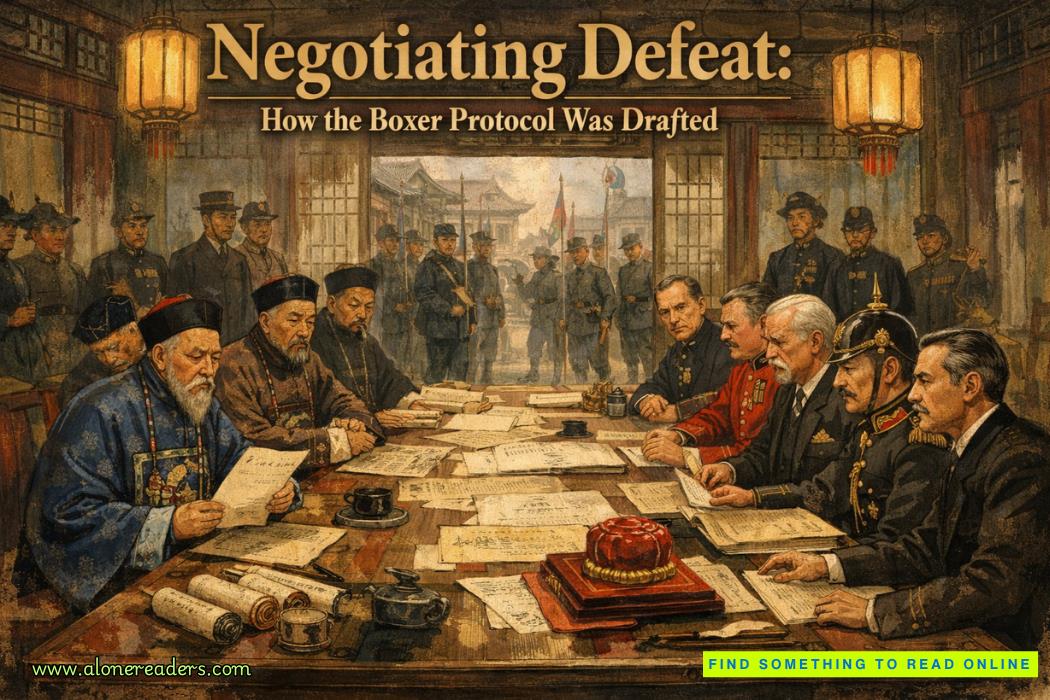
In September 1901, the consequences of Beijing’s fall were formalized through the Boxer Protocol, one of the most punitive treaties in modern history. China was forced to pay an enormous indemnity, station foreign troops permanently in the capital, dismantle coastal defenses, and execute or exile officials associated with the uprising. Beijing itself became a semi-occupied city, its sovereignty compromised at the very center of power.
The psychological impact was profound. For centuries, the Chinese worldview had placed the emperor at the center of civilization, ruling “all under heaven.” The occupation of Beijing by foreign soldiers shattered this cosmology. Ordinary citizens witnessed foreign flags flying over imperial streets, foreign boots marching past sacred spaces, and foreign commands overriding Chinese authority. The mandate of heaven appeared broken.
The collapse of Boxer resistance also destroyed the last illusion that China could repel Western powers through tradition alone. Intellectuals, students, and reformers drew harsh conclusions. Confucian orthodoxy, isolationism, and imperial stagnation were increasingly blamed for national humiliation. The fall of Beijing became the defining symbol of China’s weakness, referenced repeatedly in political discourse for decades to come.
Yet within the devastation lay the seeds of transformation. The shock forced reforms that had long been resisted. The Qing government reorganized education, abolished the civil service examination system, modernized the military, and cautiously experimented with constitutional ideas. These reforms came too late to save the dynasty, but they reshaped Chinese political consciousness. The memory of foreign occupation fueled nationalism, not mystical nationalism like the Boxers’, but a modern, ideological one.
For many Chinese thinkers, the lesson was brutal but clear: spiritual resistance without industrial strength was suicide. National survival required science, technology, unity, and political reform. The Boxer defeat thus became a dark teacher, shaping the minds of those who would later overthrow the Qing in 1911 and redefine China in the twentieth century.
The fall of Beijing also altered global perceptions of China. Once viewed as an ancient but formidable civilization, it was now widely considered a vulnerable prize in imperial competition. Foreign powers intensified economic penetration, carving spheres of influence across the country. China had not been colonized outright—but it had been subordinated, trapped between formal sovereignty and practical dependence.
In retrospect, the collapse of Boxer resistance was inevitable not because the cause lacked passion, but because it lacked structure, unity, and realism. The movement reflected genuine suffering—land loss, drought, missionary privilege, foreign immunity—but its methods belonged to an earlier age. Facing industrial empires, belief alone could not substitute for organization or strategy.
The tragedy of 1900 lies in this collision of worlds. The Boxers represented a society trying to defend itself using the tools of its past, while its enemies embodied the brutal efficiency of modern warfare. When these forces met at Beijing’s gates, history rendered its verdict without mercy.
The fall of Beijing was not simply the end of the Boxer Uprising; it was the collapse of an entire worldview. It marked the moment when imperial China fully confronted modernity—not as a choice, but as a consequence. The echoes of that defeat continued to shape Chinese nationalism, reform, revolution, and memory for generations.
In the ruins left behind, a new question emerged—one that would dominate the twentieth century: How could China rise again without losing itself? The answer would not come quickly. But it began in the ashes of Beijing, where resistance died, illusion faded, and history turned irrevocably forward.



 The Hundred Days Offensive: How the Allies Defeated Germany in World War I
 The Second Battle of the Marne: The Turning Point of World War I in 1918
 The Spring Offensive of 1918: Germany's Final Gamble to Win World War I
 The Treaty of Brest-Litovsk: How Russia Left World War I
 The Russian Revolution and World War I: How War Brought Down the Tsar
 The Zimmermann Telegram Explained: Germany's Secret Offer to Mexico in World War I