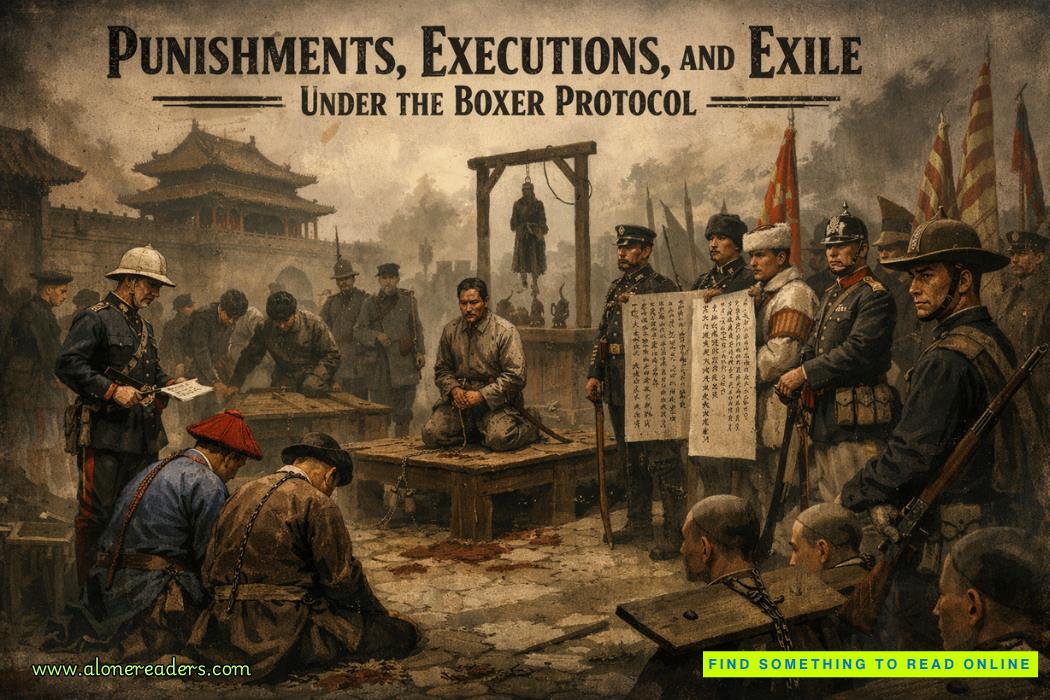
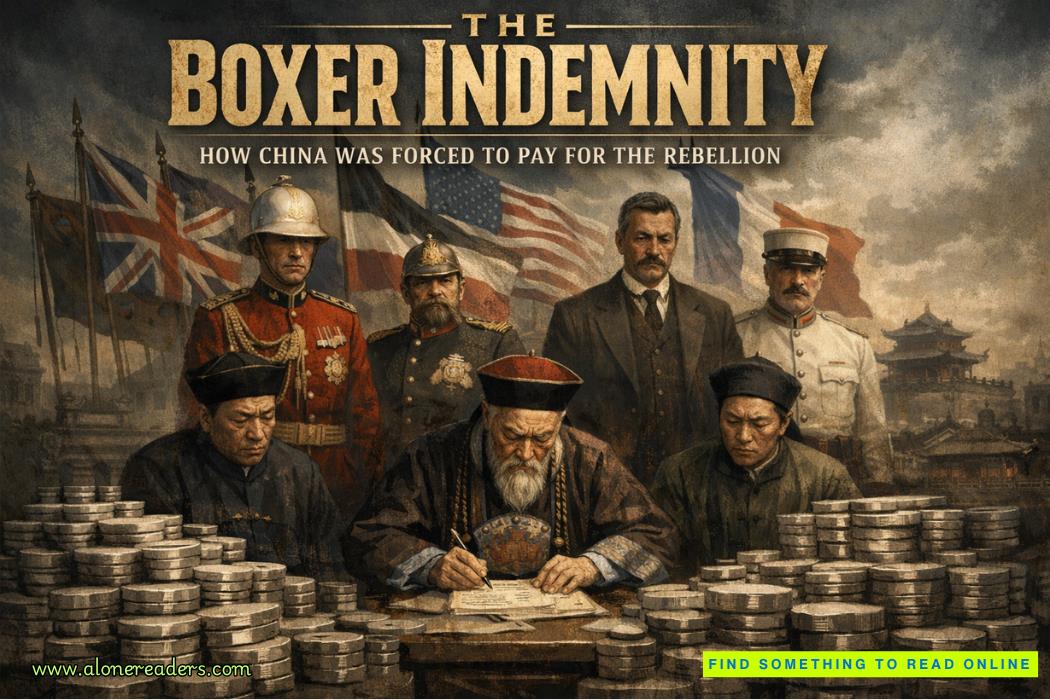
The Boxer Protocol of 1901 was not merely a diplomatic settlement following the violent upheaval of the Boxer Rebellion; it was a systematic instrument of retribution imposed upon the Qing Empire by the victorious foreign powers. While indemnities and military occupations captured international attention, the most psychologically devastating aspect of the agreement lay in its mandated punishments, executions, and forced exiles, which were designed to dismantle resistance at its roots and permanently weaken imperial authority. These penalties extended far beyond individual guilt, striking directly at the moral legitimacy of the Qing state itself.
In the aftermath of the rebellion, the Eight-Nation Alliance demanded visible justice. The foreign powers believed that punishment had to be public, humiliating, and irreversible to prevent future uprisings. The protocol therefore required the Qing government to identify, prosecute, execute, or exile officials and civilians accused of supporting the Boxers or resisting foreign troops. Importantly, this was not an internal judicial process guided by Chinese law, but rather a system dictated externally, with foreign governments exercising effective veto power over Qing decisions.
Executions became the most dramatic symbol of submission. High-ranking officials who had supported or tolerated the Boxer movement were singled out as examples. Some were accused of direct participation in anti-foreign violence, while others were condemned simply for failing to suppress it. The Qing court was compelled to sentence several senior officials to death, even when internal investigations suggested ambiguity or limited involvement. These executions were not negotiated; they were demanded as proof of loyalty to the new international order imposed upon China.
Among the most notable cases were officials who had authorized or failed to prevent attacks on foreign legations and missionaries. Their deaths were intended to communicate a single message: Chinese sovereignty no longer extended to deciding its own justice. In traditional imperial governance, punishment of high officials was an internal matter tied to Confucian moral evaluation. Under the Boxer Protocol, this centuries-old system was overridden, replaced by foreign insistence on exemplary punishment.
Exile, however, was often considered more cruel than execution. Officials sentenced to exile were stripped of rank, titles, and family privileges before being banished to remote border regions. These locations were deliberately chosen for their harsh climates, political insignificance, and isolation. Exile meant permanent separation from family, disgrace extending to descendants, and social death within Confucian society. For many officials, exile represented a living punishment with no possibility of redemption.
The protocol required that those exiled could never return to central China or reenter public service. This condition destroyed the traditional Qing mechanism of rehabilitation, in which disgraced officials might eventually regain favor. Under the new system, punishment was final and absolute. The goal was not correction but eradication of influence.
Punishments were not limited to high officials alone. Local magistrates, military commanders, and regional administrators across northern China were investigated under foreign pressure. Entire bureaucratic networks were dismantled. In some provinces, dozens of officials were dismissed, flogged, imprisoned, or exiled simultaneously, creating administrative paralysis. The Qing state found itself punished not only politically but functionally, unable to govern effectively in regions already devastated by war.
Civilian punishments were equally severe. Thousands of alleged Boxers or sympathizers were executed in the months following the rebellion. Many trials were conducted hastily, often relying on accusations from local elites seeking revenge or favor with occupying forces. The distinction between Boxer militants and ordinary villagers blurred, especially in rural areas where foreign troops and local collaborators exercised near-absolute authority. For countless families, punishment arrived without formal charges, documentation, or opportunity for defense.
Public executions served a theatrical purpose. They were staged to instill fear and discourage resistance. Bodies were displayed, notices posted, and rumors allowed to spread. These acts were meant to demonstrate that rebellion against foreign presence would be met not with negotiation, but annihilation. The violence of suppression thus became an extension of diplomacy by other means.
One of the most humiliating aspects of the protocol was the demand for imperial apologies tied directly to punishment. The Qing government was required to send envoys to Germany and Japan to formally apologize for the deaths of foreign officials. These missions were symbolic acts of submission, but they were inseparable from the internal punishments ordered at home. Together, they formed a ritual of defeat that marked the Qing dynasty as subordinate within the international hierarchy.
The forced punishment of officials loyal to the dynasty deeply destabilized court politics. Many remaining bureaucrats became risk-averse, prioritizing foreign approval over domestic stability. This shift altered governance behavior across the empire. Officials avoided decisive action, fearing that any resistance to foreign demands might later be reinterpreted as rebellion. As a result, the Qing administration entered a period of chronic paralysis and moral collapse.
The psychological impact of these punishments was immense. Confucian governance rested on the belief that the emperor ruled by moral authority granted by Heaven. When the emperor executed his own officials under foreign command, that moral foundation fractured. The population witnessed a dynasty unable to protect its servants, its territory, or its dignity. This erosion of legitimacy would later fuel revolutionary sentiment in the years leading to the 1911 collapse.
Exile also reshaped China’s intellectual geography. Many exiled scholars and officials carried resentment into remote regions, where they recorded bitter memoirs and political critiques. These writings, though often circulated privately, contributed to emerging nationalist consciousness. Ironically, the punishments intended to suppress dissent instead seeded long-term ideological resistance.
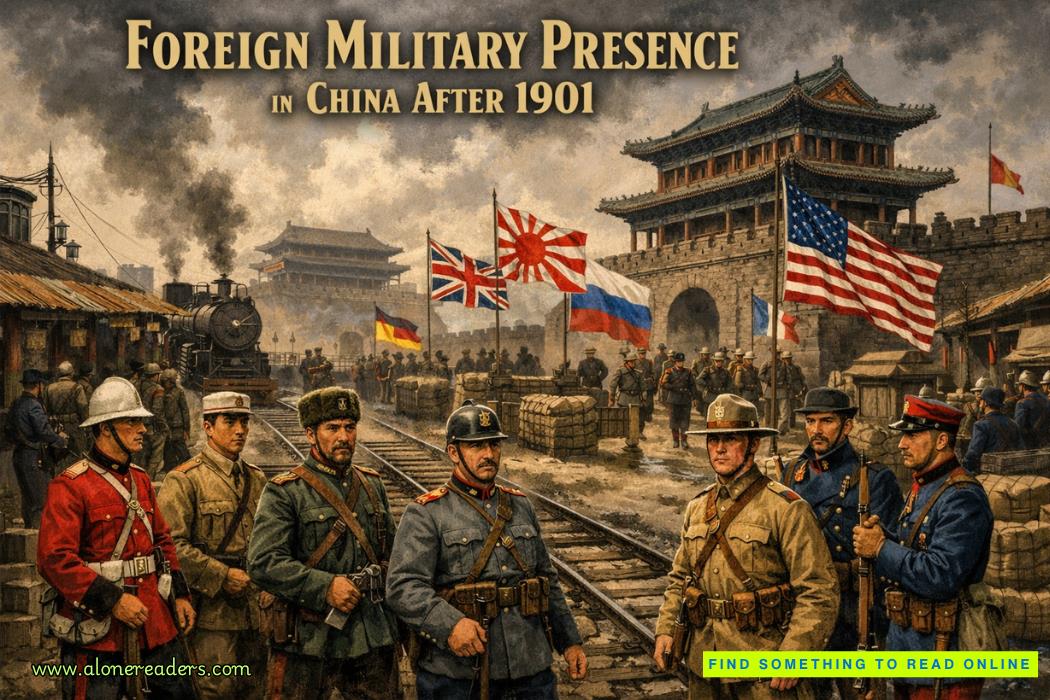
The protocol’s punitive framework also institutionalized collective responsibility. Entire communities suspected of Boxer sympathy were fined, disarmed, or placed under surveillance. Villages were forced to host foreign troops or provide labor and supplies. These measures blurred the boundary between justice and occupation, embedding punishment into daily life. For ordinary people, the Boxer Protocol was not a distant treaty but a constant presence shaping food, movement, and security.
Military punishment was another critical dimension. Qing troops involved in the rebellion were disbanded or restructured under foreign supervision. Weapons were confiscated, arsenals destroyed, and recruitment restricted. Officers associated with Boxer resistance were dismissed or punished, while new military reforms were imposed. These actions weakened traditional military loyalty and accelerated dependence on foreign-modeled systems.
The emotional toll of punishment extended across generations. Families of executed or exiled officials were stigmatized. Sons were barred from examinations, daughters faced diminished marriage prospects, and ancestral honors were revoked. In a society built upon lineage and reputation, this represented intergenerational punishment, far more enduring than death itself.
What made these punishments particularly devastating was their visibility. Unlike previous internal suppressions, this one unfolded under international observation. Foreign newspapers reported executions approvingly, framing them as necessary civilization. The narrative positioned Chinese suffering as a corrective lesson rather than a tragedy. This global validation further deepened domestic humiliation.
Yet beneath the surface of submission, resentment accumulated. Many Chinese intellectuals concluded that moral reform alone could not protect the nation. The punishments under the Boxer Protocol became a turning point in political thought, convincing reformers and revolutionaries alike that structural transformation—not imperial compromise—was necessary for survival.
The Qing court attempted to present the punishments as acts of internal reform, but few believed the narrative. Everyone understood that these measures were coerced. The emperor ruled, but not freely. Law existed, but not independently. Justice functioned, but not sovereignly. This realization permanently altered the Chinese understanding of statehood.
Executions ended lives, exile erased futures, and punishments dismantled institutions. Together, they formed a comprehensive system of control embedded within the Boxer Protocol. The treaty did not simply punish past rebellion; it engineered future compliance through fear, disgrace, and memory.
In historical perspective, these measures reveal the true nature of the Boxer Protocol. It was not peace restored through reconciliation, but stability enforced through humiliation. The punishments were calculated to break resistance while preserving enough administrative structure to collect indemnities and maintain order. This balance—between destruction and utility—defined imperialism at the turn of the twentieth century.
The legacy of these punishments endured long after foreign troops withdrew. They haunted court debates, shaped reform movements, and hardened nationalist resolve. When the Qing dynasty finally collapsed a decade later, many historians traced its moral disintegration back to the moment when it executed its own officials under foreign command.
In this sense, the punishments, executions, and exile imposed under the Boxer Protocol were not merely consequences of rebellion. They were the beginning of the end of imperial China, marking the point at which sovereignty became conditional, justice became negotiated, and authority became visibly hollow.
What survived was memory—of kneeling officials, silent executions, lonely exiles, and a dynasty forced to punish itself in order to exist. That memory would later fuel a new China determined never again to accept such humiliation.



 The Hundred Days Offensive: How the Allies Defeated Germany in World War I
 The Second Battle of the Marne: The Turning Point of World War I in 1918
 The Spring Offensive of 1918: Germany's Final Gamble to Win World War I
 The Treaty of Brest-Litovsk: How Russia Left World War I
 The Russian Revolution and World War I: How War Brought Down the Tsar
 The Zimmermann Telegram Explained: Germany's Secret Offer to Mexico in World War I