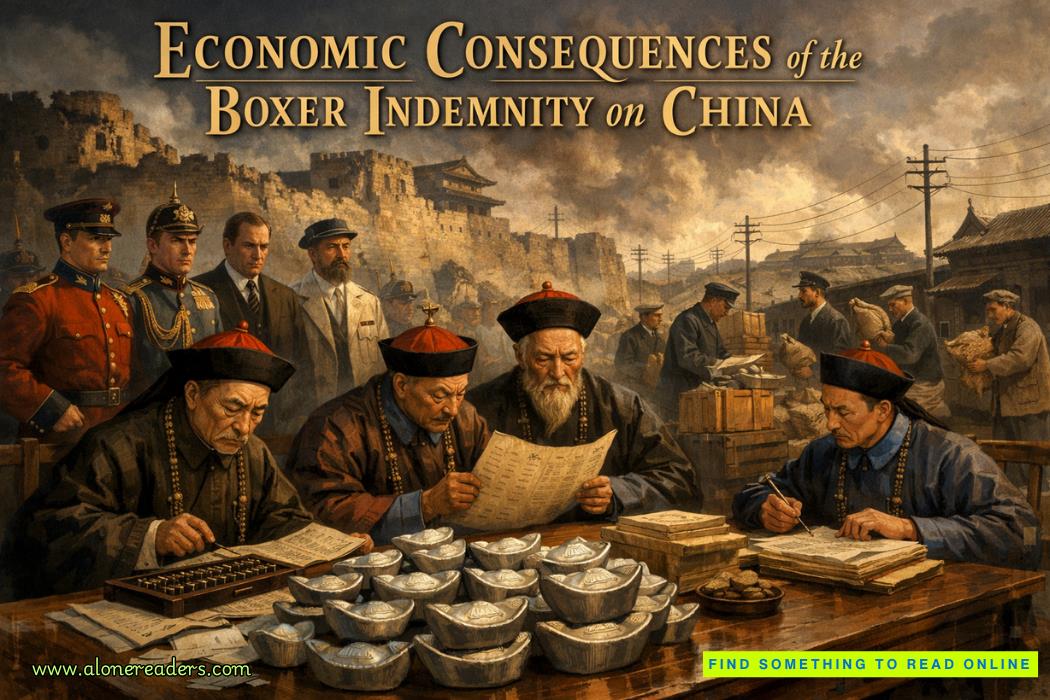
The Boxer Uprising of 1899–1900 culminated not merely in military defeat but in one of the most devastating financial settlements ever imposed on a sovereign state. The resulting Boxer Protocol of 1901 required the Qing dynasty to pay an indemnity so vast that its economic repercussions reverberated for decades. While the uprising itself was violently suppressed by the Eight-Nation Alliance, it was the financial clauses of the agreement that proved most transformative. The indemnity institutionalized foreign fiscal control, deepened structural weaknesses in China’s economy, altered monetary circulation, intensified domestic taxation, and accelerated both reform and revolution.
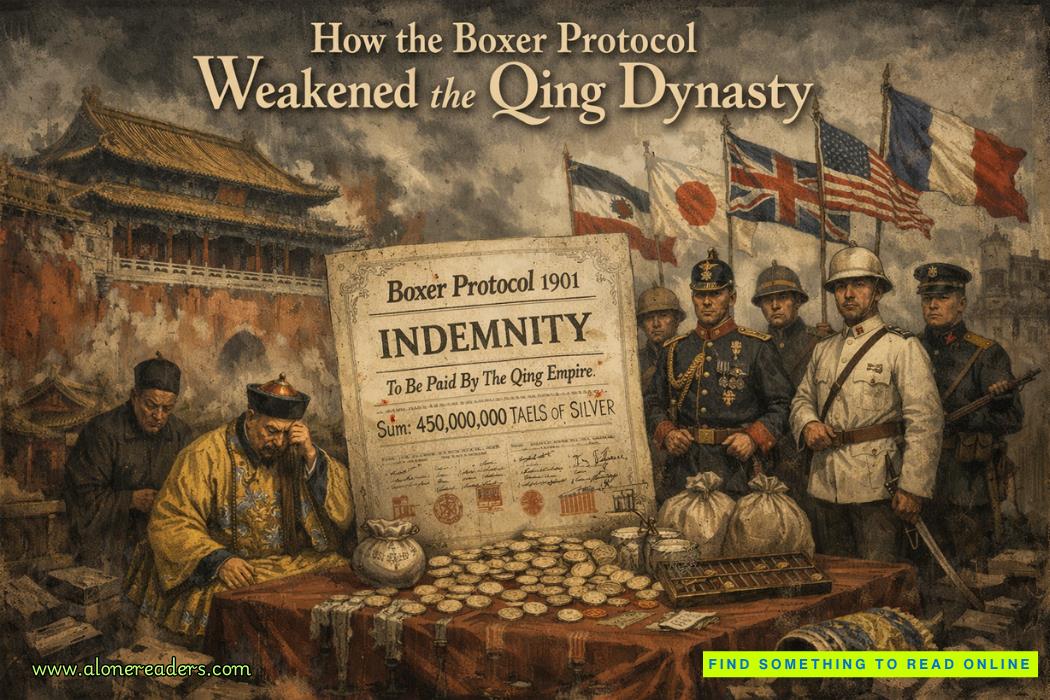
The indemnity was set at 450 million taels of silver, payable over 39 years with 4 percent annual interest. With interest included, the final sum exceeded 980 million taels. To grasp its magnitude, one must consider that the Qing government’s annual revenue at the turn of the century hovered around 80 to 100 million taels. In effect, the indemnity represented several years of total state income, locked into a long-term debt structure under foreign supervision. The obligation was not symbolic punishment; it was a binding fiscal regime that reshaped the state’s financial architecture.
The payment schedule required annual installments, which meant that the Qing state had to guarantee steady revenue streams insulated from internal instability. To ensure repayment, foreign powers secured control over specific revenue sources, particularly the Imperial Maritime Customs Service, which had already been staffed largely by foreigners since the mid-nineteenth century. Customs revenues became collateral for the indemnity, effectively placing a significant portion of China’s external trade income under foreign oversight. This arrangement entrenched what can be described as a quasi-colonial fiscal regime, even though China was never formally partitioned.
Beyond customs revenues, the Qing government pledged internal taxes, including the salt tax, one of the most reliable and traditional sources of state income. The dedication of these revenue streams to foreign debt servicing constrained fiscal flexibility. Funds that might have been used for infrastructure, military modernization, famine relief, or industrialization were instead redirected outward. The indemnity thus functioned as a long-term capital drain, inhibiting autonomous development at a critical historical juncture.
The economic consequences were not limited to macro-fiscal strain. At the local level, the burden translated into intensified taxation. Provincial authorities were compelled to extract additional revenue from already strained agrarian communities. In many regions, land taxes were raised, new surcharges were introduced, and informal exactions proliferated. The peasantry—still forming the backbone of China’s economy—absorbed much of this pressure. The result was growing rural indebtedness, land sales, and in some cases migration. The indemnity indirectly deepened social inequality by shifting imperial debt onto the agrarian population.
Monetary implications further complicated the picture. China’s economy at the time operated on a silver-based system, with taels functioning as accounting units and silver ingots serving as the principal medium for large transactions. The indemnity payments required vast quantities of silver to be remitted abroad. This outflow exerted deflationary pressure domestically. Silver scarcity could lead to contraction in credit and higher real debt burdens for borrowers. Although global silver flows and exchange rates fluctuated, the psychological impact of massive bullion transfers reinforced perceptions of national impoverishment.
At the same time, the indemnity was denominated in silver but calculated in gold terms relative to foreign currencies. Exchange rate volatility exposed China to additional risk. If the silver price fell relative to gold, the real burden of repayment increased. This vulnerability underscored the structural disadvantage of a semi-colonial economy integrated into a gold-standard world dominated by industrial powers.
Ironically, the fiscal crisis generated by the indemnity also catalyzed reform. Recognizing the insufficiency of traditional revenue mechanisms, the Qing court initiated late reforms aimed at centralizing taxation, modernizing financial administration, and strengthening economic governance. Efforts were made to reform the salt administration, rationalize provincial remittances, and introduce new forms of taxation. Modern banks began to emerge, and limited attempts at currency reform were undertaken. In this sense, the indemnity acted as a brutal stimulus, forcing an archaic fiscal structure into reluctant modernization.
One of the most consequential economic responses was the push for railway development and state control over infrastructure. Railways symbolized both modernization and foreign encroachment. Foreign loans financed many early lines, often tied to political concessions. As the Qing government sought to reclaim control, it attempted railway nationalization policies to consolidate revenue streams and prevent further foreign leverage. However, these policies provoked elite backlash, particularly among provincial gentry-investors. The Railway Protection Movement of 1911, partly rooted in disputes over compensation and control, became one of the immediate triggers of the Xinhai Revolution. Thus, economic restructuring driven by indemnity pressure contributed indirectly to dynastic collapse.
The indemnity also reshaped China’s relationship with foreign education and technology transfer. In an unexpected development, the United States later remitted a portion of its share of the indemnity, using the funds to finance Chinese students studying abroad. This policy facilitated the creation of institutions such as Tsinghua College, which trained a generation of Chinese intellectuals and reformers. While the indemnity symbolized humiliation, its partial redirection toward education introduced a complex legacy: financial coercion intertwined with intellectual modernization.
From a structural perspective, the indemnity entrenched foreign influence within China’s financial system. Foreign banks expanded operations in treaty ports, facilitating indemnity transfers and commercial finance. Their presence strengthened the integration of China’s coastal economy into global capital networks, often on unequal terms. Domestic banks struggled to compete. Economic sovereignty became increasingly fragmented, divided between provincial authorities, central officials, and foreign creditors.
The long amortization period—stretching into the 1940s—meant that the indemnity overlapped with dramatic political transformations: the fall of the Qing dynasty, the establishment of the Republic of China, warlord fragmentation, and later conflicts. Even as regimes changed, the debt obligations persisted. Servicing the indemnity constrained fiscal options for successive governments. The Republic inherited not only territory and institutions but also the financial shackles of imperial defeat.
Inflation and fiscal instability in the Republican era cannot be attributed solely to the indemnity, but the inherited debt burden exacerbated structural weakness. Military expenditures during the warlord period consumed large shares of revenue, leaving limited capacity for development. The need to maintain creditworthiness in foreign eyes further limited policy autonomy. The indemnity thus became part of a broader pattern in which sovereign debt served as an instrument of geopolitical leverage.
Economically, the indemnity reinforced regional disparities. Coastal provinces engaged in foreign trade were more directly tied to customs revenues and foreign finance, while inland provinces bore increased taxation pressures without equivalent commercial benefit. This imbalance contributed to uneven modernization. Industrialization proceeded in limited enclaves, particularly in treaty ports, while vast rural hinterlands remained undercapitalized.
It is also essential to analyze the indemnity within the context of global imperial finance. Indemnities were not unique to China; defeated powers often paid reparations. However, the Boxer Indemnity differed in duration and oversight. The enforcement mechanisms embedded within the Boxer Protocol ensured foreign monitoring of Chinese fiscal administration. This supervision curtailed sovereignty in ways that went beyond standard treaty obligations. Debt became a mechanism of control, not merely compensation.
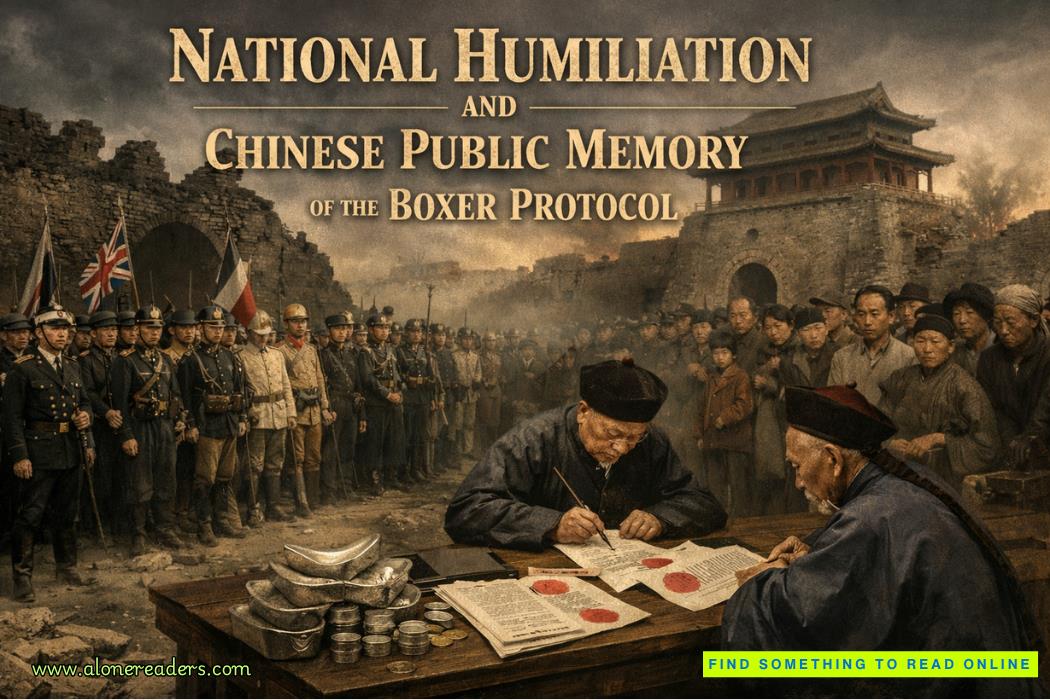
The psychological dimension cannot be ignored. The indemnity symbolized national humiliation and reinforced narratives of weakness. Economic hardship fueled nationalist discourse, linking fiscal reform with political renewal. Reformers argued that only structural transformation—constitutionalism, industrialization, educational modernization—could prevent further subjugation. Revolutionary groups, including those aligned with Sun Yat-sen, used the indemnity as evidence of Qing incompetence. Thus, financial pressure translated into ideological mobilization.
By the early twentieth century, China faced a paradox. The indemnity drained resources and constrained sovereignty, yet it also forced engagement with global economic norms. Modern accounting practices, centralized budgeting, and engagement with international finance emerged partly in response to external pressure. The late Qing reforms attempted to reconcile traditional imperial governance with modern fiscal statecraft. Whether these reforms were too late remains a matter of debate, but their impetus is inseparable from the indemnity’s shock.
Over time, portions of the indemnity were renegotiated or remitted, particularly after World War I and during shifting diplomatic alignments. Nonetheless, the cumulative impact of decades of payments had already shaped institutional trajectories. Infrastructure investment lagged behind potential. Military modernization remained incomplete. Fiscal extraction at the local level fostered resentment. The indemnity’s shadow stretched across generations.
In economic historiography, the Boxer Indemnity represents more than a punitive fine. It was a transformative fiscal regime that exposed the vulnerabilities of a pre-modern empire confronting industrialized powers. Its consequences reveal the interconnectedness of debt, sovereignty, taxation, monetary stability, and political legitimacy. The indemnity deepened immediate fiscal crisis, restructured revenue systems, intensified social burdens, stimulated reform, and contributed indirectly to revolutionary change.
Ultimately, the economic consequences of the Boxer Indemnity on China can be summarized as a convergence of three forces: capital outflow, institutional transformation, and political destabilization. The indemnity drained silver and constrained budgets; it forced administrative modernization under foreign oversight; and it amplified internal tensions that culminated in regime change. Far from being a peripheral clause in a diplomatic settlement, the indemnity functioned as a central pivot in China’s transition from imperial order to modern statehood.
In retrospect, the indemnity stands as a case study in how financial obligations imposed by victorious powers can reshape a nation’s economic trajectory for decades. It demonstrates that economic coercion can achieve structural penetration without formal colonization. It reveals how debt can both suffocate and stimulate reform. And it underscores a broader historical lesson: fiscal sovereignty is inseparable from political sovereignty.



 The Hundred Days Offensive: How the Allies Defeated Germany in World War I
 The Second Battle of the Marne: The Turning Point of World War I in 1918
 The Spring Offensive of 1918: Germany's Final Gamble to Win World War I
 The Treaty of Brest-Litovsk: How Russia Left World War I
 The Russian Revolution and World War I: How War Brought Down the Tsar
 The Zimmermann Telegram Explained: Germany's Secret Offer to Mexico in World War I