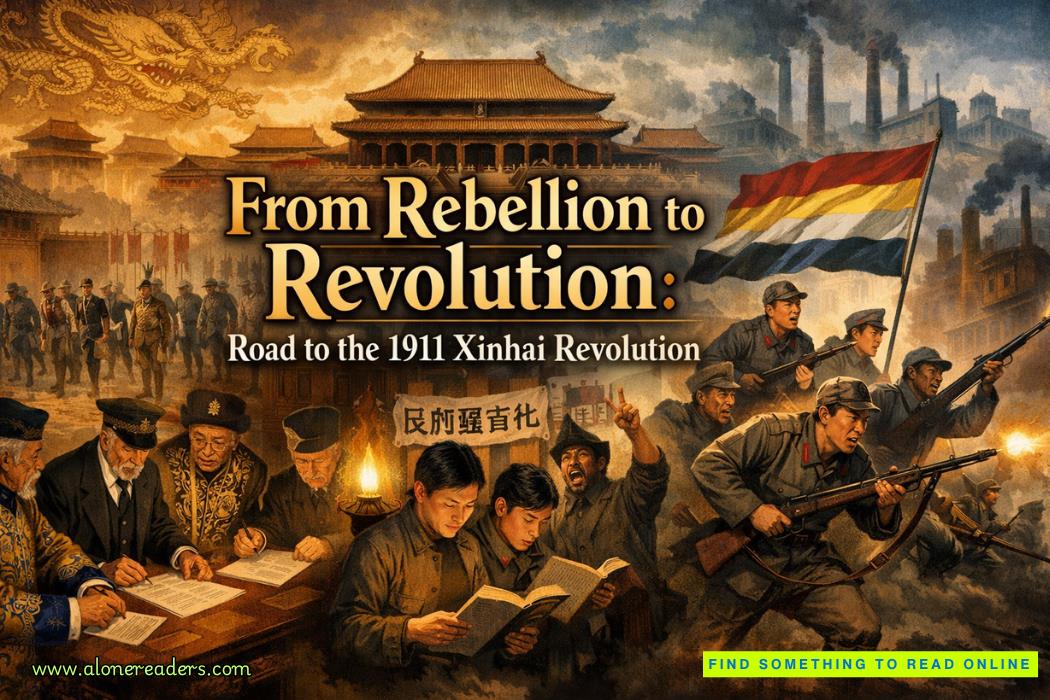
The fall of the Qing dynasty in 1911 was not the product of a single uprising nor the spontaneous collapse of an exhausted empire. It was the culmination of a decade-long transformation shaped by humiliation, reform, economic crisis, ideological ferment, and a series of calculated rebellions. To understand the 1911 Xinhai Revolution, one must begin with the deep scars left by the Boxer Protocol of 1901 and trace how a dynasty that survived rebellion and foreign invasion ultimately failed to survive its own reforms.
The Boxer Uprising of 1899–1900 had been a desperate eruption of anti-foreign fury, encouraged in part by conservative elements within the Qing court. When the Eight-Nation Alliance marched into Beijing and forced the imperial government to sue for peace, the resulting Boxer Protocol imposed staggering indemnities, foreign troop deployments, and further concessions to imperial powers. The treaty was more than a financial burden; it was a psychological rupture. China was no longer merely pressured by foreign powers—it was visibly subordinated.
The indemnity payments alone were crushing. The Qing government agreed to pay 450 million taels of silver over 39 years, with interest. This obligation required heavy new taxation and borrowing, deepening resentment among provincial elites and ordinary citizens alike. Meanwhile, foreign troops stationed along key railways symbolized national humiliation. The imperial court’s authority was weakened not only internationally but domestically. Officials, scholars, merchants, and military officers increasingly questioned whether the Manchu-led Qing dynasty could defend the nation.
Yet paradoxically, the Boxer catastrophe also catalyzed reform. Shocked by defeat, the Qing leadership initiated what became known as the “New Policies” reforms. These were not superficial adjustments; they were systemic transformations. The ancient civil service examination system, which had structured elite life for centuries, was abolished in 1905. Modern schools were established. Students were sent abroad in unprecedented numbers. Provincial assemblies were created. Military forces were reorganized along modern lines.
On the surface, this appeared to be a bold modernization drive. Beneath it, however, lay a destabilizing paradox: reform empowered the very social groups that would later overthrow the dynasty.
The abolition of the examination system disrupted the Confucian scholar-gentry class. For centuries, entry into government service had been the pathway to status and influence. With its removal, thousands of degree holders found themselves politically marginalized. Many turned to new ideologies—constitutionalism, nationalism, republicanism. Study abroad programs, particularly in Japan, exposed Chinese students to Meiji reforms and revolutionary thought. Japan’s successful modernization after the Meiji Restoration offered a powerful model: an Asian nation that resisted Western domination through rapid institutional transformation.
Among those influenced by overseas experiences was Sun Yat-sen, whose revolutionary activities had begun years earlier but gained momentum in the post-Boxer climate. His vision of overthrowing the Qing and establishing a republic resonated increasingly with urban intellectuals and overseas Chinese communities. Revolutionary societies multiplied. Secret networks spread across provinces. Though early uprisings failed, they built organizational infrastructure and ideological clarity.
Simultaneously, the Qing court’s attempt to modernize the military produced unintended consequences. The creation of the New Army brought disciplined, Western-trained officers and soldiers into positions of regional power. These units were often commanded by ambitious provincial leaders who enjoyed significant autonomy. Loyalty shifted from the dynasty to regional commanders. The military modernization that was meant to strengthen imperial authority instead decentralized coercive power.
Provincial assemblies, established in 1909 as part of tentative constitutional reforms, further redistributed political energy. Though their authority was limited, they provided platforms for local elites to debate policy and articulate grievances. These assemblies became incubators of political activism. Leaders there increasingly demanded a national parliament and genuine constitutional governance. The court promised a constitution—but projected its implementation nearly a decade into the future. This delay signaled reluctance rather than commitment.
By the late 1900s, three forces were converging: nationalist resentment against foreign intrusion, elite frustration with imperial half-measures, and military modernization that loosened central control. Still, the dynasty might have survived gradual reform had it not been for the railway crisis of 1911.
Railways were not merely transportation projects; they were symbols of sovereignty and economic modernization. Provincial investors had financed several railway ventures, seeing them as instruments of regional development and autonomy. When the Qing government, desperate for funds to repay foreign debts, decided to nationalize local railway projects and transfer them to foreign banks as collateral for loans, outrage exploded.
The Railway Protection Movement began in Sichuan but quickly spread. Merchants, gentry, and students protested what they perceived as betrayal. The nationalization policy transformed economic grievance into political rebellion. When Qing authorities attempted to suppress demonstrations, violence escalated. Troops were diverted to quell unrest in Sichuan, leaving other regions less defended.
This redeployment created a critical vulnerability. In Wuchang, a city in Hubei province, revolutionary cells had infiltrated New Army units. On October 10, 1911, an accidental explosion exposed their plans, forcing them into premature action. What followed was the Wuchang Uprising—an armed mutiny that rapidly seized control of the city. Crucially, local military leaders chose not to suppress the revolt decisively.
The uprising triggered a domino effect. Province after province declared independence from the Qing court. Within weeks, large swaths of southern and central China renounced imperial authority. What made this cascade remarkable was its speed. The revolution was less a single coordinated movement than a rapid reorientation of provincial loyalties. Governors and commanders calculated that alignment with revolutionary forces was safer than fidelity to a weakened throne.
At the heart of this transformation was the erosion of legitimacy. For centuries, dynastic rule rested on the Mandate of Heaven—a cosmological justification linking moral governance with divine favor. By 1911, that framework had lost persuasive power among reformist elites. Nationalism replaced cosmology. The question was no longer whether the dynasty was morally virtuous, but whether it could defend China as a sovereign nation-state.
The court attempted last-minute concessions. It accelerated constitutional promises and appointed Yuan Shikai, a powerful general, to suppress the rebellion. Yuan’s role was pivotal. As commander of the Beiyang Army, he possessed the most formidable military force in China. Yet Yuan was pragmatic. Rather than annihilate the revolutionaries, he negotiated.
Negotiation signaled that the Qing dynasty no longer commanded unquestioned loyalty from its own generals. Yuan recognized that the monarchy was untenable. In early 1912, after negotiations between revolutionary representatives and Yuan, the last emperor, Puyi, abdicated. The Qing dynasty ended not with the storming of the Forbidden City but with a formal edict of abdication.
The revolution succeeded not because the Qing state collapsed militarily, but because it collapsed politically.
It is essential to appreciate that the Xinhai Revolution did not instantly create stability. The newly declared Republic of China faced immense fragmentation. Yuan Shikai soon attempted to consolidate personal power, even declaring himself emperor in 1915—a move that failed disastrously. Warlordism, regional militarization, and political instability followed. Yet the symbolic rupture of 1911 was irreversible. For the first time in over two millennia, China was no longer governed by a hereditary monarchy.
When viewed through the lens of the Boxer Protocol, the revolution appears less sudden and more structural. The humiliation of 1901 exposed systemic weakness. The indemnities strained finances. Foreign encroachment intensified nationalist sentiment. Reform efforts disrupted traditional elites. Military modernization decentralized force. Economic mismanagement provoked mass protest. Each step weakened the connective tissue holding the empire together.
From rebellion to revolution, the trajectory was cumulative rather than explosive.
The Boxer Uprising had been reactionary—a violent attempt to expel foreign influence and restore traditional order. The Xinhai Revolution, by contrast, was future-oriented. It sought to reconstruct China as a modern nation-state. The difference between the two movements reflects a profound shift in political imagination. In 1900, many still believed salvation lay in defending the old system. By 1911, increasing numbers believed salvation required dismantling it.
This transformation was intellectual as much as political. Newspapers proliferated. Urban centers became hubs of debate. Concepts such as citizenship, sovereignty, and constitutionalism entered mainstream discourse. Overseas Chinese communities provided funding and ideological support. The Qing court’s incremental reforms could not keep pace with the accelerating circulation of ideas.
Moreover, demographic and economic pressures compounded instability. Population growth strained agrarian resources. Urbanization disrupted rural hierarchies. Industrial enterprises, though limited, created new labor constituencies. These shifts did not alone cause revolution, but they created a society more volatile and less deferential than in previous centuries.
The revolution’s geographic pattern also reveals its nature. Southern provinces, historically less integrated into Manchu power structures, were quicker to declare independence. Northern regions, closer to the imperial court and more dependent on central patronage networks, were slower. This regional divergence foreshadowed the fragmentation that would plague the republic.
In analyzing the road to 1911, one must resist simplistic narratives of inevitable decline. The Qing dynasty had demonstrated resilience before. It had suppressed the Taiping Rebellion in the mid-19th century and navigated earlier crises. What distinguished the early 20th century was the convergence of global pressures and domestic transformation. The international system had shifted toward imperial competition. Japan’s rise altered regional dynamics. Industrial warfare and financial capitalism reshaped power politics.
Within this environment, partial reform proved destabilizing. Reform raised expectations faster than the state could fulfill them. By promising constitutionalism yet delaying it, by modernizing the military yet losing control of it, by nationalizing railways yet alienating investors, the Qing court eroded trust.
The abdication of 1912 closed one chapter but opened another fraught with uncertainty. The ideals articulated by revolutionaries—national unity, popular sovereignty, modernization—would remain central to Chinese politics throughout the 20th century. Competing regimes, from warlord governments to nationalist and communist states, all claimed to fulfill the unfinished promise of 1911.
Thus, the Xinhai Revolution was both an ending and a beginning. It ended imperial rule but did not resolve the deeper questions of political order. Those questions would shape decades of conflict.
Looking back, the path from the Boxer Protocol to the revolution illustrates a fundamental dynamic of political change: humiliation can provoke reform; reform can generate expectation; unmet expectation can fuel revolution. The Qing dynasty’s final decade was defined by this accelerating cycle.
From rebellion against foreigners to revolution against the throne, China’s early twentieth century was a laboratory of modern state formation.
The story of 1911 is not merely about the fall of a dynasty. It is about the birth pains of modern China—a transformation born from defeat, shaped by reform, and realized through revolution.




 The Hundred Days Offensive: How the Allies Defeated Germany in World War I
 The Second Battle of the Marne: The Turning Point of World War I in 1918
 The Spring Offensive of 1918: Germany's Final Gamble to Win World War I
 The Treaty of Brest-Litovsk: How Russia Left World War I
 The Russian Revolution and World War I: How War Brought Down the Tsar
 The Zimmermann Telegram Explained: Germany's Secret Offer to Mexico in World War I