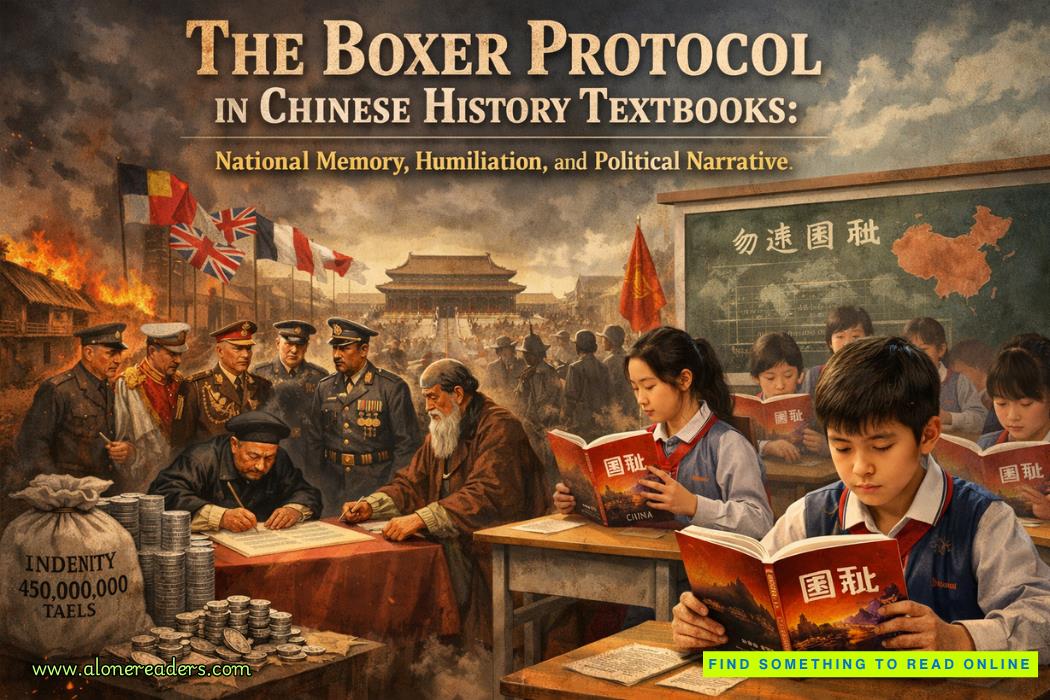
The Boxer Protocol of 1901 occupies a uniquely charged position within Chinese historical consciousness, not merely as a diplomatic agreement but as a symbolic cornerstone of national humiliation and awakening. In Chinese history textbooks and broader narratives, its representation is neither neutral nor purely descriptive; rather, it is deeply embedded within a structured ideological framework that reflects evolving political priorities, educational reforms, and the construction of modern Chinese identity. The treatment of the Boxer Protocol reveals how history is curated to serve didactic, nationalistic, and legitimizing purposes, transforming a complex historical episode into a powerful narrative tool.
At its core, the Boxer Protocol marked the culmination of the Boxer Uprising, an anti-foreign, anti-Christian movement that spiraled into a broader conflict involving the Qing dynasty and the Eight-Nation Alliance. The resulting treaty imposed severe penalties on China, including massive indemnities, foreign troop stationing rights, and punitive measures against officials. However, in Chinese textbooks, the emphasis is not on diplomatic nuance or the internal fragmentation of Qing authority but rather on the asymmetry of power and the injustice inflicted upon China. This selective focus is critical, as it frames the event within the larger discourse of the “Century of Humiliation,” a concept that underpins much of modern Chinese historiography.
Textbooks in the People’s Republic of China consistently present the Boxer Protocol as an embodiment of imperialist aggression and national weakness. The narrative structure often follows a linear progression: foreign encroachment leads to domestic unrest, which is then brutally suppressed by external powers, culminating in humiliating concessions. Within this framework, the Boxer Protocol is portrayed as the final and most severe blow in a sequence of unequal treaties, reinforcing the perception of China as a victim of global imperialism. This portrayal is not incidental but deliberately constructed to evoke emotional resonance among students, fostering a sense of historical grievance and collective memory.
A striking feature of these narratives is the moral polarization between China and foreign powers. The Eight-Nation Alliance is typically depicted as exploitative and aggressive, motivated by economic greed and imperial ambition. In contrast, Chinese actors—even those involved in the Boxer movement—are often portrayed with a degree of sympathy or contextual justification. While modern scholarship may highlight the Boxers’ xenophobia and violence, textbooks tend to frame them as patriotic but misguided, emphasizing their resistance to foreign domination rather than their ideological extremism. This reframing serves to align the Boxers with a broader tradition of anti-imperialist struggle, integrating them into a national narrative of resistance.
Equally important is the treatment of the Qing government’s role. Rather than presenting the Qing leadership as uniformly complicit or incompetent, textbooks often depict a fragmented and pressured regime, caught between internal rebellion and external coercion. This nuanced portrayal allows for a dual narrative: on one hand, it acknowledges the weakness and corruption of late Qing governance, while on the other, it avoids assigning excessive blame to Chinese actors. The ultimate responsibility is shifted toward foreign powers, reinforcing the overarching theme of external oppression.
The indemnity imposed by the Boxer Protocol is a central element in textbook narratives, often highlighted with precise figures to underscore its magnitude. The financial burden is presented not merely as an economic issue but as a symbol of exploitation and subjugation. Textbooks frequently emphasize how these payments strained China’s economy, delayed modernization, and entrenched foreign influence. By quantifying the indemnity and linking it to long-term consequences, the narrative transforms abstract historical events into tangible injustices, making the past more accessible and emotionally impactful for students.
Another critical dimension is the integration of the Boxer Protocol into the broader trajectory of national rejuvenation. In contemporary Chinese textbooks, the narrative does not end with humiliation; instead, it transitions into a story of recovery and resurgence. The suffering associated with the Boxer Protocol is juxtaposed with the achievements of modern China, creating a contrast that highlights progress and resilience. This structure serves a clear pedagogical purpose: it instills pride in China’s current status while reminding students of the costs of weakness and disunity.
The concept of historical continuity is central to this approach. The Boxer Protocol is not treated as an isolated घटना but as part of an ongoing narrative that extends into the present. Textbooks often draw implicit or explicit connections between past humiliations and contemporary geopolitical dynamics, encouraging students to view history as a living force that shapes current policy and national identity. This linkage reinforces the idea that understanding events like the Boxer Protocol is essential for safeguarding China’s sovereignty and preventing a recurrence of past injustices.
Visual elements in textbooks further amplify these narratives. Illustrations of foreign troops in Beijing, images of destroyed buildings, and depictions of treaty signings are carefully selected to evoke a sense of loss and indignity. These visual cues complement the textual narrative, creating a multi-layered educational experience that appeals to both intellectual and emotional engagement. The use of such imagery is not merely decorative but strategic, reinforcing key themes and ensuring that the lessons of the Boxer Protocol are deeply internalized.
Over time, the portrayal of the Boxer Protocol in Chinese textbooks has evolved, reflecting shifts in political ideology and historiographical priorities. During the Maoist era, the emphasis was heavily on class struggle and anti-imperialism, with the Boxers depicted as proto-revolutionary forces. In the reform era, while anti-imperialist themes remain prominent, there is a greater focus on national development and modernization, with the Boxer Protocol serving as a cautionary tale about the consequences of technological and institutional backwardness. This evolution demonstrates the adaptability of historical narratives, which are continually reshaped to align with contemporary objectives.
Despite these changes, certain core themes have remained remarkably consistent. The narrative of humiliation, the emphasis on foreign aggression, and the integration of the Boxer Protocol into a broader story of national revival are enduring elements. These themes reflect a deliberate effort to construct a cohesive historical identity, one that balances victimhood with resilience and memory with aspiration. By maintaining this continuity, textbooks ensure that each generation of students inherits a shared understanding of the past.
Critically, the representation of the Boxer Protocol also raises questions about historical selectivity and omission. While textbooks provide detailed accounts of foreign actions and treaty terms, they often downplay internal factors such as factionalism within the Qing court, the complexity of Boxer motivations, and the broader socio-economic context of the uprising. This selective emphasis is not necessarily a distortion but a prioritization, reflecting the educational goals of fostering national unity and historical consciousness. However, it also highlights the tension between academic historiography and state-sponsored narratives.
From a pedagogical perspective, the use of the Boxer Protocol as a teaching tool is highly effective. It encapsulates multiple themes—imperialism, resistance, modernization, and national identity—within a single घटना, making it an ideal case study for illustrating broader historical processes. By presenting the protocol within a structured narrative framework, textbooks enable students to grasp complex concepts while also engaging with emotionally resonant material. This dual function underscores the role of history education as both an intellectual and ideological enterprise.
The broader societal impact of these narratives cannot be overstated. The portrayal of the Boxer Protocol contributes to a collective memory that influences public discourse, foreign policy attitudes, and national identity. The repeated emphasis on humiliation and recovery fosters a sense of vigilance and determination, shaping how Chinese citizens perceive both their past and their place in the world. In this sense, textbooks are not merely educational tools but instruments of cultural and political continuity.
In examining the Boxer Protocol through the lens of Chinese history textbooks, it becomes clear that history is not simply recorded but actively constructed. The choices of emphasis, language, and structure reflect a deliberate effort to shape perception and meaning. The protocol itself, while a historical document, has been transformed into a narrative symbol—one that encapsulates the challenges and aspirations of modern China.
Ultimately, the representation of the Boxer Protocol in Chinese textbooks reveals a sophisticated interplay between history, memory, and identity. It demonstrates how a single event can be reinterpreted and repurposed to serve evolving national needs, becoming a cornerstone of collective consciousness. Through this process, the Boxer Protocol transcends its original context, emerging as a powerful narrative that continues to influence how China understands its past and envisions its future.



 The Hundred Days Offensive: How the Allies Defeated Germany in World War I
 The Second Battle of the Marne: The Turning Point of World War I in 1918
 The Spring Offensive of 1918: Germany's Final Gamble to Win World War I
 The Treaty of Brest-Litovsk: How Russia Left World War I
 The Russian Revolution and World War I: How War Brought Down the Tsar
 The Zimmermann Telegram Explained: Germany's Secret Offer to Mexico in World War I