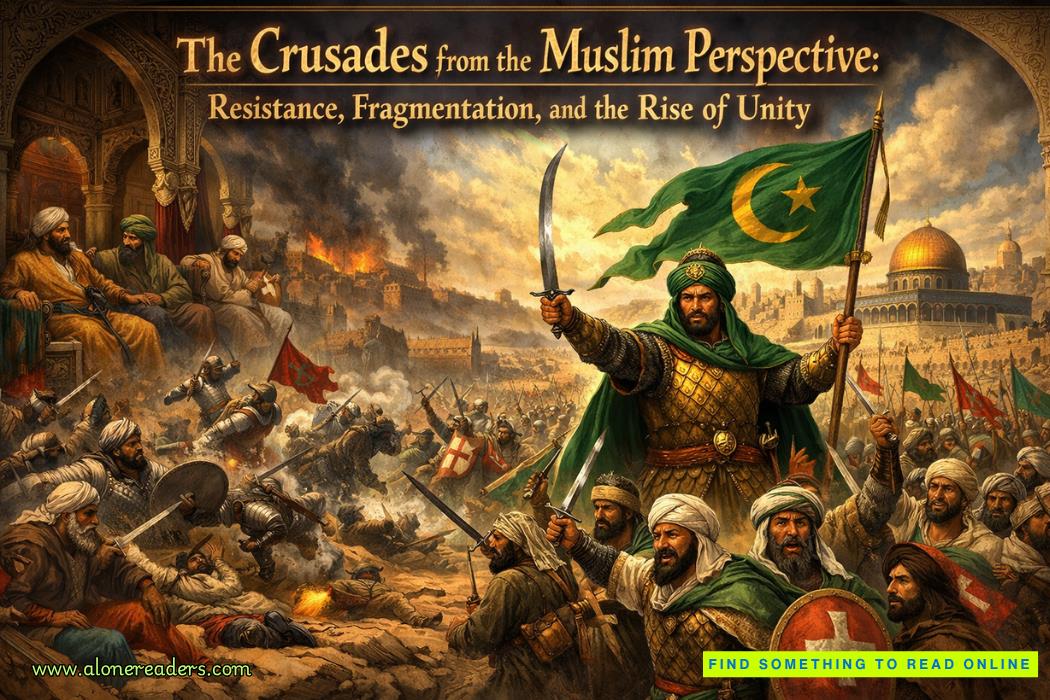
The Crusades, often framed in Western historiography as a series of religious wars initiated by Latin Christendom, take on an entirely different meaning when viewed through the lens of the Muslim world. For Muslim chroniclers, jurists, and political leaders, these campaigns were not merely expeditions for holy sites but invasions that disrupted an already complex and often fragmented political and cultural landscape. To understand the Crusades from the Muslim perspective is to engage with a narrative of shock, adaptation, internal struggle, and eventual consolidation.
At the close of the 11th century, the Islamic world was far from unified. The Abbasid Caliphate in Baghdad retained symbolic religious authority but had lost much of its political control. Real power lay in regional dynasties such as the Seljuk Turks, the Fatimids in Egypt, and numerous local rulers across Syria and Mesopotamia. This fragmentation was perhaps the single most critical factor that shaped the initial Muslim response to the Crusades. When the First Crusade began in 1096, it did not encounter a unified Islamic resistance but rather a patchwork of rival states more concerned with their immediate political interests than with the broader threat posed by the advancing European armies.
The arrival of the Crusaders was initially perceived not as a unified religious invasion but as another wave of foreign incursions, similar to earlier Byzantine or Turkic conflicts. Muslim chroniclers of the time often referred to the Crusaders as “Franks,” emphasizing their foreignness rather than their religious motivation. This distinction is crucial, as it reveals that the early Muslim understanding of the Crusades was not framed primarily in terms of a global religious war. Instead, it was seen as a regional disturbance, albeit a violent and disruptive one.
The fall of Jerusalem in 1099 marked a turning point in Muslim perception. The massacre that followed, in which thousands of Muslim and Jewish inhabitants were killed, left a profound psychological and cultural impact. For Muslim observers, this event symbolized not only military defeat but also a profound moral outrage. Chroniclers described the streets of Jerusalem running with blood, emphasizing the brutality of the conquest and framing it as a violation of both human and religious norms. This narrative would later serve as a powerful rallying point for calls to resistance.
Despite the severity of these events, the Muslim response in the immediate aftermath remained fragmented. Local rulers often prioritized their own survival and political ambitions over collective action. Alliances between Muslim states and Crusader forces were not uncommon, illustrating the pragmatic, and at times opportunistic, nature of medieval politics. This period highlights a critical tension within the Muslim world: the struggle between political pragmatism and the emerging ideal of religious unity against a common enemy.
The concept of jihad, or struggle in the path of God, began to take on renewed significance during this period. While jihad had always been an important aspect of Islamic thought, it was not always actively emphasized in political or military contexts. However, the presence of Crusader states in the Levant gradually transformed jihad into a central ideological tool for mobilization. Religious scholars and preachers began to frame the conflict as a defensive jihad, emphasizing the duty of Muslims to reclaim their lands and protect their faith. This ideological shift was instrumental in reshaping the Muslim response to the Crusades from fragmented resistance to a more unified and purpose-driven effort.
One of the earliest figures to embody this shift was Imad ad-Din Zengi, the ruler of Mosul and Aleppo. His capture of Edessa in 1144 marked the first major Muslim victory against the Crusader states and demonstrated the potential of coordinated action. Zengi’s campaigns were not solely military endeavors; they were accompanied by a deliberate effort to promote the idea of jihad as a unifying force. His success laid the groundwork for a new phase in the conflict, one characterized by increasing Muslim cohesion and strategic coordination.
Zengi’s legacy was carried forward by his son, Nur ad-Din, who further developed the ideological and political framework necessary for sustained resistance. Nur ad-Din emphasized justice, religious piety, and the importance of unity among Muslim rulers. He invested in religious institutions, supported scholars, and sought to legitimize his rule through adherence to Islamic principles. Under his leadership, the concept of jihad evolved into both a moral obligation and a political strategy, bridging the gap between religious ideals and practical governance.
The culmination of this transformation came with the rise of Salah ad-Din, known in the West as Saladin. His leadership marked a decisive turning point in the Muslim perspective on the Crusades. Unlike many of his predecessors, Saladin was able to unify significant portions of the Muslim world, including Egypt and Syria, under his rule. This unity was not merely political; it was deeply rooted in a shared sense of purpose and identity, shaped by decades of conflict with the Crusader states.
Saladin’s recapture of Jerusalem in 1187 was a moment of profound significance. Unlike the Crusader conquest of 1099, his victory was characterized by restraint and a commitment to ethical conduct. The city’s inhabitants were largely spared, and many were allowed to leave peacefully. This contrast was not lost on contemporary observers and became a central element of the Muslim narrative, emphasizing the moral superiority of their cause. Saladin’s actions reinforced the idea that the struggle against the Crusaders was not only about reclaiming territory but also about upholding principles of justice and compassion.
From the Muslim perspective, the Crusades were not a single, continuous conflict but a series of encounters that evolved over time. The later Crusades, particularly those targeting Egypt and other regions, were often seen as extensions of the same threat but lacked the initial shock and urgency of the early campaigns. By this stage, the Muslim world had developed more effective strategies for dealing with external invasions, and the ideological framework of jihad had become firmly established.
It is also important to consider the cultural and intellectual dimensions of the Muslim response to the Crusades. While the conflict was primarily military, it also had significant implications for trade, diplomacy, and knowledge exchange. Despite the hostility, there were periods of coexistence and interaction between Muslim and Crusader states. These interactions, though often overlooked, contributed to a complex relationship that went beyond simple opposition. Trade agreements, diplomatic missions, and even cultural exchanges occurred, reflecting the multifaceted nature of the medieval Mediterranean world.
Muslim chroniclers such as Ibn al-Qalanisi, Usama ibn Munqidh, and Ibn al-Athir provide invaluable insights into how the Crusades were perceived at the time. Their writings reveal a nuanced understanding of the conflict, one that acknowledges both the brutality of the Crusaders and the internal weaknesses of the Muslim world. This self-critical perspective is particularly significant, as it highlights the role of internal division in shaping the course of events. Rather than attributing their difficulties solely to external forces, these chroniclers often emphasized the need for reform and unity within their own societies.
In the long term, the Crusades had a lasting impact on the Muslim world. They contributed to the consolidation of political power in certain regions, the strengthening of religious identity, and the development of new military and administrative structures. At the same time, they also exposed vulnerabilities and highlighted the consequences of fragmentation. The memory of the Crusades would continue to resonate in Muslim societies for centuries, shaping historical narratives and influencing perceptions of relations with the West.
It is essential to recognize that the Muslim perspective on the Crusades is not monolithic. Different regions, communities, and individuals experienced and interpreted these events in various ways. However, certain themes remain consistent: the initial shock of invasion, the challenges of internal division, the gradual emergence of unity, and the enduring importance of moral and religious principles. These themes provide a framework for understanding how the Crusades were not only a series of battles but also a transformative period in Islamic history.
Ultimately, viewing the Crusades from the Muslim perspective offers a more comprehensive and balanced understanding of this complex historical phenomenon. It challenges simplistic narratives and highlights the interplay between politics, religion, and culture. By examining the experiences and responses of the Muslim world, we gain deeper insight into the dynamics of conflict and the processes through which societies adapt and evolve in the face of external threats.
The Crusades, in this light, are not merely a story of confrontation between two civilizations but a reflection of the internal and external forces that shape human history. For the Muslim world, they represent a period of trial and transformation, marked by both suffering and resilience. It is within this duality that the true significance of the Crusades from the Muslim perspective can be understood.



 The Hundred Days Offensive: How the Allies Defeated Germany in World War I
 The Second Battle of the Marne: The Turning Point of World War I in 1918
 The Spring Offensive of 1918: Germany's Final Gamble to Win World War I
 The Treaty of Brest-Litovsk: How Russia Left World War I
 The Russian Revolution and World War I: How War Brought Down the Tsar
 The Zimmermann Telegram Explained: Germany's Secret Offer to Mexico in World War I