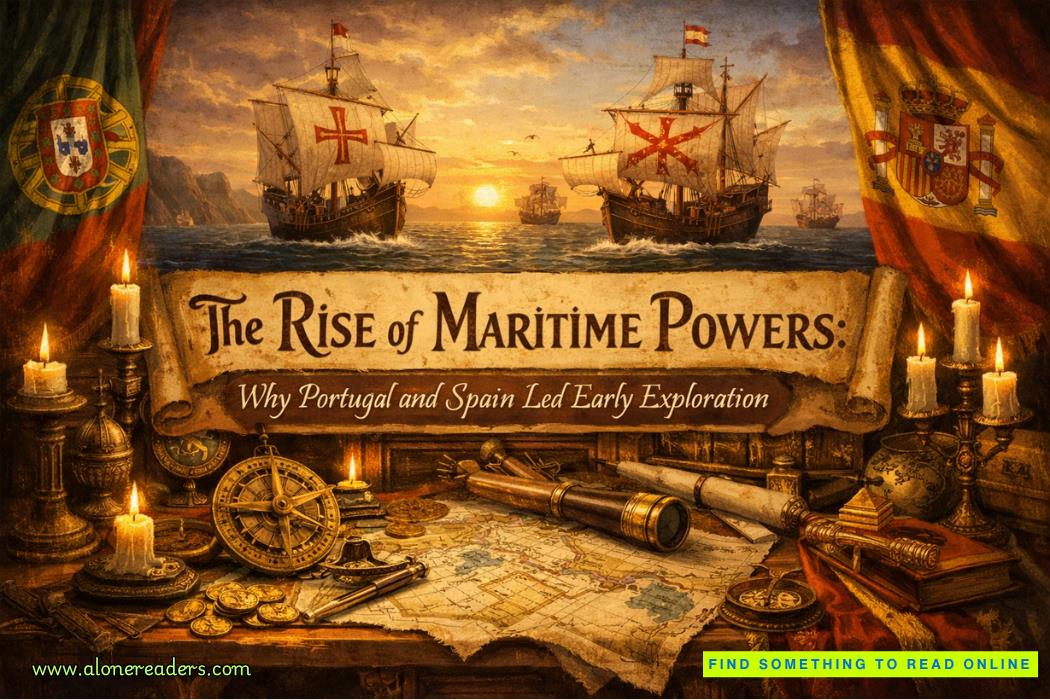
In the fifteenth century, the world was on the brink of transformation. The known continents were separated by myth and mystery, and the seas stretched beyond the edges of maps filled with dragons and imagined lands. Among the many kingdoms of Europe, two small nations on the Iberian Peninsula—Portugal and Spain—emerged as the vanguards of maritime exploration. Their rise was no accident of fate; it was shaped by geography, ambition, technology, faith, and fierce competition. The Age of Discovery began not in the halls of larger continental empires but on the windswept Atlantic coasts of these two nations determined to master the unknown.
The Iberian Peninsula, perched between the vast Atlantic Ocean and the Mediterranean Sea, gave both Portugal and Spain a unique vantage point. For centuries, their people had looked outward, fishing, trading, and battling pirates or invaders from distant shores. Isolation from the heart of Europe forced them to look to the sea for opportunity. The Reconquista—the long campaign to reclaim Iberian lands from Muslim rule—shaped their military spirit and faith-driven worldview. Once the wars ended, that same restless energy and unity of purpose turned seaward.
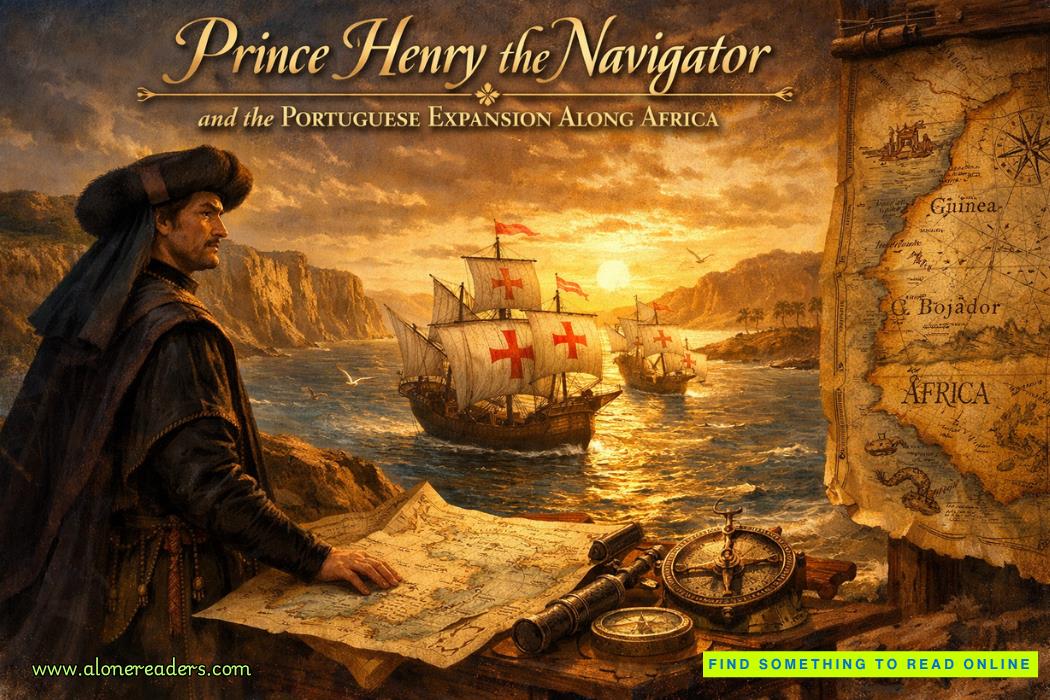
For Portugal, geography was destiny. With few natural borders and a long Atlantic coastline, the kingdom developed seafaring traditions earlier than most. Under the leadership of Prince Henry the Navigator, Portugal established itself as a pioneer of organized exploration. Henry’s school at Sagres, though partially mythologized over time, symbolized the fusion of knowledge, experimentation, and state vision that defined the Portuguese approach. Skilled mapmakers, shipbuilders, and navigators gathered to refine maritime instruments and produce the caravel, a light, highly maneuverable ship that became the workhorse of exploration.
Prince Henry’s motivation was layered—economic ambition, religious zeal, and curiosity. Portugal, hemmed in by Castile and poor in natural resources, sought wealth in trade rather than conquest. The route to the riches of the East lay blocked by Islamic empires dominating the overland paths. Thus, Portugal’s gaze turned southward, down the African coast, seeking an alternate passage to Asia. Step by step, they charted unknown waters—reaching Madeira, the Azores, and the Cape Verde islands, and finally pushing beyond the feared Cape Bojador, once believed to be the edge of the world.
Each mission Portugal launched expanded not only their maps but also their maritime confidence. They developed techniques to sail effectively against the prevailing winds using the volta do mar—a navigational method that relied on understanding oceanic currents and wind cycles. It was this scientific precision, rather than blind courage, that set the Portuguese apart. Their voyages were laboratories of observation as much as journeys of conquest.
Meanwhile, the Spanish kingdom—a newly unified force after the union of Castile and Aragon under Ferdinand and Isabella—stood poised to follow. Unlike Portugal, Spain began its maritime expansion slightly later but with grander ambitions. The completion of the Reconquista in 1492 freed enormous military and financial resources. That same year, Christopher Columbus, a Genoese sailor backed by the Spanish crown, set sail westward with the belief that Asia lay just beyond the Atlantic. His success in reaching the Caribbean, though not Asia, transformed Spain into a global power seemingly overnight.
Spain’s rise was driven by different yet complementary forces. Where Portugal had methodically built trade posts and sea routes, Spain sought imperial dominion. The Spanish worldview, shaped by Catholic fervor, saw exploration as divine mission and destiny. Converting new peoples, claiming new lands, and spreading Christianity went hand in hand with seeking wealth in gold, silver, and spices. The early Spanish Crown believed the oceans were a stage on which God had handed them the role of conquerors and civilizers—a belief that justified their rapid colonization drive.
However, Spain’s entry inevitably brought conflict with Portugal, whose explorers had already reached India by sailing around Africa. To prevent war between these two maritime powers, the Treaty of Tordesillas was signed in 1494, an extraordinary act of papal diplomacy that divided the newly discovered world between them along an imaginary meridian. Portugal was granted rights to lands east of the line, including Africa and Asia, while Spain claimed the west—an arrangement that, by accident of geography, later granted Portugal control over Brazil. This treaty illustrates how both nations viewed the Earth: not as a shared world but as spoil to be divided, explored, and ruled.
What made these Iberian nations uniquely successful was their combination of state sponsorship, technological innovation, and systematic organization. Unlike the fragmented merchant ventures of northern Europe, Portuguese and Spanish expeditions were royal enterprises. Monarchs invested directly, understanding exploration as an extension of state policy. They financed voyages, built naval schools, and established bureaucratic systems to manage new territories. Navigation became a field of statecraft.
Technological mastery underpinned their dominance. The astrolabe and quadrant allowed mariners to measure latitude, while improved maps—the portolans—charted coastlines with precision. Portuguese shipbuilders refined hull designs, enabling their vessels to handle both the shallow coastal waters of Africa and the rough Atlantic swells. The invention of the lateen sail, which allowed ships to tack against the wind, gave them unmatched range. Their navigational records became closely guarded secrets known as the Padrao Real—Portugal’s official master map, accessible only to state-sanctioned captains.
Moreover, these explorers operated within a robust network of knowledge exchange. Jewish, Arab, and Italian scholars contributed immensely to the Iberian advancements in astronomy, cartography, and mathematics. Arab navigational instruments and Indian Ocean sailing techniques, combined with European ship design, created a multicultural fusion of maritime science. Portugal, in particular, served as a bridge between worlds—absorbing knowledge from North Africa and translating it into Atlantic exploration.
Economics reinforced exploration. The motives were clear: control of the spice trade, gold, and other lucrative commodities. The overland routes through the Middle East were dominated by rival powers such as Venice and the Ottoman Empire. By finding sea routes to India and beyond, Portugal could bypass intermediaries and monopolize trade directly. When Vasco da Gama reached Calicut in 1498, it signaled the realization of decades of incremental effort. The flow of wealth thereafter—spices, silks, and later slaves—transformed Portugal into a commercial giant disproportionate to its size.
For Spain, the economic windfall came not from trade routes but from colonial extraction. The discovery of the Americas opened vast new possibilities. Spanish conquistadors, operating as both entrepreneurs and agents of empire, conquered entire civilizations. The Aztec and Inca empires fell within decades, transforming Spain into the wealthiest power in Europe. Gold and silver shipments from the New World flooded the royal treasury, funding armies and influencing the politics of Europe for generations. The Spanish galleons became symbols of imperial reach and naval supremacy.
One of the less discussed but equally important dimensions of Iberian success was their religious mission. Both kingdoms viewed their voyages as part of a spiritual continuum: the continuation of the Crusades by maritime means. Conversion of indigenous peoples justified conquest and supplied moral legitimacy. Missionaries accompanied explorers almost from the beginning, spreading Christianity across Africa, Asia, and the Americas. Faith, wealth, and empire became inseparable ideas within the Iberian psyche.
The human cost of this ambition was enormous. Enslavement of Africans, subjugation of native populations, and the spread of diseases marked the dark side of discovery. Yet in the European imagination, these endeavors represented triumph—evidence of divine favor and national glory. The Portuguese and Spanish crowns crafted national myths of “civilizing missions,” which resonated across later centuries.
Gradually, however, Iberian dominance would wane. The very maps they drew opened pathways for others—England, France, and the Dutch Republic—to build their own empires. The Portuguese monopoly broke under the pressure of Dutch and English intrusions into the Indian Ocean, while Spain’s vast empire became overextended, vulnerable to administrative inefficiency and piracy. But their legacy endured. They had stitched together the first truly global network of trade, religion, and culture—bridging continents that had evolved in isolation.
At the heart of this historical moment lay a change in worldview. The voyages of Portugal and Spain redefined humanity’s sense of space and possibility. The Earth ceased to be a series of isolated worlds and became a single, interconnected globe. Geography, commerce, and curiosity united in the Iberian vision. The sea became not a barrier but a pathway.
Portugal and Spain’s pioneering spirit rested on a delicate mix of pragmatism and faith, calculation and wonder. They were driven not only by profit but also by imagination—a belief that the horizon concealed both danger and promise. The Age of Discovery was thus both an age of adventure and an age of ambition, marking the dawn of modern globalization.
Ultimately, Portugal’s charts and Spain’s voyages together reshaped human history. They transformed coastlines into crossroads, encounters into empires, and the Atlantic into the highway of the modern world. Their rise as maritime powers reminds us that empires begin not always with strength, but with vision—the daring belief that knowledge and courage can remake the world.



 The Hundred Days Offensive: How the Allies Defeated Germany in World War I
 The Second Battle of the Marne: The Turning Point of World War I in 1918
 The Spring Offensive of 1918: Germany's Final Gamble to Win World War I
 The Treaty of Brest-Litovsk: How Russia Left World War I
 The Russian Revolution and World War I: How War Brought Down the Tsar
 The Zimmermann Telegram Explained: Germany's Secret Offer to Mexico in World War I










