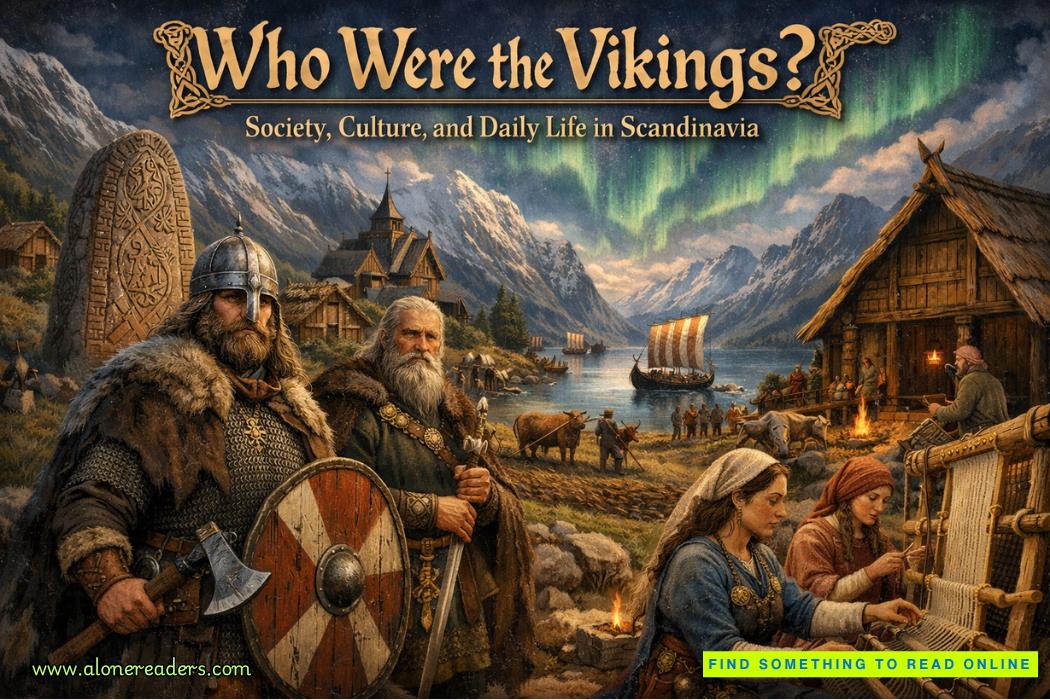
To understand who the Vikings were, one must look beyond the sword and ship. The term "Viking", drawn from Old Norse víkingr, referred originally not to a single people but to those who went “a-viking”—raiders, adventurers, and merchants who crossed seas from their Scandinavian homelands between the late eighth and early eleventh centuries. Yet behind the image of horned helmets and ferocious warriors stood a rich and complex society rooted in agriculture, craftsmanship, kinship, and belief—a civilization whose rhythms were marked by the climate of the North and the tides of the sea.
Scandinavia in the Viking Age was not a monolithic kingdom but a mosaic of lands—Norway, Sweden, and Denmark—linked by language and lineage but divided by geography. Rugged mountains and narrow valleys in Norway fostered small, independent communities, while fertile Danish plains supported heavier agriculture and more stable settlements. Sweden, stretching eastward, connected Scandinavia to the Baltic’s trade routes, sending warriors and merchants down the rivers toward Byzantium and the Arab world. The Viking world thus grew both upward and outward—anchored in its farms but always looking beyond its shores.
Life in Viking society revolved around the farmstead, the beating heart of Norse existence. These were wooden longhouses with grass roofs, often surrounded by barns, stables, and workshops. Families raised cattle, sheep, goats, and pigs, while the harsh northern climate made barley, rye, and oats staple crops. Hunting and fishing complemented farming, with coastal communities relying heavily on the sea’s bounty. Household work was shared—men tended fields and livestock, women managed the home, brewed ale, wove textiles, and oversaw food storage. Far from being mere servants, women held authority within the domestic sphere, often running estates when men sailed abroad.
The Vikings’ social structure was hierarchical yet fluid, bound by honor, wealth, and kin alliances. At the top stood jarls, regional chieftains who wielded power through land ownership and war bands. Beneath them were karls—free farmers forming the backbone of Norse society—and then thralls, slaves obtained through warfare or trade. Freedom could be earned, and social mobility was possible, particularly through success in commerce or battle. What mattered most was reputation: a man’s word, courage, and generosity defined his standing in the eyes of others. Feasts were not mere celebrations; they were acts of prestige, binding communities through exchange of gifts and oaths.
The Viking economy extended far beyond Scandinavia’s borders. Norse merchants sailed open seas to trade furs, walrus ivory, amber, and iron for silver, spices, silk, and glass. Archaeological finds—from Arabic coins in Swedish graves to Byzantine jewelry in Danish settlements—reveal a vast web of exchange stretching from the North Atlantic to the Caspian. Trade and raiding were two sides of the same coin; both demanded navigation skill, courage, and knowledge of foreign lands. Viking longships, with their shallow drafts and graceful keels, were masterpieces of marine engineering—swift enough to cross oceans, versatile enough to glide into shallow rivers.
Religion infused every aspect of Viking life. The Norse pantheon reflected the society’s values—Odin, god of wisdom and war, Thor, god of thunder and protection, Freya, goddess of love and fertility. The people saw the cosmos as a living structure of nine realms connected by Yggdrasil, the world tree, where gods and humans coexisted amid constant struggle and transformation. Death was not an end but a transition to another world—those who died heroically could feast forever in Valhalla, while others went to Hel, a colder realm. Rituals included sacrifices, seasonal festivals, and runic inscriptions, each binding daily life to the divine. Stones carved with myths and prayers stood near fields and homes, integrating faith with the labor of survival.
Though known for warfare, the Vikings did not live by violence alone. Law and justice were central pillars of their civilization. Disputes were settled at local assemblies known as things, where free men gathered to debate, judge, and legislate. The thing embodied communal order: it was democratic in form but deeply tied to custom and reputation. Punishments ranged from fines and exile to outlawry—being cast out from society, condemned to live beyond legal protection. These courts reflected a culture rooted in both freedom and accountability; the idea that no man was beyond the reach of law, even in a time of kings.
The role of women in Viking society stands as one of its most striking characteristics. Norse sagas describe women who managed estates, demanded justice, and wielded influence within their clans. They could inherit property, divorce husbands, and run businesses. Some even joined expeditions, their burials containing weapons and seafaring artifacts, suggesting participation in voyages or defense. A woman’s honor was fiercely guarded; offenses against her were taken as insults to family reputation. Mythology mirrored this respect: goddesses like Freya and Frigg were powerful, not passive, shaping fates and counsel.
In daily life, art and craftsmanship were omnipresent. Carved wood, woven textiles, silver brooches, and tapestries adorned homes and ships. Vikings expressed stories and beliefs through intricate designs—spirals, animals, and interconnected knots symbolizing the eternal cycle of life. Runic letters scratched on stones or metal recorded names, victories, and blessings. Music resounded through feasts and rituals, with wooden instruments, harps, and drums accompanying oral poetry. Skalds—poet-historians—preserved genealogy, mythology, and heroic deeds through verse, ensuring that memory itself became a sacred act.
Children grew amid this cycle of labor and lore. From early years they learned to tend livestock, gather food, and respect their ancestors. Boys practiced with wooden swords, preparing for adulthood in a world that prized strength and courage. Girls learned spinning and weaving, acquiring the skills that sustained families through harsh winters. Yet they were also taught tales of heroism, wisdom, and destiny—a moral education that threaded survival with storytelling. The Viking home was not simply a shelter; it was a school, a temple, and a workshop, all wrapped within the rhythms of nature.
Diet in Scandinavia reflected practicality shaped by geography. Meals featured fish, pork, lamb, bread from barley or rye, and fermented products like beer and mead. Salting, smoking, and drying preserved food through cold seasons. Communal eating reinforced kinship; mead halls were centers of communication, political negotiation, and artistic celebration. Feasts honored gods and guests, binding the spiritual and the social. The sharing of bread and drink symbolized trust, making hospitality one of the sacred virtues of Viking culture.
Health and medicine combined practical knowledge and spiritual understanding. Herbal remedies treated wounds and fevers, bonesetting and cauterization were common techniques, while charms and runes invoked protection. Healers often blended observation with magic, and illness itself was viewed as both physical and symbolic—a disturbance in balance between mortal and divine forces. Burial rituals further reflected this deep connection; bodies were interred with weapons, jewelry, or tools, ensuring that they entered the afterlife equipped for continuation of life’s tasks.
Trade towns like Birka, Hedeby, and Kaupang became centers of interaction, blending Scandinavian and foreign cultures. Craftsmen worked in iron, bronze, and silver; merchants built networks reaching Ireland, England, and Rus. Archaeological evidence paints the Vikings not merely as raiders but as global participants in medieval economic systems. They adapted foreign influences—art styles, coinage, and urban planning—without losing their native spirit. The same hands that forged swords also minted coins, embroidered garments, and carved ships, illustrating the civilization’s dynamism.
Language tied the Viking world together. Old Norse was both practical and poetic—a language capable of expressing law as well as longing. Poetry held sacred status, with rhythm and metaphor bridging the human and divine. Runes were not just alphabetic symbols; they were mystical signs believed to contain inherent power. Writing a rune was an act of calling upon fate itself. The Viking mind considered words living entities, capable of shaping reality, a reflection of their belief that creation and speech were intertwined.
Exploration defined the Viking spirit. From Greenland’s icy shores to Baghdad’s bustling markets, they journeyed with curiosity and ambition. Norse settlers founded colonies in Iceland, reached North America long before other Europeans, and served as guards in Byzantine courts. Yet not all voyages were conquests—many were quests for land, trade, and knowledge. This outward gaze shaped their identity: the sea was not a barrier but a road, connecting them to the world and carving their legacy across continents.
By the eleventh century, Christianity began to reshape Scandinavia. Old temples gave way to churches, new laws replaced old rites, and the gods of Asgard slowly receded from daily devotion. Yet they never vanished entirely; Norse myths remained embedded in language, art, and memory. The transition was gradual, marked more by integration than eradication. The Viking spirit—adaptive, resilient, and visionary—persisted even as Europe transformed around it.
Ultimately, the Vikings were not merely warriors who plundered foreign coasts, but builders of culture and connectors of worlds. Their daily lives reflected hardship and creativity, devotion and independence. Through their ships, songs, and stones, they bridged isolation and civilization. Behind every legend of conquest is the quieter story of human endurance—families tending fields under northern skies, awaiting the return of those who sailed into uncertainty. The Viking Age was not simply a time of raids; it was an age of relationship, imagination, and ambition, whose echoes shaped Europe’s future.



 The Hundred Days Offensive: How the Allies Defeated Germany in World War I
 The Second Battle of the Marne: The Turning Point of World War I in 1918
 The Spring Offensive of 1918: Germany's Final Gamble to Win World War I
 The Treaty of Brest-Litovsk: How Russia Left World War I
 The Russian Revolution and World War I: How War Brought Down the Tsar
 The Zimmermann Telegram Explained: Germany's Secret Offer to Mexico in World War I










