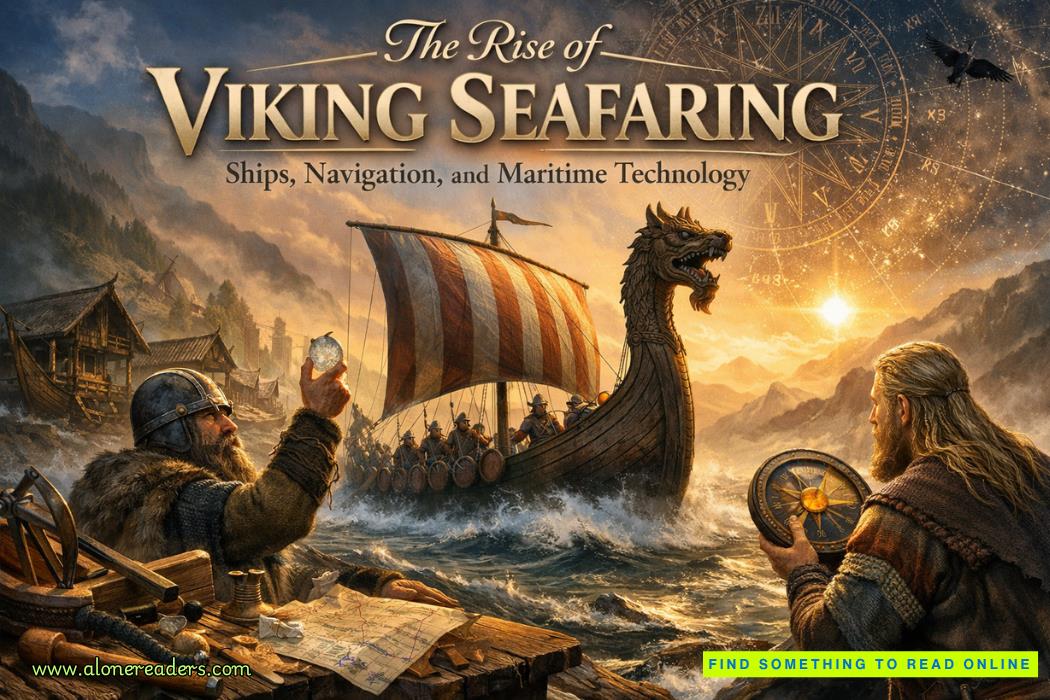
From the icy fjords of Scandinavia emerged one of the most remarkable maritime cultures in human history — the Vikings. Their mastery over the seas was not an accident born of geographical isolation; it was the result of relentless innovation, keen observation, and an enduring relationship with the ocean. The Viking Age, which stretched roughly from the late 8th to the early 11th century, marked a transformative period when Norse seafaring technology reshaped the political, economic, and cultural landscape of Europe. The Vikings were not merely raiders but also brilliant shipwrights, astute navigators, and technological pioneers who pushed the boundaries of human exploration long before the Age of Discovery began.
Central to their maritime dominance was their shipbuilding expertise. The Vikings engineered vessels unmatched in speed, versatility, and seaworthiness for their time. Their most iconic creation, the longship, was a masterpiece of both form and function. Constructed with overlapping planks in a technique known as clinker-building, it provided flexibility and strength, allowing the hull to bend with the waves rather than against them. This unique design made longships light enough to be dragged across land yet durable enough to endure the tumultuous North Atlantic. Each vessel was crafted from carefully selected oak, a wood revered for its resilience, with iron rivets binding the planks together in elegant curves that gave the ships both stability and grace.
What distinguished Viking ships from those of their contemporaries was their remarkable adaptability. The longship’s shallow draft enabled it to navigate not only deep seas but also shallow rivers and coastal inlets, granting the Norse an unparalleled ability to strike inland settlements quickly and retreat just as fast. For trading and exploration, the Vikings developed broader, sturdier vessels known as knarrs. These ships possessed increased cargo capacity and were better suited for carrying goods across the open ocean. It was aboard such vessels that Norse merchants and explorers reached as far south as Constantinople and as far west as North America, centuries before Columbus set sail.
The design philosophy behind Viking ships encapsulated the Norse mindset — practical, minimalist, and deeply attuned to nature. Shipbuilders relied not on written blueprints but on experience, tradition, and a profound understanding of wood’s natural properties. They studied the curvature of tree trunks and selected timbers that mirrored the intended shape of the hull. Each ship bore the identity of its maker, blending artistry with engineering. Carved figureheads, often depicting dragons or serpents, served not only decorative functions but were also believed to ward off evil spirits and intimidate foes. The ship was more than a vehicle; it was an extension of Viking culture, spirituality, and ambition — their gateway to the world.
Beyond mastery in construction, the Vikings were exceptional navigators, operating in an age when reliable maps were scarce, and magnetic compasses unknown in Northern Europe. Yet, they traversed vast distances with astonishing precision. Their methods combined practical seamanship, astronomical observation, and environmental awareness. They observed the sun, stars, wind direction, ocean swells, migratory birds, and even the color of the sea and sky to estimate their position.
One of the most intriguing tools attributed to Viking navigation is the sunstone, a crystal—possibly Iceland spar—that could detect the sun’s position even on overcast days. Experiments with such crystals have shown they can indeed polarize light and help find the sun’s location when it is invisible to the naked eye. Whether or not the exact historical details align, the concept itself demonstrates the advanced cognitive and experimental mindset of Viking seafarers. They transformed their environment into a natural compass, reading subtle cues that modern navigators might overlook.
The Vikings also used primitive sun compasses, wooden dials that cast a shadow whose length and direction could guide the ship’s course during daylight. When combined with celestial navigation — the measurement of the sun’s height or star patterns — these instruments enabled long-distance voyages across the open ocean. Saga literature and archaeological discoveries suggest that Norse sailors calibrated their route relative to known landmarks, islands, and ocean currents. Through generations of trial, error, and oral teaching, they developed an intuitive sense of where the sea led them.
The integration of navigational knowledge with ship design represented the height of Viking innovation. Their vessels were swift because their sails, made of finely woven wool, harnessed the wind with maximum efficiency. Their oars, evenly spaced, allowed coordinated rowing even in rough waters. The combination of sail and oar propulsion provided the flexibility to travel regardless of weather. Rigging systems evolved to adjust sail angles with precision, enabling Vikings to tack against the wind—an uncommon feat in early medieval Europe. This capability widened their effective range and minimized dependence on favorable currents.
Equally vital was the maritime community that sustained such an enterprise. Viking seafaring required cooperation, knowledge exchange, and discipline. Crews typically ranged from thirty to sixty men, each trained to fulfill specific duties—rowing, sail handling, navigation, or combat. Life aboard a longship was both communal and harsh. Space was confined; provisions were basic; yet, every voyage was underpinned by a profound sense of honor, kinship, and purpose. Their sagas praise the sea not as an obstacle but as an ally—a path laid by the gods linking distant lands and destinies.
The technological sophistication of Viking seafaring went hand in hand with bold exploration. Their ships allowed them to traverse the stormy North Atlantic and establish routes that connected Scandinavia with the British Isles, Iceland, Greenland, and Vinland (North America). Each voyage expanded the Norse worldview, fostering intercultural contact and economic exchange. Archaeological evidence from settlements like Hedeby, Birka, and Ribe attests to bustling trade networks that carried amber, furs, weapons, and slaves in exchange for silver, silk, and glassware. Maritime capability thus underpinned not only Viking expansion but also their economic and cultural flourishing.
Even their raiding strategy reflected maritime intelligence. The longship’s speed enabled surprise attacks, while its shallow hull allowed instant landings on enemy shores. Raiding parties could strike monasteries, seize wealth, and retreat to the open ocean before local defenses assembled. Yet, contrary to popular stereotypes, many Viking ventures were as much about commerce and settlement as conquest. The same vessels that carried warriors also transported families, livestock, and craftsmen to new colonies throughout the North Atlantic. Their technology turned migration into an organized endeavor, ensuring that Norse influence endured far beyond the Viking Age.
Their mastery extended beyond wood and waves — it shaped their worldview. Viking mythology revered the sea-god Njord and the trickster Loki, both associated with change and unpredictability. The ship itself held ritual significance in funerary practices, with chieftains buried in vessels that symbolized their journey to the afterlife. This spiritual dimension infused every aspect of maritime life: sailing was both a technical act and a sacred rite. The Vikings treated navigation not merely as science but as art bound to fate and faith.
Long after their raids faded, the Vikings’ technical legacy continued to influence European naval architecture. Later ship designs borrowed from their shallow keels, overlapping planks, and efficient sail rigs. The very concept of exploring across open seas owes much to their pioneering spirit. They proved that human ingenuity could overcome geographic isolation and that naval mastery could define civilizations.
What makes Viking seafaring so exceptional is its fusion of craftsmanship, observation, and courage. These were not accidental seafarers blown off course by chance; they were deliberate explorers armed with technology that reflected centuries of accumulated wisdom. Even today, reconstructions of Viking ships—like Gokstad and Oseberg—sail successfully across modern seas, validating the enduring genius of their design.
In the quiet rhythm of oars striking saltwater, in the creak of timber beneath wind-filled sails, echoes the story of a people who redefined human mobility. The Viking mastery of shipbuilding and navigation was not just a means of travel—it was a philosophy of motion, an expression of resilience against the unknown. Their legacy endures not only in sagas and artifacts but in the very idea that exploration is an act of creation, where skill and curiosity merge to conquer distance and destiny alike.
From the fjords of Norway to the shores of Newfoundland, every ripple left by a Viking ship marks a chapter in the story of humanity’s conquest of the seas. Their genius lay not only in discovering new worlds but in building the vessels and knowledge to reach them. The rise of Viking seafaring thus stands as one of the greatest technological and cultural achievements of the early medieval world—a testament to the fearless spirit that carried the Northmen across the edge of the known world and beyond.



 The Hundred Days Offensive: How the Allies Defeated Germany in World War I
 The Second Battle of the Marne: The Turning Point of World War I in 1918
 The Spring Offensive of 1918: Germany's Final Gamble to Win World War I
 The Treaty of Brest-Litovsk: How Russia Left World War I
 The Russian Revolution and World War I: How War Brought Down the Tsar
 The Zimmermann Telegram Explained: Germany's Secret Offer to Mexico in World War I










