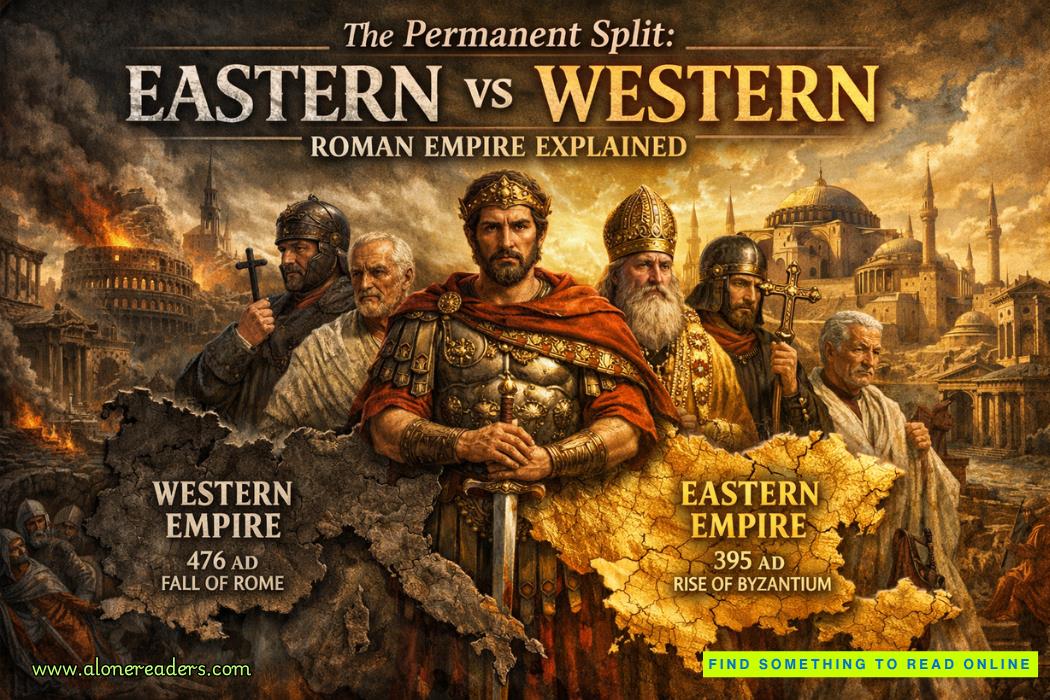
The story of the Roman Empire is not just one of conquest and civilization—it is also a story of division, resilience, and transformation. The permanent split between the Eastern and Western Roman Empires stands as one of the most defining moments in world history. It changed the course of Europe and the Near East, setting the stage for medieval Christendom, Byzantine brilliance, and the eventual birth of modern Europe. To understand this split is to understand how the same empire that once united the known world could, within a few generations, fracture into two realms destined for radically different fates.
At the height of its power in the 2nd century AD, the Roman Empire stretched from the windswept moors of Britain to the sun-baked deserts of Syria. It unified Mediterranean cultures under Roman law, Latin language, and imperial authority. Yet beneath this vast expanse lay a structural imbalance. The eastern provinces, centered on Greece, Asia Minor, and Egypt, were ancient, wealthy, and densely urbanized. The west, including Spain, Gaul, and Britain, while culturally vibrant, was more rural, less economically developed, and increasingly reliant on the riches of the east. This uneven distribution of wealth and resources would later play a profound role in the empire’s division.
The root of the split can be traced to administrative reforms introduced by Emperor Diocletian in 285 AD. Faced with constant invasions, economic turmoil, and political chaos, Diocletian concluded that the empire was simply too vast for one man to govern effectively. He introduced the Tetrarchy—a system where two senior emperors (Augusti) and two junior emperors (Caesares) ruled different regions of the empire. Diocletian took charge of the East, while his co-ruler Maximian governed the West. Though designed as a practical solution to governance, this system inadvertently formalized the division between eastern and western administration, customs, and military priorities.
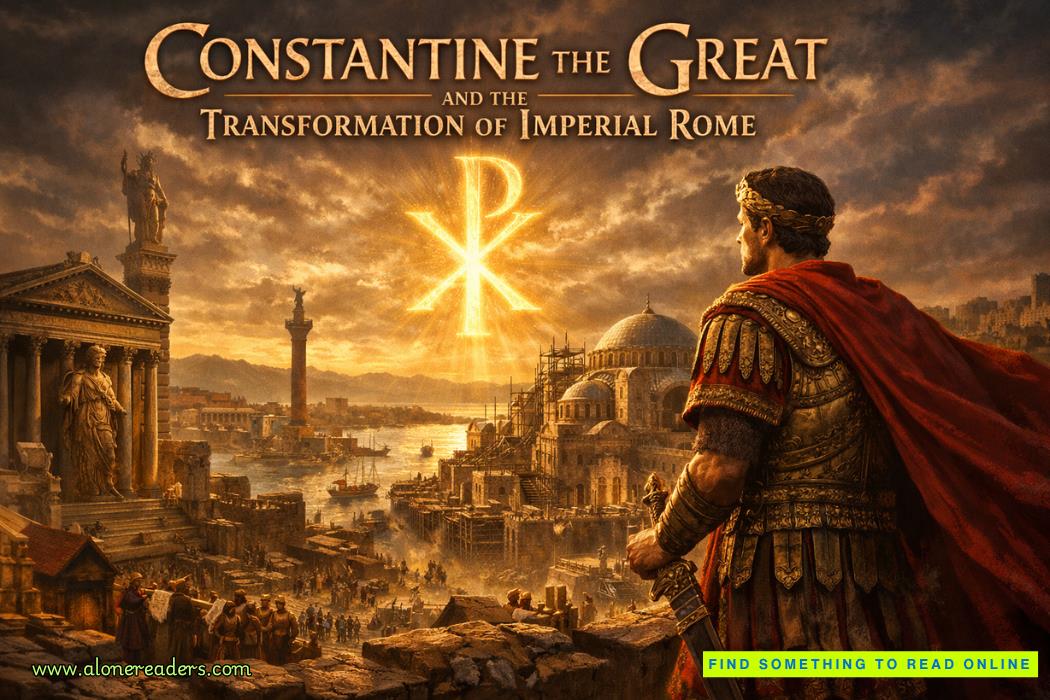
The experiment worked briefly but faltered after Diocletian’s abdication. The empire plunged back into civil wars until Constantine the Great emerged as the sole ruler by 324 AD. Constantine sought to reunify and stabilize the empire, but his own policies further cemented the east-west divide. Most notably, he founded a new capital in 330 AD—Constantinople—on the site of the ancient Greek city Byzantium. Strategically located on the Bosporus Strait, it controlled the crossroads of Europe and Asia and the key trade routes of the eastern Mediterranean. Constantinople was designed to be a “New Rome,” both Christian in spirit and imperial in grandeur. Its selection symbolized a shift of power toward the Greek-speaking, urbanized, and economically prosperous East.
After Constantine, the empire again oscillated between unity and division, as emperors struggled to maintain control across such a vast realm. Administrative divisions became routine, with separate courts, bureaucracies, and armies established in the East and West. The everyday governance of Rome—once centralized—now operated through two competing yet interdependent systems. Cultural divergence deepened: the Latin West clung to traditional Roman identity, while the Greek East evolved with its own intellectual and theological life, influenced deeply by Hellenistic traditions. Even the Christian Church, which had once envisioned itself as universal, began to mirror these differences in doctrine, ritual, and language.
The final and permanent division came after the death of Emperor Theodosius I in 395 AD. Theodosius, the last ruler to govern both halves of the empire, divided it between his two sons—Arcadius in the East and Honorius in the West. What began as a dynastic arrangement became a geopolitical reality: the Eastern and Western Roman Empires went their separate ways, never to be reunited again. The border was not just physical—it symbolized a split in ideology, culture, and destiny. Constantinople’s court became the guardian of imperial administration and Christian orthodoxy, while Rome’s declining west faced increasing barbarian pressures and political fragmentation.
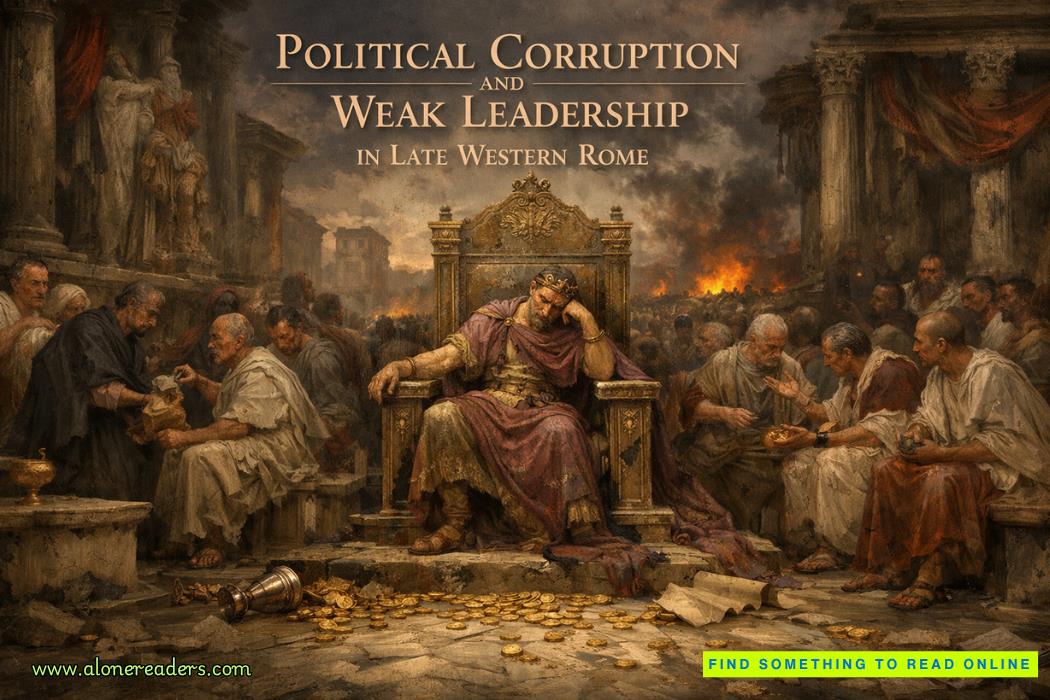
The Western Roman Empire entered the 5th century beset by crises it could no longer manage. Economic decline, overreliance on mercenaries, depopulation, and internal corruption eroded its strength. The army, once the pride of Rome, now consisted largely of Germanic foederati—foreign allies bound by unstable treaties. As the Huns moved westward across Europe, displaced Germanic tribes like the Visigoths, Vandals, and Ostrogoths pushed into Roman lands. The sack of Rome in 410 AD by Alaric the Visigoth shocked the ancient world; for the first time in eight centuries, the Eternal City had fallen. Though the empire survived for a few more decades in name, its authority was hollow, its provinces slipping away one by one.
Meanwhile, the Eastern Roman Empire—later known as the Byzantine Empire—proved remarkably resilient. Unlike the West, it had strong cities, robust trade networks, and an efficient tax system. Its strategic position at the crossroads of continents allowed it to control lucrative commerce between Asia and Europe. Eastern emperors such as Anastasius, Justinian I, and Heraclius reformed administration, strengthened fortifications, and sustained the imperial ideal even when the Latin West disintegrated. Constantinople, surrounded by massive defensive walls and blessed with naval superiority, survived countless sieges that would have destroyed a lesser city. The contrast between the fates of Rome and Constantinople captured the essence of the permanent split: one half collapsed into the chaos of the early Middle Ages, while the other evolved into a new, distinctly Eastern civilization.
The fall of the Western Roman Empire is traditionally dated to 476 AD, when Romulus Augustulus, the last Western emperor, was deposed by the Germanic general Odoacer. To many Romans, this event marked the death of the empire; to those in the East, however, it was merely the end of an administrative outpost. The Byzantine emperors continued to regard themselves as true Roman rulers, the legitimate heirs to Augustus and Constantine. They preserved Roman law, imperial ceremony, and much of the ancient learning that would later inspire the Renaissance. Yet, their world was no longer Latin—it was Greek in language, Christian in faith, and imperial in vision.
Religious developments further amplified the divide. The East embraced theological debate and philosophical speculation, particularly over the nature of Christ. Councils and controversies—Nicaea, Chalcedon, and others—shaped Eastern Christianity’s complex theological landscape. In the West, the Church of Rome gradually emerged as the supreme spiritual authority, asserting independence from imperial control. By the time of the Great Schism in 1054 AD, the split between Eastern Orthodoxy and Western Catholicism had deep roots in the centuries-old divide of empire and culture that began with Theodosius’s partition in 395 AD.
Language also became a defining marker of difference. For centuries, Latin remained the language of law and administration across the empire. But while it endured in the West, Greek increasingly dominated in the East. By the 6th century, the Byzantine Empire’s government had transitioned almost entirely to Greek, reflecting not just a linguistic but also a cultural transformation. In essence, the Roman Empire did not die—it changed its language, religion, and identity.
The economies of the two halves followed divergent trajectories. The western provinces endured agricultural collapse, trade disruption, and depopulation. Barbarian invasions cut off vital trade routes, shattering urban life that had been the heartbeat of Roman civilization. The East, conversely, maintained economic continuity through the wealth of Egypt’s grain, the luxury of Syrian textiles, and the gold of Constantinople’s markets. This prosperity enabled the Byzantines to sustain armies, pay tributes, and project power long after their western counterparts had vanished.
Politically, the separation fostered contrasting ideologies of rule. The Western emperors relied heavily on the Senate and the military aristocracy, trying to preserve republican traditions amid imperial reality. The Byzantine emperors, by contrast, evolved an autocratic, theocratic monarchy, blending Roman law with Christian divine kingship. Their authority was wrapped in ceremony, symbol, and sacred legitimacy. The Emperor was not merely ruler but God’s representative on Earth, sustaining a sense of continuity that would endure for a thousand years after Rome’s fall.
When one imagines the permanence of the Roman split, it is striking how each half preserved a fragment of the ancient world. The West bequeathed Roman legal frameworks and Latin-based languages to its medieval successors—France, Spain, Italy, and beyond. The East preserved classical scholarship, architecture, and art, safeguarding the intellectual heritage of antiquity. Both legacies together would later shape the foundations of Western civilization.
The permanent split of 395 AD was thus not simply a political division; it was a transformation in identity. The Western Roman Empire became Europe’s memory—a lost golden age of order and power. The Eastern Roman Empire carried the Roman spirit forward, redefined through Christianity and Hellenic culture. For nearly a millennium after the fall of Rome, Constantinople stood as the beacon of Rome’s endurance, until its own fall to the Ottomans in 1453 AD finally closed the book on the Roman world.
Yet even today, the echoes of that divide remain visible. The linguistic, religious, and cultural lines that separate Eastern and Western Europe trace back to this ancient partition. The split was permanent not because of geography alone, but because it reshaped civilization’s very structure. In that sense, the Roman Empire never truly collapsed—it divided, metamorphosed, and lived on in two worlds that would forever remember their common origin and separate destinies.



 The Hundred Days Offensive: How the Allies Defeated Germany in World War I
 The Second Battle of the Marne: The Turning Point of World War I in 1918
 The Spring Offensive of 1918: Germany's Final Gamble to Win World War I
 The Treaty of Brest-Litovsk: How Russia Left World War I
 The Russian Revolution and World War I: How War Brought Down the Tsar
 The Zimmermann Telegram Explained: Germany's Secret Offer to Mexico in World War I










