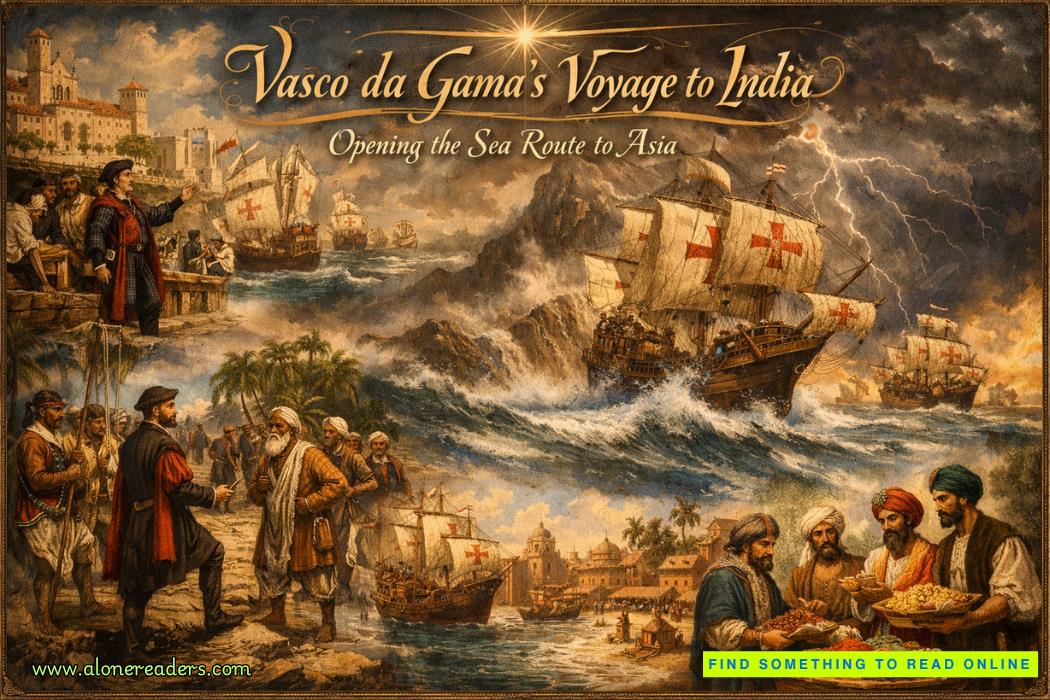
When the Age of Discovery dawned in the late fifteenth century, Europe stood on the brink of a new world order. The ambition that drove kingdoms to explore the unknown seas was not romantic adventure but the relentless search for profit, power, and prestige. Among these ambitious monarchies, Portugal, a relatively small nation along the Atlantic coast, arose as the pioneer of global navigation. The man who would become the symbol of this daring era was Vasco da Gama, the navigator whose voyage to India in 1497–1499 forever transformed the course of world history.
The story of Vasco da Gama’s journey is one of strategic vision, maritime innovation, and unshakable determination in the face of unimaginable hardship. His expedition succeeded in discovering a direct sea route from Europe to Asia—a triumph that not only broke the Islamic monopoly over Eastern trade but also laid the foundation for European colonial empires in the centuries to follow.
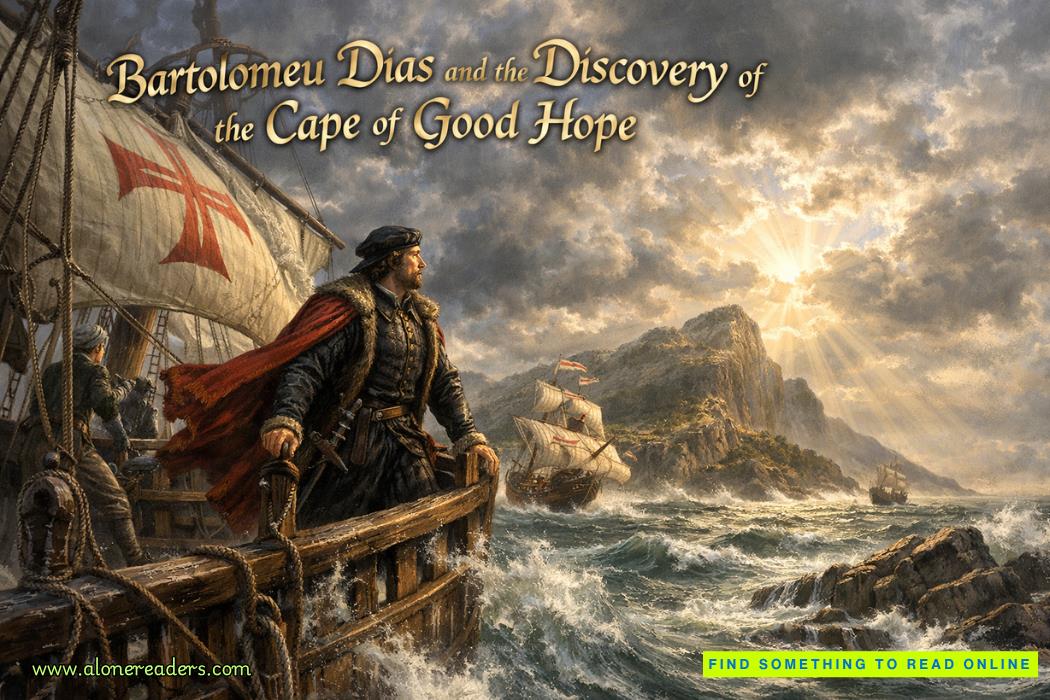
The seeds of this monumental achievement were sown decades before da Gama’s voyage. Under the visionary leadership of Prince Henry the Navigator, Portugal had begun a systematic exploration of Africa’s western coast. By the late 15th century, Portuguese sailors had rounded Cape Bojador, reached the Equator, and finally, under Bartolomeu Dias in 1488, had rounded the Cape of Good Hope—the southernmost tip of Africa. Yet the passage to India remained unfinished. The Portuguese crown needed a man of skill, courage, and faith to complete this mission. King Manuel I chose Vasco da Gama for this monumental task.
In July 1497, da Gama set sail from Lisbon with a fleet of four ships: the São Gabriel, São Rafael, Berrio, and a supply ship. Each was equipped with the latest navigational instruments—astrolabes, compasses, and quadrant charts—and manned by a skilled crew hardened by voyages along the African coast. The voyage marked the beginning of a historic adventure that would stretch across uncharted seas and test the limits of human endurance.
The fleet followed the familiar route along the West African coast, stopping at Cape Verde before heading southward into the open Atlantic. Here, da Gama employed an ingenious navigational technique learned from previous voyages: instead of hugging the dangerous African coastline, he sailed far west into the Atlantic to capture favorable winds that would later bring him back toward the southern tip of Africa. This maneuver, known as the volta do mar, was a major factor in the success of the expedition. After weeks of perilous sailing, the fleet reached the southern coast of Africa, where raging storms and violent seas greeted them.
Da Gama’s ships struggled to round the Cape of Good Hope, the same treacherous cape that Dias had named “The Cape of Storms.” The passage tested the limits of seamanship and human will. By November, the fleet had successfully rounded the cape and entered the waters of the Indian Ocean, venturing into a realm still unknown to Europeans. It was a triumph of navigation and endurance, one that paved the way for centuries of global maritime dominance.
Continuing northward, da Gama’s fleet anchored at Mozambique, then under the influence of Arab traders who viewed the Portuguese with suspicion. Pretending to be Muslim merchants, da Gama’s crew attempted to trade, but the deception soon failed, prompting them to leave in haste. In Mombasa, they faced further hostility, nearly suffering destruction when locals plotted against them. Yet in Malindi, a rival port city, the Portuguese found a more receptive ally. Here, fate introduced Vasco da Gama to an Indian pilot believed to be Ahmed ibn Majid, a master navigator familiar with the monsoon winds and the route across the Indian Ocean to Calicut (modern Kozhikode) in India.
With the pilot's guidance, da Gama boldly crossed the Arabian Sea, sailing eastward into the vast Indian Ocean. After twenty-three harrowing days, in May 1498, the fleet finally sighted the Malabar Coast, and soon after, anchored off the port of Calicut. For the first time in human history, a European vessel had reached India entirely by sea. The centuries-old dream of linking Europe directly with the spice markets of Asia had become reality.
Yet da Gama’s triumph was met with both curiosity and tension. The ruler of Calicut, known as the Zamorin, received da Gama with ceremonial courtesy, but local Arab merchants—long the dominant force in the spice trade—viewed the Portuguese as intruders threatening their commercial monopoly. Da Gama offered gifts that the local merchants found unimpressive—textiles, beads, and trinkets—utterly insufficient compared to the wealth of India’s vibrant trade economy. Despite these awkward beginnings, da Gama managed to secure a tentative agreement allowing limited Portuguese trade. Still, mutual suspicion lingered beneath the surface.
The return voyage proved even more grueling. Without favorable monsoon winds, da Gama’s ships took months to cross the Indian Ocean, and the crew suffered severe scurvy, a deadly disease caused by vitamin deficiency. The supply ship was burned to conserve resources, and many sailors perished from exhaustion and illness. When the battered fleet finally reached Lisbon in September 1499, less than half of its original crew survived. Yet despite the human cost, the outcome was nothing short of revolutionary. Da Gama had secured the prize of all European exploration efforts—the sea route to India.
The impact of this voyage on world history was profound. Portugal immediately dispatched a series of Armadas—heavily armed fleets—to consolidate control over trade routes. Within a decade, Portugal established fortified trading posts at Goa, Calicut, Cochin, and Malacca, laying the foundations of the first global maritime empire. These developments shifted the balance of world trade, moving wealth and power from the overland routes dominated by Islamic powers toward the western maritime powers—first Portugal, then Spain, and eventually the Dutch and British.
The discovery of the sea route to India also reshaped global geopolitics. Europe’s newfound access to Asian spices—pepper, cloves, cinnamon, and nutmeg—fueled economic growth and cultural exchange. But it also ignited competition and conquest. Colonial powers jockeyed for dominance across Asia, Africa, and the Americas, ushering in the age of empire. What had begun as a quest for spices evolved into centuries of global colonization that would redefine civilizations on every continent.
For Portugal, Vasco da Gama’s journey became a source of immense national pride and identity. King Manuel I rewarded him with the title “Admiral of the Seas of India.” Subsequent Portuguese rulers celebrated his name in poetry, monuments, and national lore. Da Gama himself later returned to India twice more—first in 1502 to enforce Portuguese authority with military might, and finally in 1524, when he arrived as the Viceroy of Portuguese India. He died in Cochin later that year, his remains returned to Portugal decades afterward, enshrined as those of a national hero.
Yet even as the voyage symbolized European triumph, it also marked the dawn of unequal encounters between civilizations. The Portuguese expansion that followed often relied on violence, coercion, and forced conversion. Indian Ocean coastal cities were bombarded, and trade networks that once operated freely were subordinated to Lisbon’s authority. The same routes that carried spice and silk would later witness the traffic of arms, slaves, and imperial control. Thus, Vasco da Gama’s voyage stands as both a marvel of human ingenuity and a harbinger of global exploitation.
Still, from a historical perspective, the voyage remains one of the pivotal events that connected the Old World and the New World into a single global system. It demonstrated the possibilities of long-distance maritime navigation and revealed how scientific progress, political ambition, and economic desire could merge to reshape civilizations. The success of da Gama’s expedition confirmed that Europe’s destiny would lie on the seas—not in the feudal farms of its past, but in the open waters of exploration, trade, and conquest.
In today’s world, the ripples of da Gama’s voyage can be felt in every corner of our interconnected planet. The global economy, cosmopolitan trade, and even the concept of international maritime law trace their lineage to these early seaborne explorations. His voyage embodies the paradox of progress: a testament to human courage and curiosity, yet also a reminder of the costs of ambition and empire.
When we imagine da Gama’s fleet sailing under the blazing African sun, the wooden decks creaking amid endless waves, it is easy to forget that the sailors aboard those vessels had no certainty of return. They faced uncharted waters, disease, treacherous winds, and unknown peoples. Yet, within that peril, they carried the dreams of an entire civilization reaching beyond the horizon.
More than five centuries later, Vasco da Gama’s voyage to India still stands as a milestone in the human story—a moment when courage met opportunity, and when the vast oceans that once separated nations became the bridges that connected them. His success transformed a regional expedition into the first act of global history, opening the way to the world’s first age of true intercontinental exchange.
And so, the sea route to India—once a dream sought by generations of explorers—became not merely a pathway across waters but a channel that forever altered the direction of human civilization.



 The Hundred Days Offensive: How the Allies Defeated Germany in World War I
 The Second Battle of the Marne: The Turning Point of World War I in 1918
 The Spring Offensive of 1918: Germany's Final Gamble to Win World War I
 The Treaty of Brest-Litovsk: How Russia Left World War I
 The Russian Revolution and World War I: How War Brought Down the Tsar
 The Zimmermann Telegram Explained: Germany's Secret Offer to Mexico in World War I










