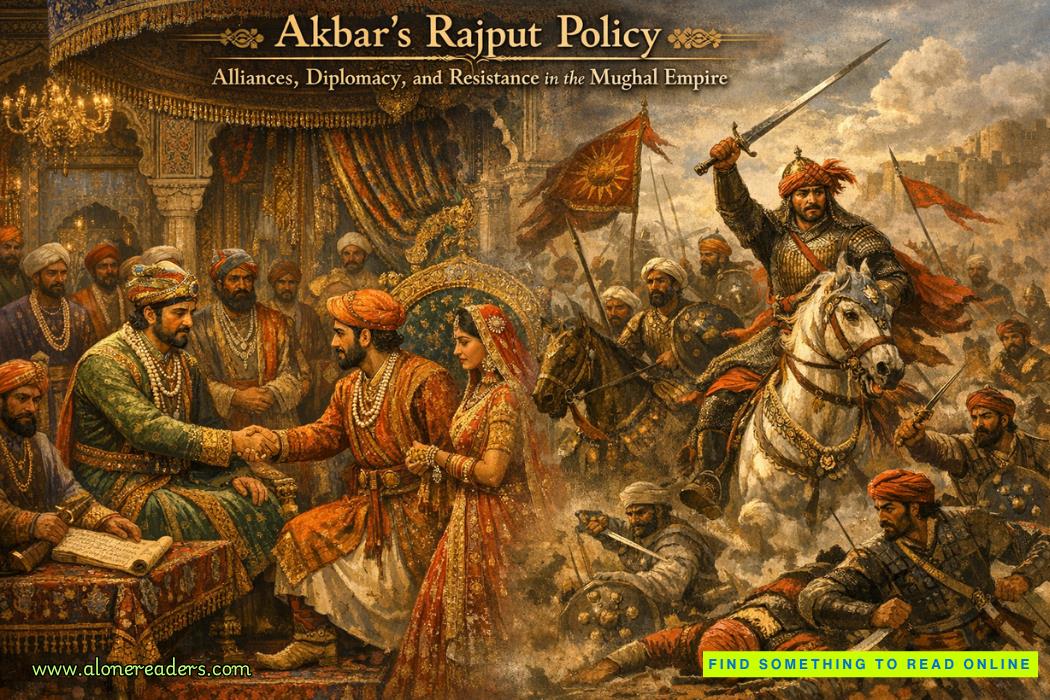
Akbar’s reign marked a decisive turning point in the political and cultural evolution of the Indian subcontinent, and at the center of this transformation stood his remarkably nuanced approach toward the Rajputs. Unlike his predecessors, who often relied heavily on military conquest and coercion, Akbar crafted a policy that blended strategic alliances, cultural diplomacy, and calculated tolerance, thereby reshaping not only Mughal governance but also the political identity of Rajput states. His Rajput policy was neither accidental nor purely benevolent; it was a deliberate and sophisticated statecraft designed to secure imperial stability, expand territorial control, and integrate powerful regional elites into the Mughal administrative framework.
The Rajputs, known for their fierce independence, martial traditions, and strong clan loyalties, represented both a challenge and an opportunity for the Mughal Empire. Their kingdoms were strategically located across Rajasthan and central India, controlling key trade routes and acting as buffers against external threats. Earlier Mughal rulers, including Babur and Humayun, had limited success in establishing lasting relationships with these warrior clans. Akbar, however, recognized that sustainable empire-building required cooperation rather than constant confrontation. This realization formed the foundation of his Rajput policy, which would become one of the most defining features of his reign.
A cornerstone of Akbar’s strategy was the use of matrimonial alliances, a practice that symbolized both political pragmatism and cultural inclusivity. By marrying Rajput princesses, most notably Harkha Bai of Amber, Akbar established bonds of kinship with influential Rajput families. These marriages were not mere symbolic gestures; they carried profound political implications. Rajput rulers who entered into such alliances were granted high positions in the Mughal court, autonomy in their internal affairs, and recognition of their hereditary rights. In return, they offered military support and loyalty to the emperor. This mutual arrangement created a network of trust that significantly reduced the likelihood of rebellion among allied Rajput states.
The integration of Rajput nobles into the Mughal administrative and military systems further reinforced these alliances. Figures like Raja Man Singh of Amber rose to prominent positions, serving as trusted generals and governors. Their inclusion was not tokenistic; it represented a genuine sharing of power that blurred the lines between conqueror and ally. By elevating Rajputs to high mansabs, Akbar ensured that they became stakeholders in the stability and success of the empire. This approach also helped to legitimize Mughal authority in the eyes of the local population, as governance now included familiar and respected regional leaders.
Akbar’s policy also reflected a broader vision of religious and cultural accommodation. He abolished the jizya tax on non-Muslims and promoted a climate of intellectual and spiritual dialogue. While these measures were not exclusively aimed at the Rajputs, they significantly contributed to building trust with Hindu elites. Akbar’s court became a space where diverse traditions coexisted, and his interest in different religious philosophies signaled a departure from rigid orthodoxy. This environment made it easier for Rajput rulers to align themselves with the Mughal state without feeling that their identity or beliefs were under threat.
However, Akbar’s Rajput policy was not universally accepted, and resistance played a crucial role in shaping its limits and complexities. The most notable example of defiance came from the kingdom of Mewar under Maharana Pratap. Unlike other Rajput rulers who chose diplomacy, Pratap رفض submission to Mughal authority, viewing it as a compromise of Rajput honor and sovereignty. The conflict between Akbar and Mewar culminated in the famous Battle of Haldighati in 1576, a confrontation that has since become emblematic of Rajput resistance.
Although the battle did not result in a decisive victory for Maharana Pratap, it demonstrated the enduring spirit of resistance among certain Rajput factions. Pratap’s continued guerrilla warfare and refusal to accept Mughal suzerainty highlighted the limits of Akbar’s conciliatory approach. It revealed that while alliances and diplomacy could win over many, they could not completely eliminate opposition rooted in deeply held values of independence and honor. This duality—cooperation alongside resistance—added a layer of complexity to Akbar’s policy, making it both effective and contested.
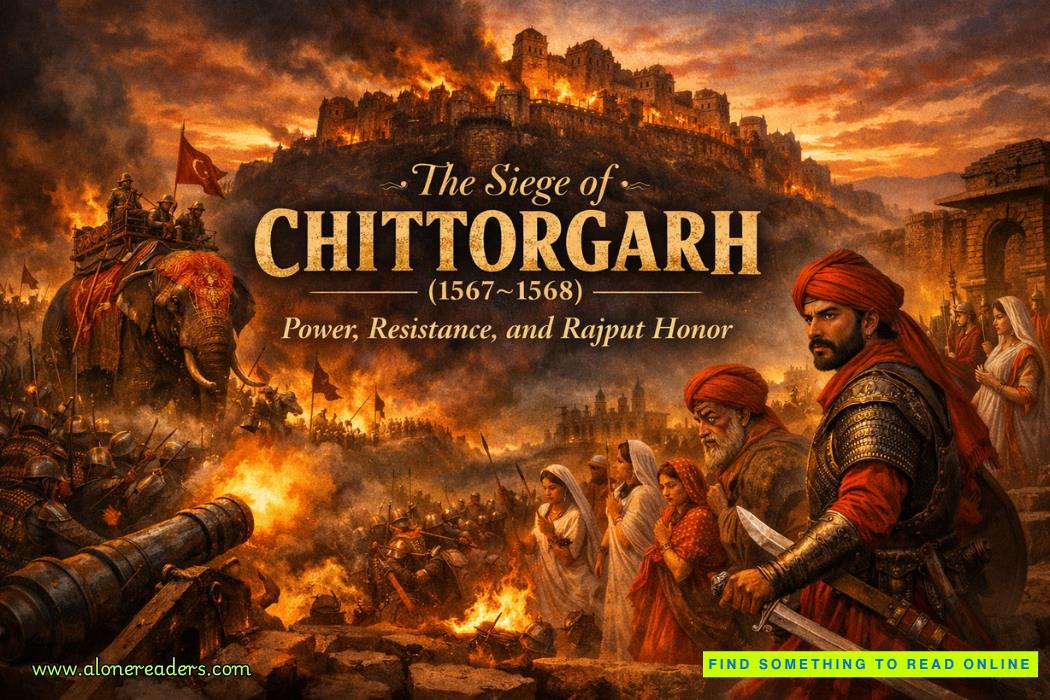
The case of Mewar also underscores the selective nature of Akbar’s strategy. While he was willing to negotiate and compromise with many Rajput states, he did not hesitate to use military force when diplomacy failed. The siege of Chittorgarh in 1568 serves as a stark reminder of this aspect. The fall of the fortress was accompanied by significant loss of life and marked a decisive assertion of Mughal power. Yet, even in such instances, Akbar’s ultimate goal was not mere destruction but integration. Once subdued, regions were often incorporated into the imperial system with provisions for local governance.
What made Akbar’s Rajput policy particularly effective was its flexibility and adaptability. It was not a rigid framework but a dynamic approach that evolved in response to changing circumstances. In regions where cooperation was possible, Akbar emphasized diplomacy and inclusion. In areas where resistance persisted, he combined military action with subsequent reconciliation efforts. This balance allowed him to expand his empire without overextending his resources or alienating key groups.
The long-term impact of this policy was profound. By incorporating Rajputs into the Mughal elite, Akbar created a more inclusive ruling class that reflected the diversity of the empire. This inclusivity contributed to political stability and facilitated administrative efficiency. It also fostered a cultural synthesis that influenced art, architecture, and social practices. The Mughal-Rajput alliance became a defining feature of the empire, shaping its identity for generations.
At the same time, the policy also had implications for Rajput society. While many rulers benefited from their association with the Mughal court, it also led to internal divisions. Some clans embraced the opportunities offered by imperial service, while others remained committed to traditional ideals of autonomy. This divergence created tensions within the Rajput community, as questions of loyalty and identity became increasingly complex. The legacy of Akbar’s policy, therefore, is not one of simple harmony but of negotiated coexistence marked by both collaboration and contestation.
In evaluating Akbar’s Rajput policy, it is essential to recognize its strategic brilliance as well as its limitations. It succeeded in securing the loyalty of many powerful states, thereby strengthening the Mughal Empire and enabling its expansion. It also introduced a model of governance that prioritized inclusion and mutual benefit over domination. Yet, it did not fully resolve the tensions between imperial authority and regional independence, as evidenced by continued resistance in places like Mewar.
Ultimately, Akbar’s approach to the Rajputs reflects a broader vision of empire that was both pragmatic and innovative. He understood that power could be consolidated not only through force but also through trust, respect, and shared interests. By weaving alliances, practicing diplomacy, and confronting resistance with both strength and restraint, he crafted a policy that remains a subject of historical fascination. It stands as a testament to the complexities of governance in a diverse and dynamic society, where unity was achieved not by erasing differences but by accommodating them within a larger political framework.
This intricate interplay of alliances, diplomacy, and resistance did more than secure Akbar’s rule; it redefined the relationship between rulers and the ruled in medieval India. It demonstrated that even in an era often characterized by conquest and conflict, there was room for negotiation, adaptation, and coexistence. And in that sense, Akbar’s Rajput policy was not just a strategy of empire-building, but a vision of political integration that continues to resonate in the study of history today.



 The Hundred Days Offensive: How the Allies Defeated Germany in World War I
 The Second Battle of the Marne: The Turning Point of World War I in 1918
 The Spring Offensive of 1918: Germany's Final Gamble to Win World War I
 The Treaty of Brest-Litovsk: How Russia Left World War I
 The Russian Revolution and World War I: How War Brought Down the Tsar
 The Zimmermann Telegram Explained: Germany's Secret Offer to Mexico in World War I










