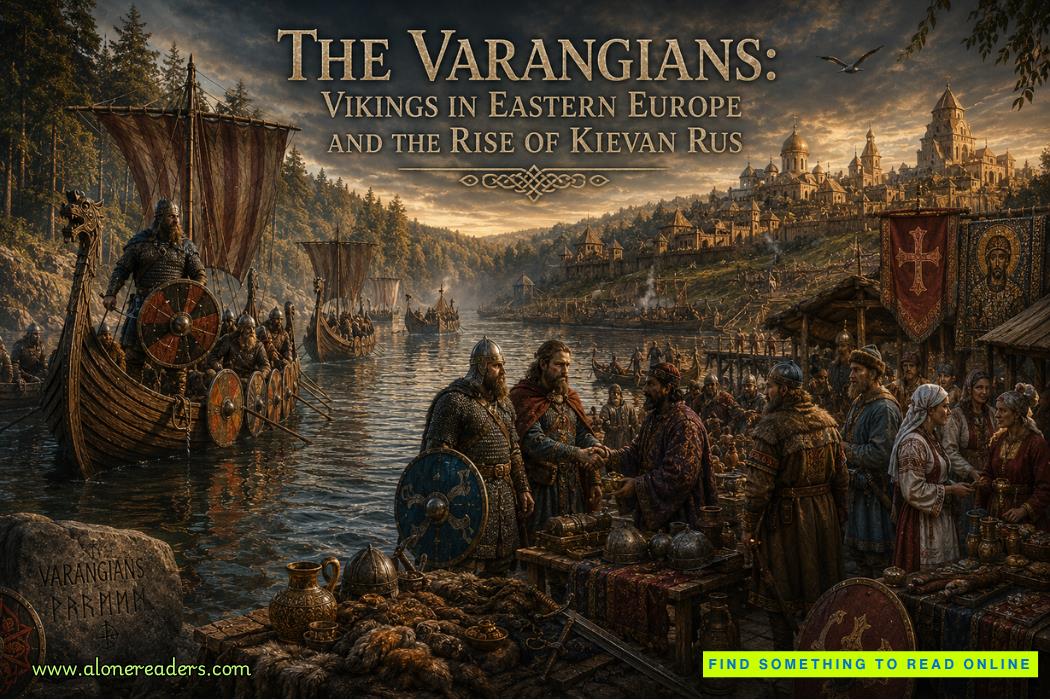
The story of the Varangians is one of movement, adaptation, and ambition, stretching far beyond the familiar image of Vikings raiding the coasts of Western Europe. While popular imagination often focuses on longships striking England or Francia, a parallel and equally transformative narrative unfolded deep within the river systems of Eastern Europe. Here, the Varangians—Norse adventurers, traders, and warriors—played a decisive role in shaping the political and cultural landscape that would eventually give rise to Kievan Rus, one of the most influential early medieval states in Europe.
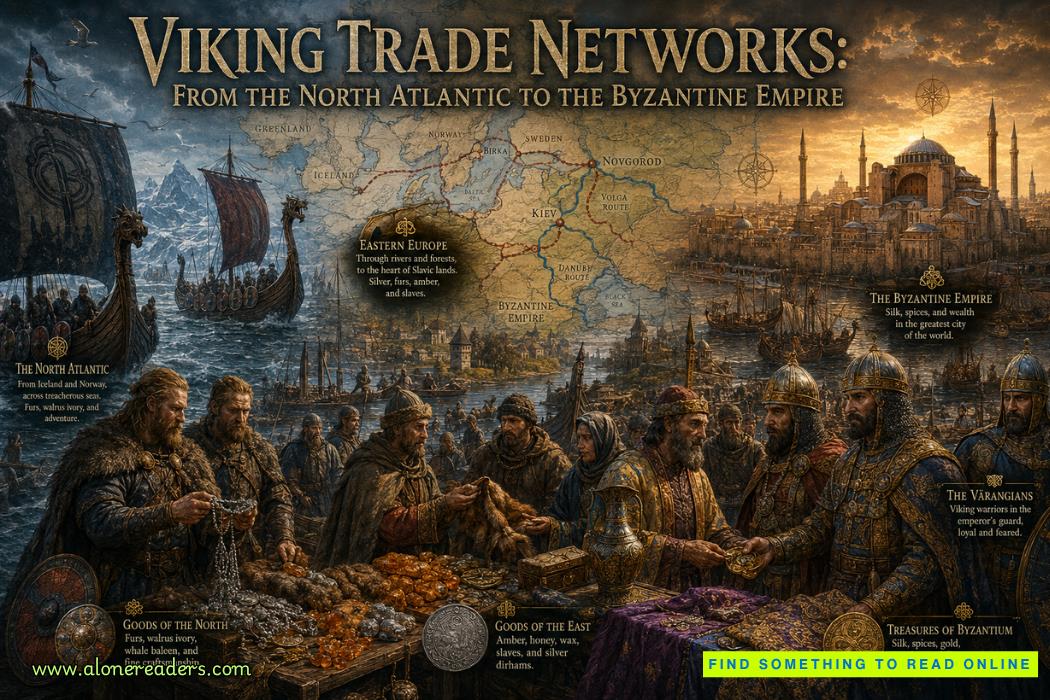
The term Varangian itself is believed to derive from an Old Norse word meaning “sworn companion” or “ally,” reflecting the tight-knit warrior bands that characterized Norse society. Unlike their western counterparts, who are often remembered primarily as raiders, the Varangians in the east were deeply engaged in trade, diplomacy, and state-building. They followed vast river networks such as the Volga and the Dnieper, carving out routes that connected the Baltic Sea to the Black Sea and the Byzantine Empire. These waterways became the arteries of a new economic system, linking northern Europe with the wealth of Constantinople and the Islamic Caliphates.
The Varangian expansion into Eastern Europe began in the late eighth and early ninth centuries, driven by a combination of factors including population pressure, internal conflict, and the lure of wealth. Scandinavia at the time was fragmented into numerous chieftaincies, and ambitious leaders sought opportunities beyond their homelands. The east offered not only riches but also relatively less organized resistance compared to the fortified kingdoms of Western Europe. The Slavic and Finnic tribes inhabiting the region were diverse and often divided, creating a landscape where skilled outsiders could exert influence.
One of the most enduring and debated aspects of this history is the so-called “Normanist theory,” which argues that the foundations of Kievan Rus were laid by these Norse Varangians. According to early chronicles, notably the Primary Chronicle, local tribes invited a Varangian leader named Rurik to rule over them in order to bring stability and order. Whether this invitation was literal or symbolic, it reflects a broader truth: the Varangians were not merely invaders but organizers of power. Rurik is said to have established himself in Novgorod, creating a base from which his successors would expand southward.
Following Rurik, his kinsman Oleg played a crucial role in consolidating Varangian authority. In a strategic move, Oleg captured Kiev, a settlement strategically located along the Dnieper River. This city would become the political and economic heart of Kievan Rus. By controlling Kiev, Oleg effectively dominated the trade route “from the Varangians to the Greeks,” a vital corridor that connected the Baltic world with Byzantium. This route was not merely a path for goods but a conduit for ideas, technologies, and cultural exchange.
The Varangians were uniquely positioned to act as intermediaries in this vast network. They traded furs, honey, wax, and enslaved people from the north in exchange for silk, spices, silver, and luxury goods from the south. Their longships, adapted for both open seas and shallow rivers, allowed them to navigate complex waterways and even portage between river systems. This logistical flexibility gave them a significant advantage and enabled them to establish far-reaching economic influence.
Yet, the rise of Kievan Rus was not solely an economic phenomenon. It was also a process of cultural synthesis. The Varangians did not remain isolated as a ruling elite; over time, they assimilated with the local Slavic populations. They adopted the Slavic language, intermarried with local elites, and integrated local customs into their governance. This blending created a new identity that was neither purely Norse nor entirely Slavic but a hybrid civilization with its own distinct character.
One of the most significant turning points in the history of Kievan Rus came with the reign of Vladimir the Great in the late tenth century. Although several generations removed from the original Varangian leaders, Vladimir’s rule exemplified the maturation of the state they had helped create. His decision to adopt Christianity from the Byzantine Empire in 988 was a transformative moment. This conversion was not merely a religious act but a strategic alignment that brought Kievan Rus into the cultural and political orbit of Byzantium.
The adoption of Christianity had profound consequences. It led to the development of written culture, the construction of churches, and the establishment of legal codes. The use of the Cyrillic script, influenced by Byzantine missionaries, facilitated the recording of laws, chronicles, and religious texts. This shift marked the transition of Kievan Rus from a loosely organized collection of territories into a more cohesive and sophisticated state.
Despite their growing integration, the Varangian legacy remained visible in various aspects of Kievan Rus. The ruling dynasty, known as the Rurikids, traced its origins back to Rurik and maintained a sense of continuity with its Norse past. Military practices, including the use of elite warrior retinues, also reflected Varangian traditions. Moreover, the connection with Scandinavia persisted through trade and occasional political alliances.
Beyond Eastern Europe, the Varangians also left their mark in the Byzantine Empire, where they served as the famed Varangian Guard. This elite unit, composed largely of Norse and later Anglo-Saxon warriors, was tasked with protecting the Byzantine emperor. Renowned for their loyalty and ferocity, the Varangian Guard became a symbol of the enduring reputation of Norse warriors. Their presence in Constantinople further illustrates the wide geographic reach and adaptability of the Varangian networks.
The decline of Kievan Rus in the twelfth and thirteenth centuries was the result of internal fragmentation and external pressures, including the devastating Mongol invasions. However, the legacy of the Varangians endured. The political structures they helped establish influenced the development of later states such as Russia, Ukraine, and Belarus. The very name “Rus” is believed to have Varangian origins, underscoring the deep imprint they left on the region.
What makes the Varangian story particularly compelling is its complexity. It challenges simplistic narratives of Vikings as mere raiders and highlights their roles as traders, settlers, and state-builders. Their journey into Eastern Europe was not a one-dimensional expansion but a multifaceted process involving negotiation, adaptation, and innovation. They navigated not only rivers but also cultural boundaries, creating connections that reshaped the medieval world.
In examining the rise of Kievan Rus, it becomes clear that the Varangians were catalysts rather than sole architects. They provided the initial framework of leadership and connectivity, but the state’s development was a collaborative process involving diverse peoples and influences. This interplay between Norse initiative and Slavic foundation produced a civilization that was both dynamic and resilient.
The enduring fascination with the Varangians lies in their ability to bridge worlds. They linked the cold fjords of Scandinavia with the bustling markets of Constantinople, the forests of Eastern Europe with the deserts of the Islamic world. In doing so, they created a network of exchange that transcended geography and culture. Their legacy is not confined to battles or conquests but is embedded in the very fabric of Eastern European history.
Ultimately, the story of the Varangians and the rise of Kievan Rus is a testament to the power of movement and interaction in shaping human history. It reveals how groups on the margins can become central actors in transformative processes, and how the blending of cultures can give rise to new and enduring forms of identity. The Varangians did not simply pass through Eastern Europe—they helped define it, leaving behind a legacy that continues to echo through the centuries.




 The Hundred Days Offensive: How the Allies Defeated Germany in World War I
 The Second Battle of the Marne: The Turning Point of World War I in 1918
 The Spring Offensive of 1918: Germany's Final Gamble to Win World War I
 The Treaty of Brest-Litovsk: How Russia Left World War I
 The Russian Revolution and World War I: How War Brought Down the Tsar
 The Zimmermann Telegram Explained: Germany's Secret Offer to Mexico in World War I










