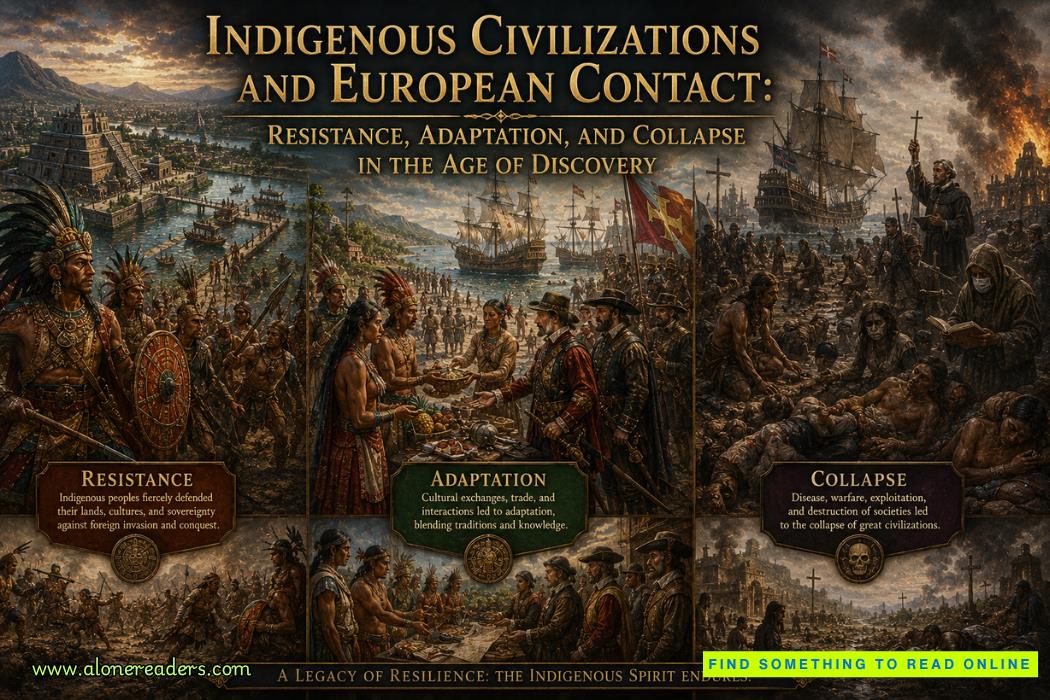
The encounter between Indigenous civilizations and European explorers during the Age of Discovery represents one of the most transformative and devastating periods in human history. Long before European ships crossed the Atlantic and Pacific Oceans, Indigenous societies across the Americas, Africa, and parts of Asia had developed complex political systems, thriving economies, advanced agricultural practices, and deeply rooted spiritual traditions. These civilizations were not isolated or primitive; rather, they were sophisticated networks of human life that evolved over thousands of years. When Europeans arrived in the late fifteenth and early sixteenth centuries, they did not discover empty lands—they entered worlds already rich with culture, knowledge, and power.
The initial contact between Europeans and Indigenous peoples was often marked by curiosity and cautious diplomacy. In regions like the Caribbean, early encounters between Spanish explorers and the Taíno people involved exchanges of goods, gestures of friendship, and attempts at communication across language barriers. However, these early moments of relative peace were short-lived. European ambitions, driven by the pursuit of wealth, land, and religious expansion, quickly transformed contact into conquest. The introduction of unfamiliar technologies, such as firearms and steel weapons, gave Europeans a significant military advantage, but it was not these tools alone that reshaped Indigenous societies.
One of the most catastrophic consequences of European arrival was the spread of diseases. Indigenous populations had no prior exposure to illnesses such as smallpox, measles, and influenza, which Europeans carried unknowingly. These diseases spread rapidly, often ahead of direct European contact, devastating entire communities. In some regions, population declines reached staggering levels, with estimates suggesting that up to ninety percent of Indigenous populations in the Americas perished within a century of contact. This biological catastrophe fundamentally weakened Indigenous resistance and disrupted social, political, and economic systems.
Despite these overwhelming challenges, Indigenous civilizations did not passively succumb to European domination. Resistance was a defining feature of this period, taking many forms across different regions. In Mesoamerica, the Aztec Empire initially confronted Spanish forces led by Hernán Cortés with military strength and strategic alliances. Although the eventual fall of Tenochtitlan in 1521 marked a turning point, it was not simply a story of European superiority. Internal divisions, alliances between the Spanish and rival Indigenous groups, and the devastating impact of disease all contributed to the outcome. Similarly, in the Andes, the Inca Empire resisted Spanish conquest under leaders like Atahualpa and later through prolonged guerrilla warfare led by figures such as Túpac Amaru.
In North America, resistance continued for centuries. Indigenous nations, including the Powhatan Confederacy, the Pueblo peoples, and later the Lakota and Apache, engaged in both direct conflict and strategic negotiation with European settlers. The Pueblo Revolt of 1680 stands as a powerful example of successful resistance, in which Indigenous communities expelled Spanish colonizers from present-day New Mexico for over a decade. These acts of resistance demonstrate that Indigenous peoples were active agents in shaping their own histories, even in the face of immense adversity.
At the same time, adaptation played a crucial role in the survival of many Indigenous societies. Adaptation was not a sign of weakness but a strategic response to rapidly changing circumstances. Indigenous groups adopted new technologies, such as horses introduced by the Spanish, which transformed mobility, hunting practices, and warfare across the Great Plains. The adoption of European goods, including metal tools and firearms, allowed some communities to strengthen their economic and military positions. Trade networks expanded and evolved, incorporating European goods into existing systems of exchange.
Cultural adaptation also occurred in complex and often painful ways. Missionary efforts led to the spread of Christianity, sometimes through coercion and sometimes through negotiation. In many cases, Indigenous peoples blended Christian beliefs with their own spiritual traditions, creating unique forms of religious expression. Language, clothing, and social structures were also influenced by European presence, resulting in hybrid cultures that reflected both continuity and change. This process of cultural blending was not uniform; it varied widely depending on local conditions, leadership, and the intensity of colonial pressure.
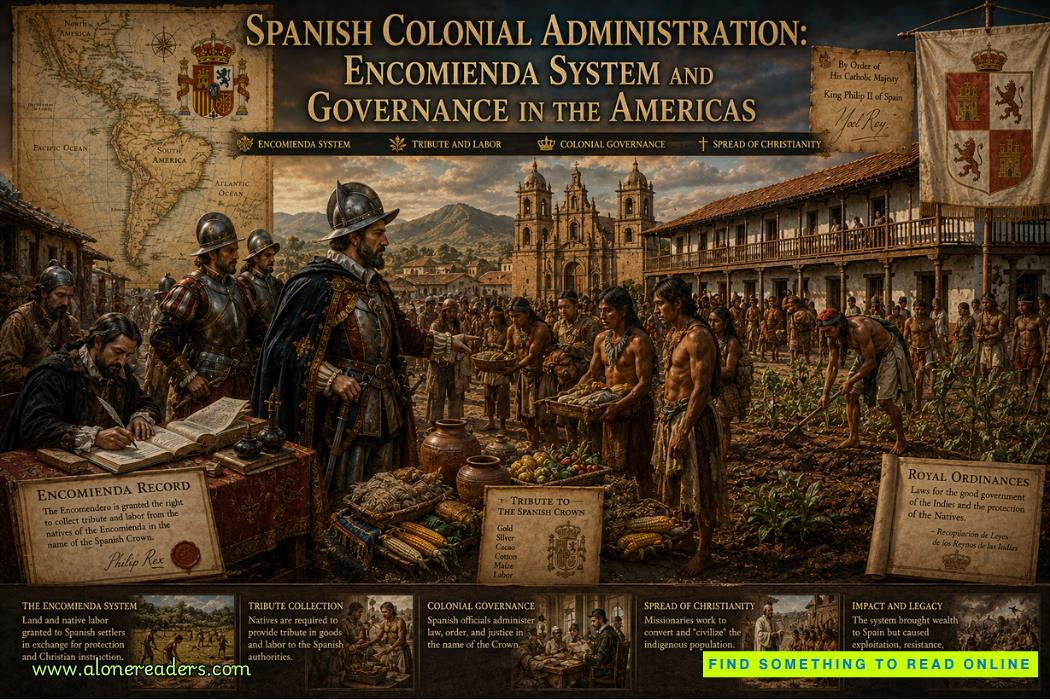
However, adaptation could not always prevent collapse. The combination of disease, warfare, forced labor, and displacement led to the breakdown of many Indigenous societies. The Spanish encomienda system, for example, imposed harsh labor conditions on Indigenous populations, particularly in mining and agriculture. This system not only exploited Indigenous labor but also disrupted traditional ways of life, leading to further population decline and social disintegration. In the Caribbean, entire Indigenous populations, such as the Taíno, were nearly wiped out within a few generations.
The collapse of Indigenous political structures also facilitated European colonization. As central authorities weakened or disappeared, European powers were able to impose new शासन systems, extract resources, and expand their territories. In many cases, Indigenous lands were seized, and surviving populations were forced into reservations, missions, or labor systems that limited their autonomy. The loss of land was not merely an economic issue; it represented a profound spiritual and cultural dislocation, as land was deeply connected to identity, ancestry, and cosmology.
Yet, even in the face of collapse, Indigenous resilience persisted. Oral traditions, cultural practices, and community structures survived, often in adapted forms. In some regions, Indigenous populations began to recover over time, maintaining their identities while navigating the realities of colonial rule. Resistance did not end with initial conquest; it continued through legal challenges, cultural preservation, and, in some cases, armed संघर्ष well into the modern era.
The impact of European contact was not limited to the Americas. In Africa and Asia, European expansion took different forms, often involving trade, alliances, and gradual colonization rather than immediate conquest. Indigenous societies in these regions also experienced a combination of resistance, adaptation, and, in some cases, collapse. However, the demographic impact was generally less catastrophic than in the Americas, largely because populations had greater exposure to Old World diseases and thus some level of immunity.
The Age of Discovery, therefore, was not a simple narrative of exploration and progress. It was a complex and often violent process that reshaped the world in profound ways. The experiences of Indigenous civilizations during this period reveal a dynamic interplay of power, survival, and transformation. Resistance demonstrated the determination of Indigenous peoples to defend their lands and ways of life. Adaptation reflected their ability to navigate new realities with creativity and resilience. Collapse, while devastating, was not the end of Indigenous histories but a turning point that continues to influence the present.
Understanding this history requires moving beyond simplified narratives of conquest and acknowledging the depth and diversity of Indigenous experiences. It involves recognizing that Indigenous peoples were not merely victims of history but active participants who responded to European contact in varied and complex ways. Their stories are essential to understanding the global transformations of the Age of Discovery and the enduring legacies of colonialism.
Today, the legacy of this period remains visible in social inequalities, cultural continuities, and ongoing struggles for Indigenous rights and recognition. Many Indigenous communities continue to assert their sovereignty, protect their lands, and preserve their cultural heritage in the face of modern challenges. The history of Indigenous civilizations and European contact is not confined to the past; it is a living narrative that continues to shape the world we inhabit.
By examining the themes of resistance, adaptation, and collapse, we gain a more nuanced understanding of this pivotal era. It reminds us that history is not only about events but about human experiences—of loss and survival, conflict and cooperation, destruction and renewal.



 The Hundred Days Offensive: How the Allies Defeated Germany in World War I
 The Second Battle of the Marne: The Turning Point of World War I in 1918
 The Spring Offensive of 1918: Germany's Final Gamble to Win World War I
 The Treaty of Brest-Litovsk: How Russia Left World War I
 The Russian Revolution and World War I: How War Brought Down the Tsar
 The Zimmermann Telegram Explained: Germany's Secret Offer to Mexico in World War I