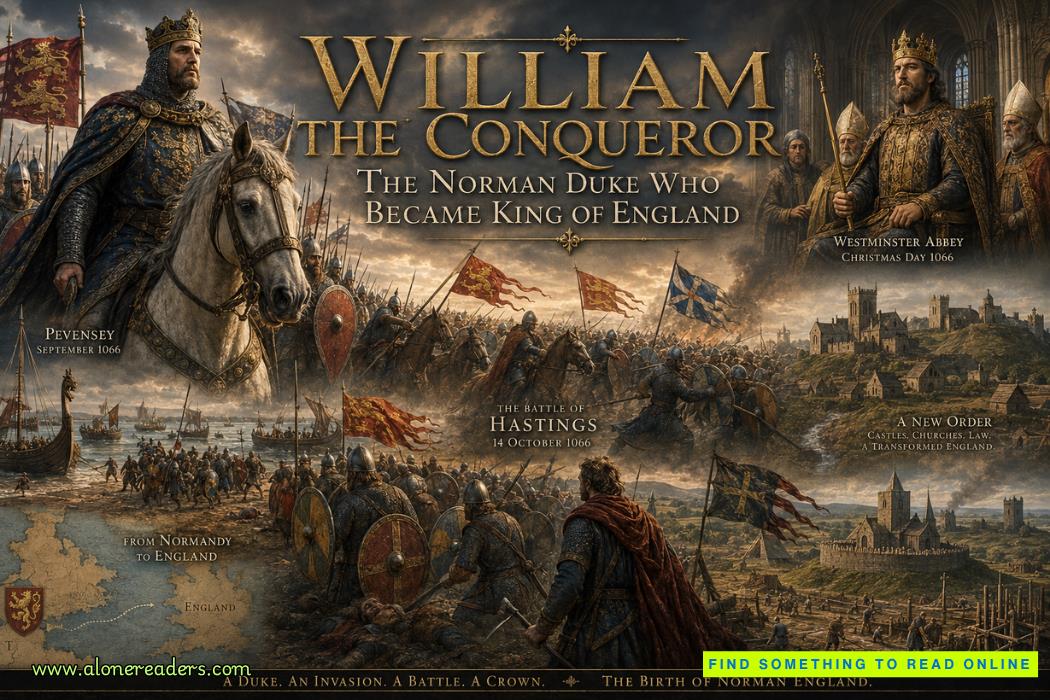
In the winter of 1066, England stood at the edge of a political abyss. A childless king had died, rival claimants pressed their rights, and within a single year the crown passed through war, oath, invasion, and conquest before resting on the head of a duke from across the Channel. The story of William the Conqueror matters not only because it ends at the Battle of Hastings, but because it explains how a contested succession became the foundation of Norman England.
Before 1066, England was a wealthy and comparatively centralized kingdom, while Normandy was a militarized duchy on the northern fringe of the French world, shaped by Viking settlement and Frankish politics. England still bore deep Scandinavian marks in law, language, and elite culture, and the House of Godwin dominated royal politics under Edward the Confessor. Normandy, by contrast, had developed a hard-edged aristocratic culture, strong ducal authority, and a ruling class accustomed to mounted warfare and outward expansion.
Edward’s reign, which began in 1042, exposed the fragility of English succession customs. He had no surviving heir, and the crown could not pass by simple hereditary rule in the modern sense; it required elite assent, dynastic legitimacy, and, ideally, the sanction of a ruler who could protect the realm. William’s claim rested on a Norman tradition that Edward had promised him the throne, reportedly as early as 1051, and that Harold Godwinson had sworn support for William during a journey to Normandy in 1064 or 1065. Harold’s supporters, however, saw matters differently: when Edward died on 5 January 1066, the English magnates chose Harold, the most powerful man in the kingdom, to preserve stability.
The central problem, then, was not merely who had the better legal claim, but which form of legitimacy would prevail in a medieval world where oath, blood, force, and consent all mattered at once. William’s genius lay in converting a disputed right into a coalition, then into an invasion, and finally into a durable regime. That transformation began long before his ships crossed the Channel.
William was born around 1028 at Falaise in Normandy, the illegitimate son of Duke Robert I and Herleva. His bastardy made his early position precarious, and his accession as duke in 1035 triggered a period of rebellion and violence in which survival itself was an achievement. Yet those years also forged his political character. He learned to punish disloyalty, reward service, and build authority through a combination of force, kinship, and patronage. By the 1050s he had become one of the most formidable rulers in northwestern Europe.
Normandy’s society made William’s style of rule possible. Like other princely powers of the age, it relied on armed retainers, castle-building, church patronage, and personal lordship. Mounted warriors were central to Norman military culture, but the duchy was not ruled by cavalry alone; it also depended on infantry, naval transport, and a disciplined ducal household. William could mobilize resources because his duchy had an unusually effective administrative core for its time, and because church reformers and leading abbots often regarded him as a protector of order. That alliance between power and piety would later matter greatly when he sought a papal blessing for the invasion of England.
Diplomacy and propaganda were as important as weapons. William presented his campaign as a lawful recovery of a promised inheritance, not as naked aggression. The Bayeux Tapestry—a crucial if partisan source—preserves the story of Harold’s oath, the preparations for invasion, the landing in England, and the climactic defeat at Hastings. As a visual narrative, it is extraordinary for its depiction of ships, armor, horses, and battlefield tactics, but it is also selective, and its Norman perspective must be handled critically.
The papacy mattered too. William reportedly obtained papal support and a banner for the campaign, turning invasion into a quasi-sacred enterprise. That did not make the conquest purely religious, but it gave the expedition an ideological edge. In medieval politics, a papal banner could signal legitimacy, aid recruitment, and frame war as a just cause. William’s expedition therefore united dynastic claim, military planning, and spiritual sanction in a way few medieval rulers could match.
The logistical achievement of 1066 was immense. William assembled a substantial army, often estimated at roughly 5,000 to 7,000 men, including cavalry, infantry, and archers or crossbowmen, and gathered ships for the Channel crossing. For weeks unfavorable winds delayed departure, while Harold’s southern army remained on watch and then had to be dismissed for lack of supplies and because the harvest required labor. This was one of the decisive strategic moments of the year: William’s patience contrasted with Harold’s need to defend a kingdom on two fronts.
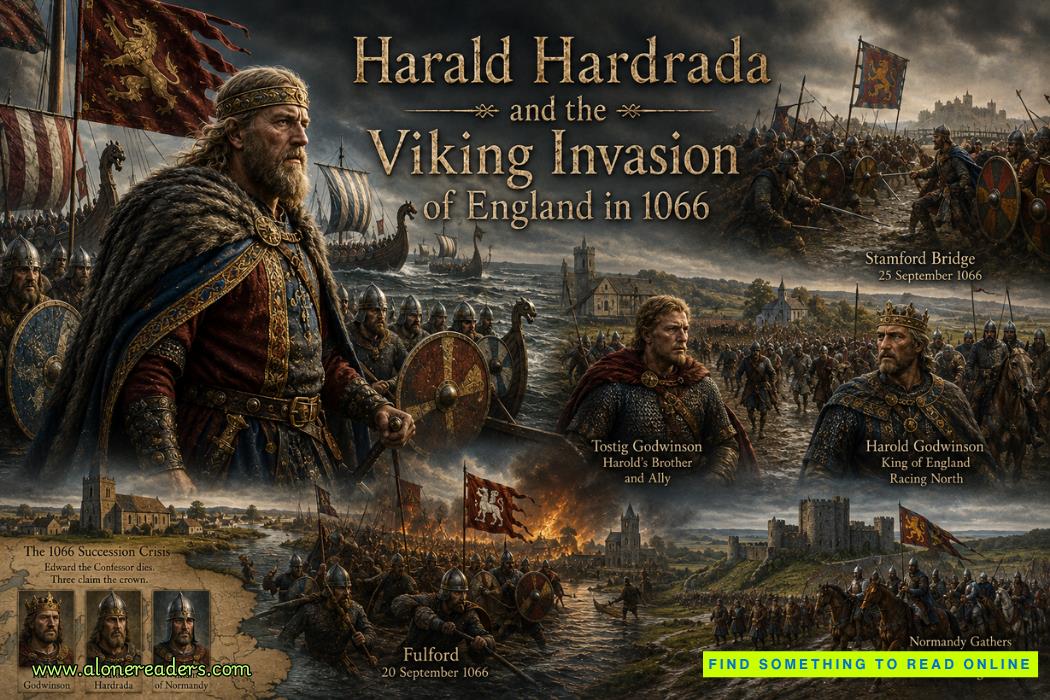
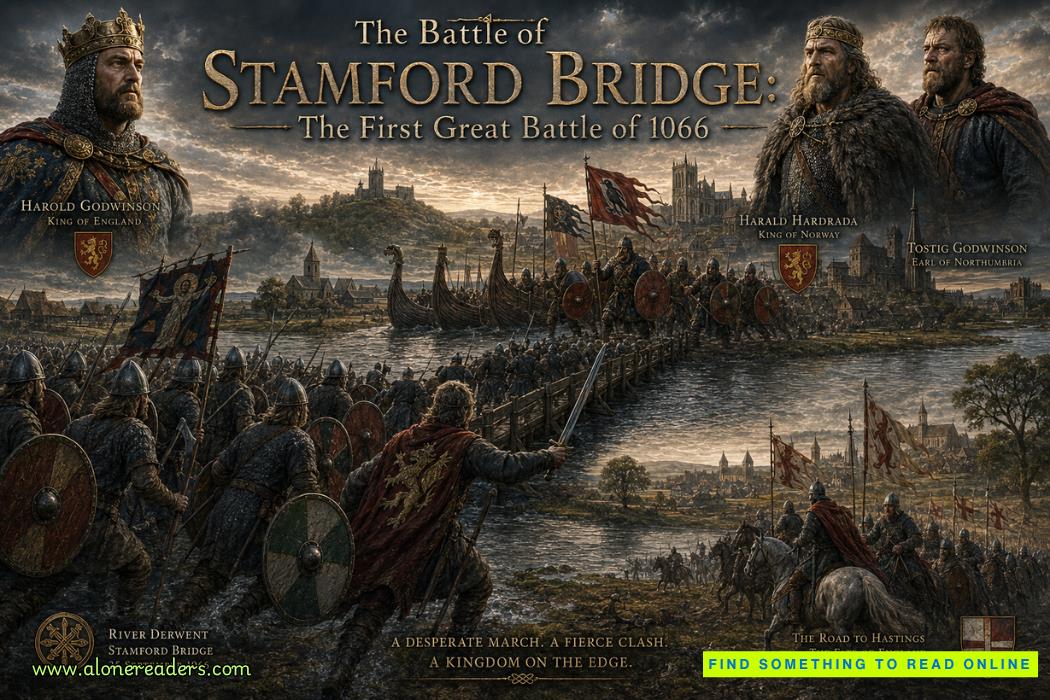
That northern threat came first. In September 1066, Harald Hardrada of Norway and Harold’s estranged brother Tostig invaded in the north. Harold Godwinson marched rapidly from the south to meet them and won a hard-fought victory at Stamford Bridge on 25 September 1066. The battle was a brilliant operational success, but it came at a cost. Harold’s army was exhausted, his northern campaign had consumed precious time, and the norman landings in the south now forced him into another rapid march across the kingdom.
William landed at Pevensey on 28 September 1066 and fortified his position almost immediately, including the construction of a castle at Hastings. This was a revealing act. The castle was not just a strongpoint; it was a statement that conquest would be made durable through permanent occupation. Norman castles would become one of the most visible instruments of rule in England, projecting control over terrain, routes, and populations.
The Battle of Hastings on 14 October 1066 was not a simple clash of infantry and cavalry, though that is the shorthand most often used. Harold’s force, drawn from the king’s household troops and the fyrd, occupied high ground on a ridge near Hastings and fought in a dense shield wall. The huscarls formed its hard center, heavily armed with helmets, mail, shields, and two-handed axes, while the fyrd supplied broader numbers but less professional experience. William’s army included mounted knights, infantry support, and archers, operating under a command structure that demanded coordination across mixed troop types.
Battlefield geography shaped the outcome. Harold’s defensive position was strong, but his army had marched hard from the north and had little time to recover or to prepare a fortified stance as fully as he might have wished. The Normans attacked uphill, and the fighting became a long attritional struggle. Norman cavalry could not simply smash the shield wall; instead, the battle seems to have turned on repeated assaults, feigned retreats, disciplined pressure, and the gradual erosion of English cohesion. Whether Harold was killed by an arrow in the eye, cut down in the melee, or both, the result was decisive: once his death spread, English resistance at the field collapsed.
William’s victory was not inevitable, and historians continue to debate how much weight to assign to luck, leadership, terrain, and morale. Some emphasize Harold’s exhaustion after Stamford Bridge and the difficulty of sustaining two major campaigns in one month. Others stress William’s preparation, his ability to keep his coalition together through delays, and the tactical flexibility of Norman warfare. The most persuasive interpretation is that Hastings was won by the convergence of logistics, timing, command discipline, and the superior sustainability of William’s campaign machine.
Among the major figures, William stands out as both a military commander and a state-builder. He was relentless, often harsh, but also methodical. His strength lay in strategic patience and political calculation; his weakness, perhaps, was his reliance on coercion once he had won. Harold Godwinson, by contrast, emerges as a king of immense energy and courage, trapped by geography, speed, and the burden of legitimacy. He has sometimes been treated too simplistically as either usurper or national hero, but he was in fact a capable ruler confronted by extraordinary pressure from multiple directions.
Other figures mattered as well. Odo of Bayeux, William’s half-brother, appears prominently in the visual and political memory of the conquest, while Edward the Confessor represented a dying order that could not settle its own succession. The House of Normandy and the House of Godwin were not merely family names; they embodied rival visions of kingship, lordship, and the proper basis of power. The English aristocracy’s choice in January 1066 was pragmatic, but pragmatism could not survive defeat in the field.
William’s march to London after Hastings was as important as the battle itself. He did not immediately subdue the kingdom through one combat; instead, he advanced with caution, isolating resistance and accepting submissions from magnates who recognized that continued war might destroy them. He was crowned at Westminster Abbey on Christmas Day, 1066, an act that fused conquest with kingship and gave the new regime ceremonial legitimacy. Yet the conquest was still incomplete. Rebellions in the north and west persisted until 1071, and William had to secure the realm through force, hostages, garrisons, and the construction of castles.
The consequences were profound. English landholding was massively redistributed to Norman lords, accelerating the replacement of the old aristocracy. Feudal relationships became more explicit and more tightly linked to military service, even though English institutions did not become a perfect copy of continental feudalism. The Church was reformed and reorganized under new leadership, and England’s connection to western Europe deepened. Administrative continuity also mattered: William did not simply destroy old law and replace it with chaos. Instead, he preserved much of the existing fiscal and judicial machinery while placing it in Norman hands.
Economically, the conquest intensified royal extraction and improved record-keeping. The Domesday Book of 1086 was a remarkable survey of land, wealth, and obligation, compiled to help William understand and control his kingdom. It was not just an inventory; it was a weapon of government, a snapshot of a conquered society being made legible to a new ruler. For ordinary people, the changes could mean new masters, harsher local pressures, castle construction, and the insecurity that followed invasion and rebellion.
Culturally, the conquest transformed the English language and elite culture. Norman French entered the court, the law, and aristocratic life, while Latin remained central to administration and learning. Over time, this produced the layered vocabulary that still marks English today. The old English elite was not entirely erased, but it was subordinated, and the social world of Anglo-Saxon England gave way to a more international Anglo-Norman order.
The legacy of William the Conqueror has been preserved in chronicles, embroidery, archaeology, and national memory. The Bayeux Tapestry remains the most famous visual account of the conquest, while modern historians use it alongside charters, chronicles, earthworks, and excavated castle sites to reconstruct the campaign. Popular culture often turns William into a single figure of triumph, but scholarship has increasingly emphasized process over spectacle: the conquest was a sequence of political choices, battlefield contingencies, and institutional reforms, not one heroic moment alone.
William’s importance endures because he changed the structure of power in England without entirely dismantling its older foundations. He brought a new aristocracy, a new military geography, and a new relationship between crown and land. Yet he also inherited and adapted a resilient kingdom, one that would absorb conquest even as it was remade by it. That tension—between continuity and rupture—is why historians still return to 1066 and to William himself.
William the Conqueror was not merely the man who won at Hastings; he was the ruler who understood that victory on a battlefield mattered only when translated into castles, surveys, churches, and law. In that sense, his greatest conquest was not England’s soil but England’s future.



 The Hundred Days Offensive: How the Allies Defeated Germany in World War I
 The Second Battle of the Marne: The Turning Point of World War I in 1918
 The Spring Offensive of 1918: Germany's Final Gamble to Win World War I
 The Treaty of Brest-Litovsk: How Russia Left World War I
 The Russian Revolution and World War I: How War Brought Down the Tsar
 The Zimmermann Telegram Explained: Germany's Secret Offer to Mexico in World War I










