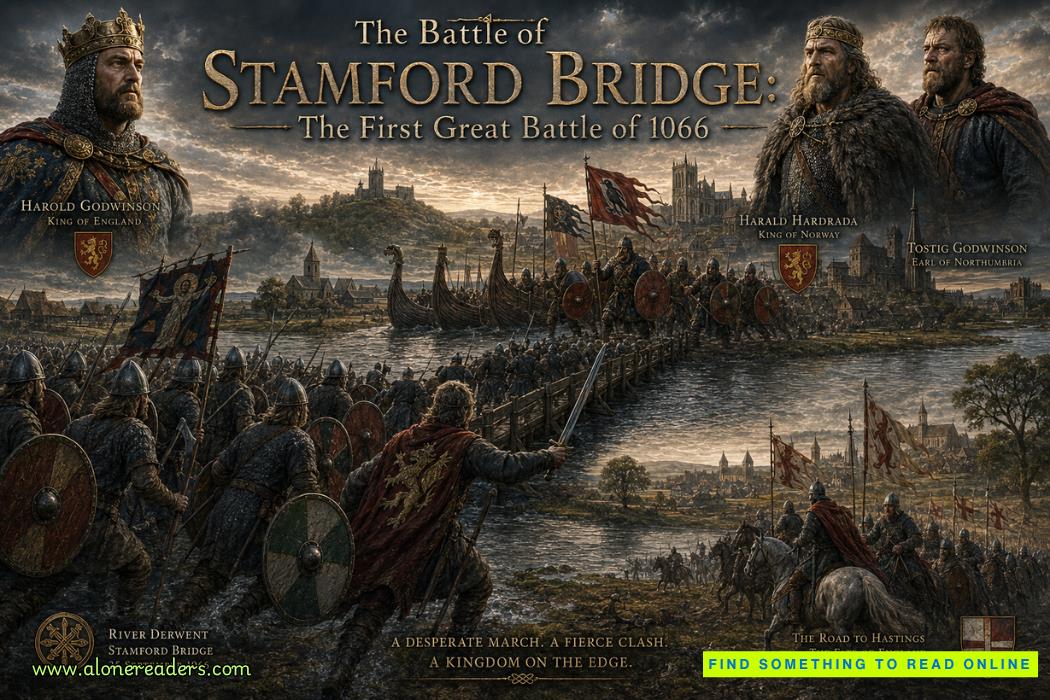
On a cold September morning in 1066, a battle fought in a riverside meadow near York decided more than a local invasion; it exposed the fragility of Anglo-Saxon kingship and set in motion the chain of events that would culminate at Hastings three weeks later. The Battle of Stamford Bridge was not merely a prelude to the Norman Conquest. It was the moment when Harold Godwinson won the most exhausting victory of his reign, destroyed the last great Scandinavian attempt to seize England, and inadvertently weakened himself for the greater struggle still to come.
To understand Stamford Bridge properly, one must place it inside the larger political crisis of Edward the Confessor’s final years and the unstable succession that followed his death in January 1066. England was a wealthy kingdom with a sophisticated royal administration, but its succession customs remained unwritten and therefore vulnerable to dispute. Royal authority depended on negotiation among the great earls, the church, and the king’s household, while northern Europe still lived under the long shadow of Viking power and cross-Channel aristocratic politics. In that world, Normandy, Norway, and the House of Godwin all believed they had claims, obligations, or opportunities in England.
Edward’s reign had tied England more closely to Normandy than many later chroniclers liked to admit. The king had spent years in exile there, had nurtured alliances with Norman churchmen and nobles, and had likely encouraged a broader exchange of ideas about government, religion, and military practice. Yet England under the Godwinsons was not a Norman dependency. It remained a kingdom ruled through earls, shire courts, tribute, and a military system in which the fyrd could be summoned for short campaigns and the elite huscarls formed the king’s professional fighting core. These institutions were durable, but they were also designed for a political order that assumed the monarch would usually have time to mobilize. In 1066, time became the decisive enemy.
The immediate northern crisis began with the ambitions of Harald Hardrada, king of Norway, one of the most formidable warrior rulers of the age. His claim to England was not based on Anglo-Saxon law in any modern sense, but on a web of dynastic memories and political opportunism that included earlier Scandinavian influence over England and the support of Harold’s exiled brother, Tostig Godwinson. Tostig had been driven from the earldom of Northumbria in 1065 after a rising against his rule, and his grievance turned into a dangerous alliance. Hardrada and Tostig together represented a fusion of external invasion and internal fracture, a combination that made England vulnerable in precisely the way a centralized monarchy feared most.
The Norwegian expedition assembled a formidable force and a fleet of longships, often estimated in the sources at around 300 vessels, though figures vary and medieval numbers must always be treated cautiously. Hardrada did not sail directly into the path of a prepared English field army. Instead, he entered the Humber and moved inland, winning a preliminary victory over local English forces at Fulford, near York, on 20 September. That battle mattered because it opened the road to the city and encouraged the invaders to believe that the north might yield before the king could react. Yet it also created a false sense of strategic success. The Norwegians were still operating far from secure bases, with their army split between men at the camp near Stamford Bridge and others guarding the ships farther south at Riccall. Their position was strong enough to threaten York, but too dispersed to resist an immediate royal counterstroke.
Harold Godwinson’s response was one of the great forced marches in medieval English history. While still waiting in the south for the expected Norman landing, he received news of the Norwegian invasion and moved with remarkable speed northward, gathering troops as he went. The exact size of his army is disputed, but the consensus is that he reached the north with a substantial force after traveling roughly 185 miles in about four days. The achievement was logistical as much as military. Men had to be summoned, fed, and coordinated over a vast distance, while the king had to balance urgency against the risk of exhausting the very army he needed to fight. That Harold succeeded at all reveals the strength of English royal mobilization in crisis; that he succeeded by such strenuous means explains why the victory would prove strategically costly.
The battlefield at Stamford Bridge lay east of York near the River Derwent, where terrain and timing shaped the outcome as much as courage did. The bridge itself became the fulcrum of the first phase of combat. According to the later tradition preserved in narrative sources, a single Norse defender held the crossing long enough to delay the English advance, and the story has become one of the iconic episodes of medieval warfare. Whether every detail is exact matters less than the tactical truth it dramatizes: a narrow river crossing can neutralize numerical superiority, especially when an attacking force is tired, compressed, and forced to fight in succession rather than deployment. Once the bridge was forced, the English pressed into the open ground beyond, where the Norwegians attempted to form a shield wall but did so without the full armor and battlefield preparation they would normally have wanted.
This was not a clash of chivalric cavalry charges in the later medieval sense. The English army was predominantly infantry, including hardened huscarls with mail shirts, helmets, shields, and the formidable two-handed axe, alongside less heavily armed fyrd levies. The Norwegians, too, fought as infantry in a shield wall, and Hardrada was by no means a primitive raider. He was a veteran commander who understood discipline, momentum, and morale. But the surprise attack exposed the vulnerability of an army that had expected to receive hostages and negotiate rather than fight for its life. Several accounts emphasize that many Norwegians had left their armor behind at the ships or in camp, which is entirely plausible as a strategic misjudgment after Fulford and York. Once battle was joined in earnest, the English could exploit their greater readiness, their heavier equipment, and their numerical advantage on the field itself.
The deaths of Hardrada and Tostig turned the battle from victory into catastrophe for the invaders. Hardrada, the seasoned king who had campaigned across Europe before seeking England, was struck down amid the fighting; later tradition says an arrow to the throat killed him, though the precise manner of his death is less important than the collapse it symbolized. Tostig refused surrender and was killed soon afterward. Their deaths decapitated the expedition’s leadership and destroyed any realistic possibility of restoring the Norwegian advance. The survivors fled or surrendered, and only a tiny remnant of the original fleet was required to carry them home. In Scandinavian terms, Stamford Bridge is often treated as the end of the great Viking Age; in English terms, it was a victory so total that it briefly seemed to secure the kingdom.
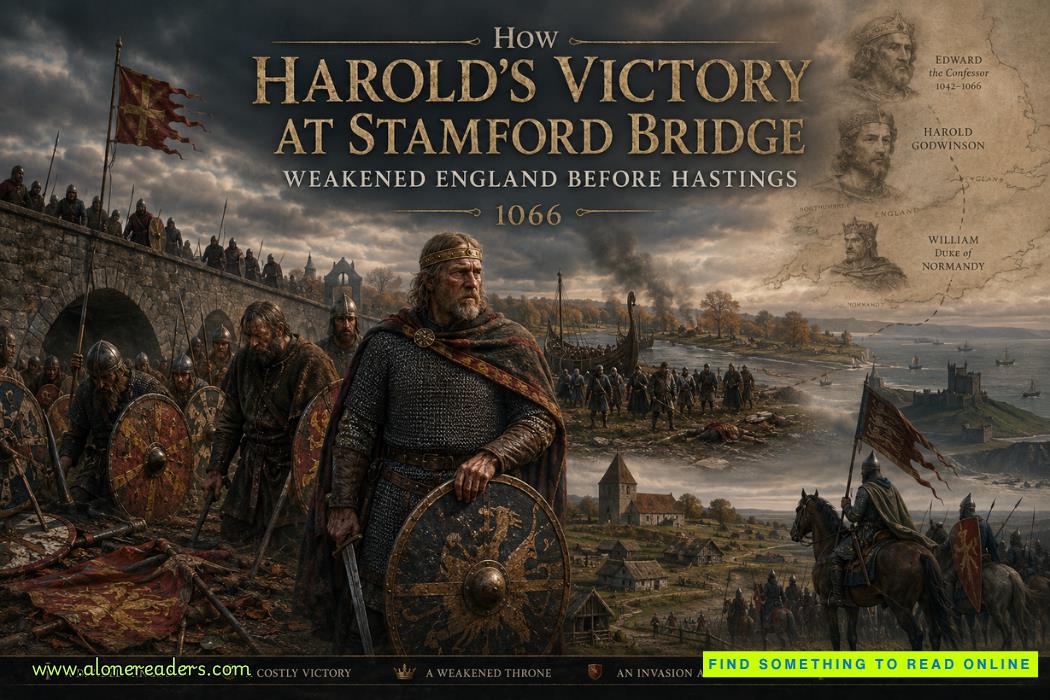
The problem was that victory came at a terrible price. Harold’s army had marched hard, fought hard, and won hard. The casualties were severe enough to matter immediately and to matter still more in retrospect, because the king could not afford to let his troops rest for long. News arrived almost at once that Duke William of Normandy had landed in the south on 28 September. The speed with which events had moved is crucial to understanding 1066: the kingdom’s defensive system was being tested by two invasions at opposite ends of the country within days of one another. Harold now faced a grim choice between consolidation and interception. He chose to move south again, a decision that was militarily daring but strategically perilous, because the alternative was to allow William time to entrench and ravage the countryside.
Harold Godwinson emerges from Stamford Bridge as a ruler of considerable energy, nerve, and practical intelligence. He was not merely a usurper, as later Norman writing often implied, nor a flawless national hero. He was a pragmatic king from the House of Godwin, deeply rooted in the political culture of Anglo-Saxon England and capable of extraordinary operational leadership. Yet his reign also reveals structural weakness: a monarchy that depended on personal mobility, regional loyalties, and rapid improvisation when written succession rules failed. His decision to confront Hardrada before William was sensible in isolation, because the Norwegian invasion was already in motion and nearer to York than the Norman landing was to London. But the sequence of invasions meant that even a successful battle could become a strategic trap.
Hardrada was equally consequential, though for different reasons. He was one of the last great warrior kings of the North Sea world, ambitious, experienced, and politically versatile. His invasion combined dynastic reasoning, Scandinavian prestige, and the opportunism of Tostig’s exile. Tostig himself remains one of the most tragic and unstable figures of the crisis: a dispossessed earl seeking revenge, restoration, and leverage in a larger international contest he could not ultimately control. Historians continue to debate whether Hardrada’s enterprise was a serious bid for permanent conquest or a bold but limited strike aimed at political gain and ransom. Whatever its precise intention, the invasion was large and dangerous enough to force Harold into a northern march that transformed the balance of the year.
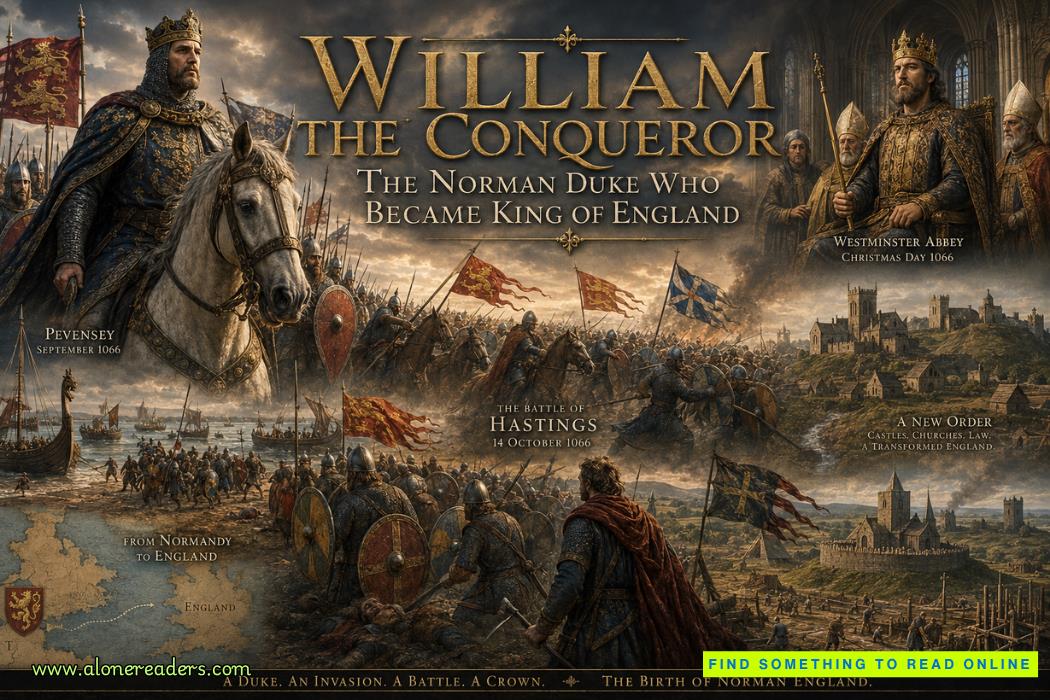
The larger historical significance of Stamford Bridge lies not only in what it ended, but in what it enabled. The battle ended the most serious Scandinavian challenge to England and effectively closed the chapter of sustained Viking conquest attempts. It also exposed the limits of a kingship that could win battles yet still be undone by exhaustion, geography, and timing. Within a generation, the Norman regime would exploit those same conditions to create a new order. Castles spread across the landscape, particularly in strategic and rebellious regions; landholding was reorganized; elite personnel were replaced on a vast scale; the church was tied more tightly to continental reform; and the Domesday Book would later record a society transformed by conquest. Stamford Bridge did not cause these changes, but it made the Norman triumph easier by weakening the English king who might otherwise have resisted William more effectively.
The battle’s cultural legacy is unusually rich. Medieval chroniclers remembered it as a dramatic test of kingship and providence, and later centuries folded it into national narratives of invasion and resistance. The Bayeux Tapestry, though devoted to Hastings rather than Stamford Bridge, stands in the background of any discussion of 1066 because it captures the visual world of the conquest era: armor, ships, councils, horses, and the language of legitimacy. Modern archaeology and local historical interpretation have refined the picture of the site, even as some tactical details remain debated. The exact scale of the armies, the position of individual units, and the degree to which saga-like motifs reflect lived reality rather than literary embellishment all remain open to careful scholarly argument. What is not disputed is that the battle changed the political rhythm of 1066.
To remember Stamford Bridge only as a preface to Hastings is to miss its own historical weight. It was a decisive English victory, a northern catastrophe for Norway, and a moment when the old Scandinavian contest for England came to a violent close. Yet it was also one of those rare battles in which success contains the seed of strategic defeat. Harold Godwinson won the field on 25 September, but the kingdom he had defended so brilliantly was already being reshaped by another enemy. Stamford Bridge stands therefore as both ending and beginning: the last great Viking battle in England, and the exhausted opening act of the Norman Conquest that would remake Norman England, its monarchy, its aristocracy, and its memory of the past. In that sense, the bridge across the Derwent did more than divide two armies; it marked the crossing from one age of English history into another.



 The Hundred Days Offensive: How the Allies Defeated Germany in World War I
 The Second Battle of the Marne: The Turning Point of World War I in 1918
 The Spring Offensive of 1918: Germany's Final Gamble to Win World War I
 The Treaty of Brest-Litovsk: How Russia Left World War I
 The Russian Revolution and World War I: How War Brought Down the Tsar
 The Zimmermann Telegram Explained: Germany's Secret Offer to Mexico in World War I