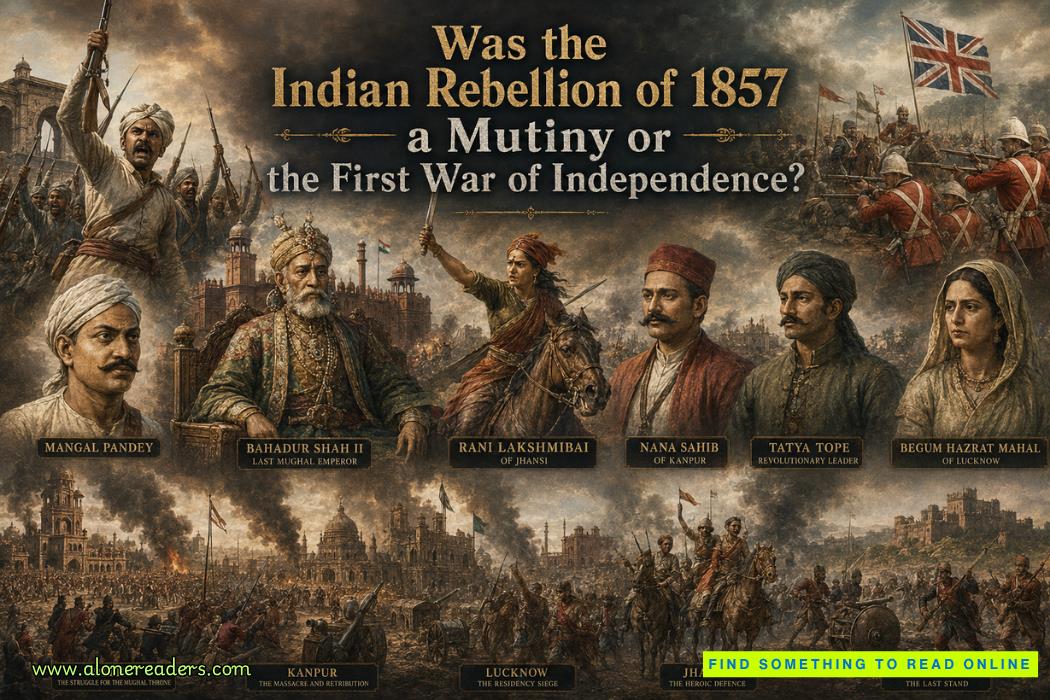
Few historical events have generated as much debate as the Indian Rebellion of 1857. For more than a century and a half, historians, political thinkers, and national leaders have disagreed over a seemingly simple question: Was it merely a military mutiny by dissatisfied soldiers, or was it India's First War of Independence? The answer has profound implications, not only for understanding nineteenth-century India but also for interpreting the origins of Indian nationalism. The terminology itself reflects competing historical perspectives. British colonial writers largely described the uprising as the "Sepoy Mutiny," emphasizing military indiscipline and limited objectives. Many Indian historians, however, especially after independence, viewed the conflict as the first large-scale struggle against British colonial rule. Modern scholarship occupies a more nuanced position, recognizing that the rebellion contained elements of both a military mutiny and a broader political and social uprising.
The debate cannot be understood without considering the circumstances that existed before 1857. During the first half of the nineteenth century, the British East India Company transformed itself from a commercial enterprise into the dominant political power across much of the Indian subcontinent. Through military conquest, annexation policies, and diplomatic pressure, it absorbed numerous Indian kingdoms. The controversial Doctrine of Lapse, implemented under Lord Dalhousie, deprived several princely states of their sovereignty by refusing to recognize adopted heirs. States such as Jhansi, Satara, and Nagpur were annexed, while the annexation of Awadh (Oudh) in 1856 deeply alienated its aristocracy, soldiers, and peasants.
Economic grievances compounded political resentment. Traditional artisans suffered under British industrial imports, while peasants faced increasing taxation and land revenue demands. The dispossession of landlords and changes in land ownership disrupted rural society. Religious and cultural anxieties also intensified as Christian missionary activity expanded and social reforms introduced by the colonial administration were interpreted by many as threats to indigenous customs and beliefs. Although these fears were often exaggerated, they created an atmosphere of widespread suspicion toward British intentions.
Within the Bengal Army, dissatisfaction had been growing for years. Indian sepoys complained about unequal pay, limited opportunities for promotion, overseas service requirements, and racial discrimination by British officers. The immediate spark came with the introduction of the new Pattern 1853 Enfield rifle, whose cartridges were rumored to be greased with the fat of cows and pigs. Since soldiers had to bite open the cartridges before loading their rifles, both Hindu and Muslim soldiers believed that using them would violate their religious principles. Whether the rumors were entirely true became almost irrelevant; the widespread belief itself destroyed confidence in British assurances.
The rebellion began dramatically on 10 May 1857 at Meerut, where imprisoned sepoys were freed by their comrades, British officers were attacked, and the rebels marched overnight to Delhi. There they proclaimed the elderly Mughal emperor, Bahadur Shah II, as their symbolic sovereign. This decision marked one of the most important turning points in the uprising. If the conflict had remained solely a military mutiny, the rebels could have confined themselves to protesting military grievances. Instead, by restoring the authority of the last Mughal emperor, they attempted to establish a political alternative to Company rule. Delhi rapidly became both the military and symbolic center of resistance.
The rebellion spread across northern and central India with remarkable speed. Kanpur, Lucknow, Jhansi, Bareilly, Arrah, and Gwalior became major centers of conflict. Yet its spread was uneven. Large regions of southern India, Punjab, Bengal, and Bombay Presidency remained relatively calm. Many princely rulers either remained neutral or actively supported the British. The Sikhs, Gurkhas, and several princely states supplied crucial military assistance that ultimately helped suppress the rebellion. This uneven participation remains one of the strongest arguments used by historians who reject the description of the conflict as a nationwide war of independence.
The principal figures of the rebellion reflected its diverse character. Mangal Pandey became an enduring symbol after attacking British officers at Barrackpore in March 1857, though his actions occurred before the main uprising. Bahadur Shah II reluctantly accepted leadership of the rebellion despite possessing little real military power. His court became the political heart of the resistance until Delhi fell in September.
Rani Lakshmibai of Jhansi emerged as one of the rebellion's most celebrated leaders. Originally motivated by British refusal to recognize her adopted heir, she evolved into one of the conflict's most determined military commanders. Her defense of Jhansi and later campaigns at Kalpi and Gwalior demonstrated extraordinary leadership and courage. Similarly, Tatya Tope displayed remarkable military skill by conducting prolonged guerrilla campaigns after the fall of major rebel centers. Nana Sahib, denied recognition of his inherited pension by the British, assumed leadership in Kanpur, while Begum Hazrat Mahal led resistance in Lucknow after the annexation of Awadh displaced her family from power.
British commanders interpreted these leaders quite differently. Many contemporary British accounts portrayed them as opportunists exploiting military unrest for personal ambitions. Later Indian historians argued instead that personal grievances evolved into broader struggles against colonial domination. In reality, motivations varied considerably. Some leaders fought primarily to restore lost kingdoms, while others increasingly embraced the wider objective of ending Company rule.
The central historiographical debate revolves around the rebellion's objectives and participation. British historians of the late nineteenth century generally emphasized that the uprising originated within the Bengal Army and lacked unified national leadership. They argued that the rebels possessed no coherent political ideology, no common command structure, and no vision of an independent Indian nation in the modern sense. Communication among rebel leaders remained poor, strategies differed from region to region, and local grievances frequently overshadowed broader political goals.
Indian nationalist historians advanced a different interpretation. During the early twentieth century, Vinayak Damodar Savarkar famously described the uprising as India's First War of Independence. He argued that despite regional differences, the rebellion represented the first collective attempt by Indians from different backgrounds to overthrow foreign rule. According to this interpretation, soldiers, peasants, princes, landlords, religious leaders, and ordinary civilians united—however imperfectly—against British imperialism. The restoration of Bahadur Shah II symbolized an attempt to create a common political authority capable of replacing Company rule.
Modern historians often reject both extremes. They acknowledge that 1857 was unquestionably more than a simple military mutiny because civilians, dispossessed rulers, religious leaders, zamindars, artisans, and peasants participated extensively in many regions. Entire cities mobilized against British authority, and alternative systems of governance briefly emerged in rebel-controlled territories. At the same time, the conflict cannot easily be described as a fully developed national war of independence because many communities remained loyal to the British, regional objectives differed significantly, and the concept of Indian nationalism had not yet fully matured. Instead, many scholars characterize the rebellion as a complex anti-colonial uprising with multiple overlapping motivations.
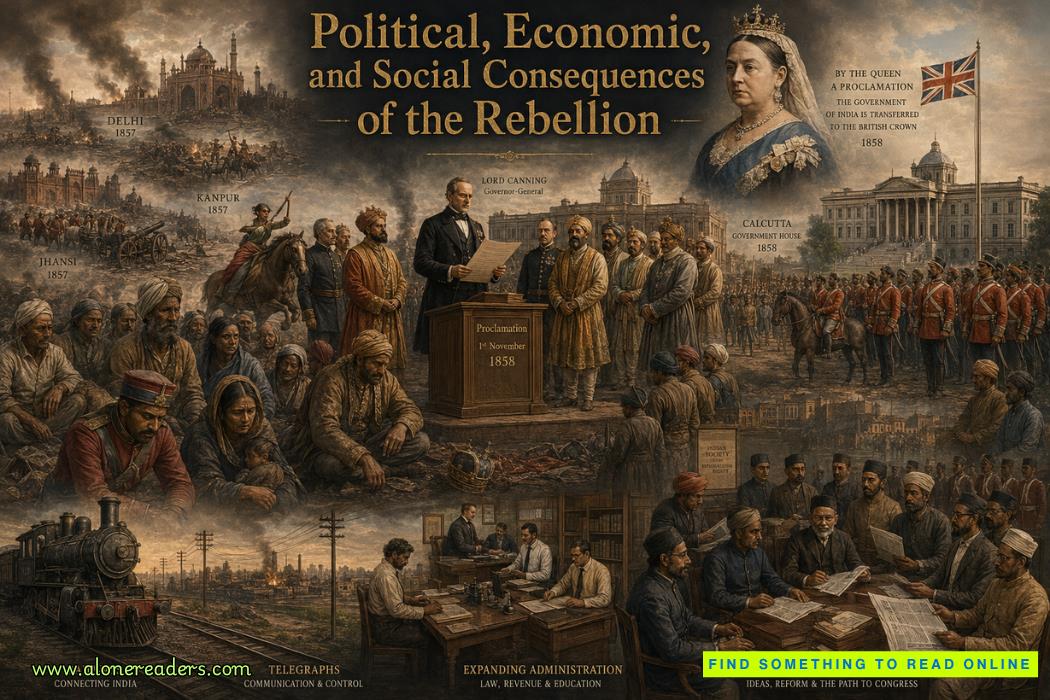
The suppression of the rebellion fundamentally transformed British rule in India. By 1858, British forces had recaptured Delhi, Lucknow, Jhansi, Gwalior, and the remaining centers of resistance. The British response was exceptionally harsh, involving mass executions, confiscation of property, and widespread reprisals against suspected rebels. The Government of India Act of 1858 abolished the East India Company's rule, transferring authority directly to the British Crown. Queen Victoria's Proclamation promised greater religious tolerance, protection of princely states, and equal treatment under the law, although many of these promises were only partially fulfilled.
Military reforms followed immediately. The proportion of European troops in India increased substantially, artillery remained largely under British control, and recruitment policies shifted toward communities considered more loyal, particularly Sikhs, Gurkhas, and Pathans. The British also adopted more cautious policies toward Indian rulers and religious practices, recognizing that aggressive intervention had contributed to the rebellion.
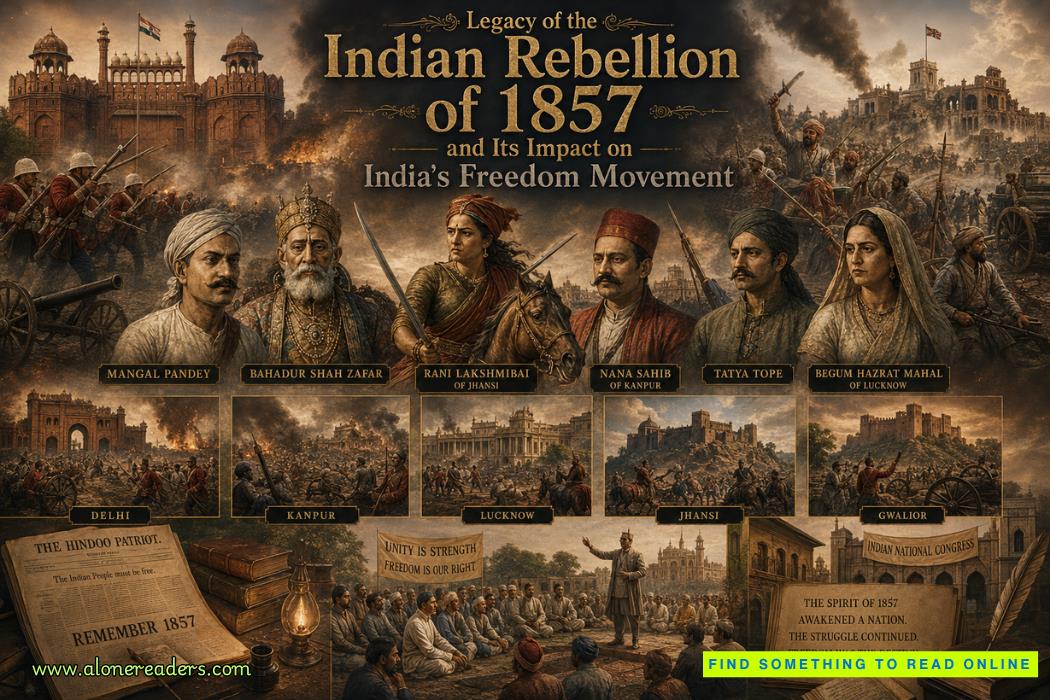
The legacy of 1857 extends far beyond its immediate military outcome. During the late nineteenth and early twentieth centuries, Indian nationalists transformed its memory into a powerful symbol of resistance. Figures such as Rani Lakshmibai and Mangal Pandey became national heroes whose sacrifices inspired later generations involved in the independence movement. Literature, poetry, theatre, and eventually cinema reinforced the image of the rebellion as the beginning of India's long struggle for freedom. British historical writing, meanwhile, gradually shifted from portraying the rebels simply as mutineers toward recognizing the broader social and political dimensions of the uprising.
Ultimately, the question of whether the Indian Rebellion of 1857 was a mutiny or the First War of Independence cannot be answered by choosing one label alone. It undoubtedly began as a military revolt among sepoys, but it rapidly expanded into a widespread political and social uprising involving numerous sections of Indian society. It lacked the unified ideology and nationwide participation characteristic of later nationalist movements, yet it clearly challenged foreign rule on a scale unprecedented in Indian history. Rather than viewing these interpretations as mutually exclusive, modern historical analysis increasingly recognizes that the rebellion embodied both realities simultaneously. It was a sepoy mutiny in its origins, a regional anti-colonial revolt in its development, and a foundational symbol of Indian independence in its historical memory. Its greatest significance lies not only in the battles fought during 1857 and 1858, but also in the enduring debate it continues to inspire about the origins of India's long and complex journey toward freedom.



 The Hundred Days Offensive: How the Allies Defeated Germany in World War I
 The Second Battle of the Marne: The Turning Point of World War I in 1918
 The Spring Offensive of 1918: Germany's Final Gamble to Win World War I
 The Treaty of Brest-Litovsk: How Russia Left World War I
 The Russian Revolution and World War I: How War Brought Down the Tsar
 The Zimmermann Telegram Explained: Germany's Secret Offer to Mexico in World War I










