The Indian Rebellion of 1857–1858 marked one of the greatest turning points in the history of the Indian subcontinent. Although the uprising ultimately failed to overthrow British authority, its consequences were far more significant than its immediate military outcome. The rebellion fundamentally altered the relationship between Britain and India, transformed the machinery of colonial government, reshaped economic policy, and left deep social and psychological scars that continued to influence Indian society for generations. Historians continue to debate whether the rebellion represented the last attempt to restore an older political order or the first expression of modern Indian nationalism, but there is little disagreement that its aftermath permanently changed the course of Indian history.
Before the rebellion, India was governed primarily by the British East India Company, a commercial corporation that had gradually acquired vast territorial possessions through conquest, diplomacy, and annexation. Policies such as the Doctrine of Lapse, introduced under Lord Dalhousie, deprived numerous Indian rulers of their states. Aggressive revenue collection, judicial reforms, military restructuring, and growing missionary activity generated widespread resentment among princes, soldiers, peasants, artisans, and religious communities. When the revolt erupted at Meerut on 10 May 1857 and quickly spread to Delhi, Kanpur, Lucknow, Jhansi, and much of northern and central India, it exposed the fragility of Company rule. Even after British forces regained control in 1858 through prolonged military campaigns, the British government concluded that the existing system of administration could no longer continue unchanged.
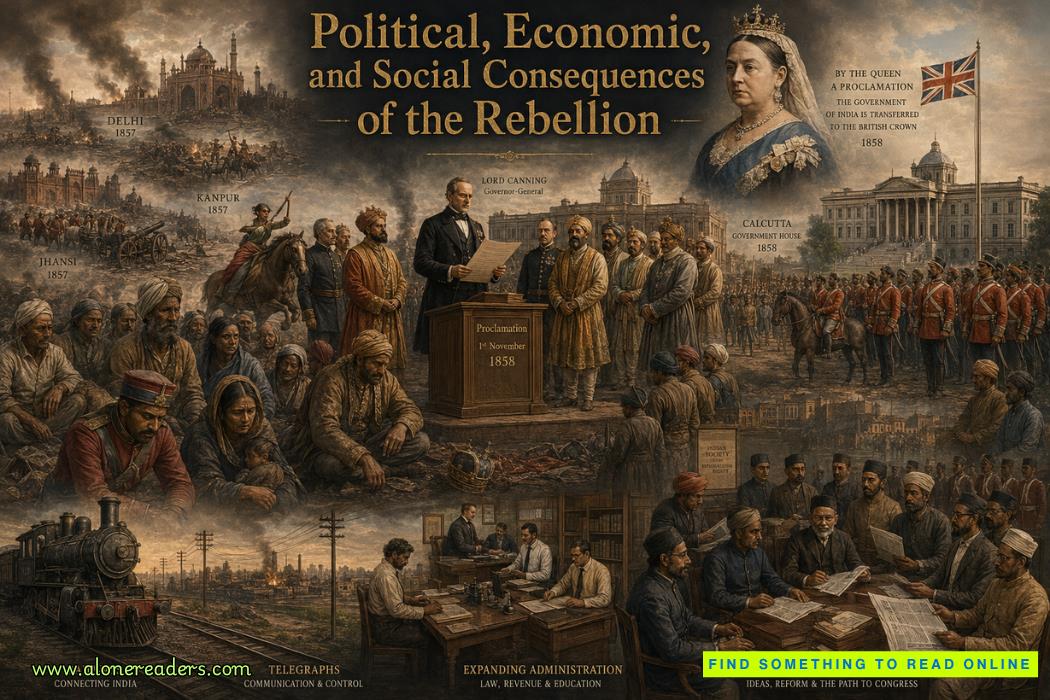
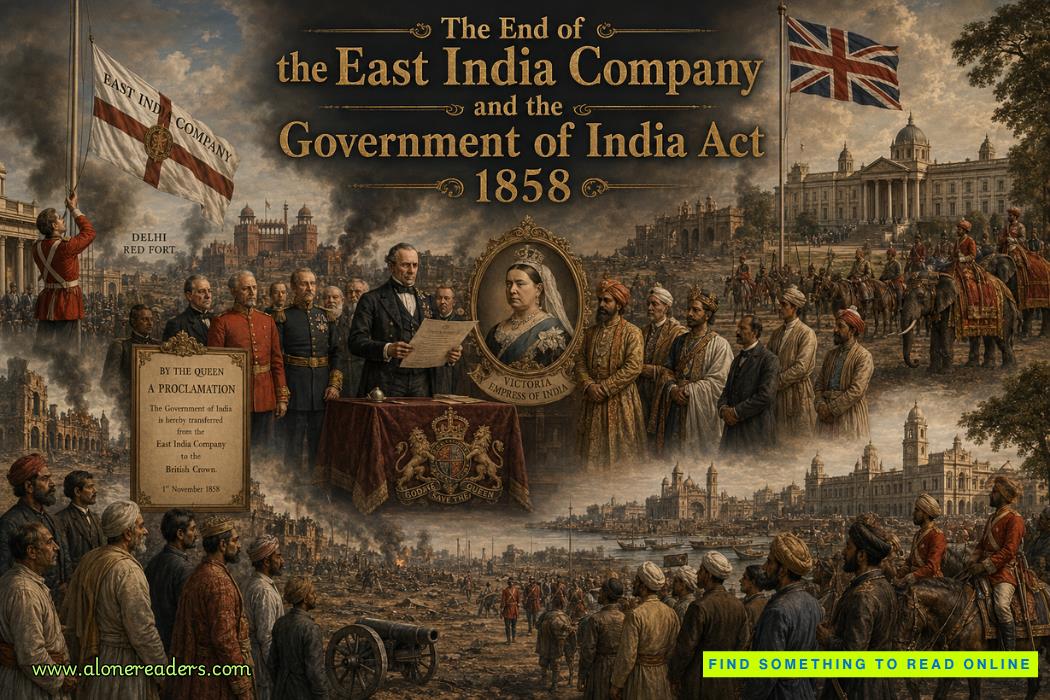
The most immediate and far-reaching consequence was political. The rebellion effectively ended the rule of the East India Company. Through the Government of India Act of 1858, the British Parliament abolished Company administration and transferred sovereignty directly to the British Crown. This constitutional change created what became known as the British Raj. A new office, the Secretary of State for India, was established in London with extensive powers over Indian affairs, assisted by the Council of India. In India, the Governor-General also became the Viceroy, representing the British monarch. Lord Canning, who had guided British forces during the rebellion, became the first Viceroy under the new constitutional arrangement.
The political symbolism of this transformation reached its peak with Queen Victoria's Proclamation of 1 November 1858. The proclamation promised equal treatment before the law, respect for religious beliefs, and an end to arbitrary territorial annexations. Indian princes were assured that their hereditary rights would generally be respected, reversing many of the expansionist policies associated with Dalhousie's administration. The British recognized that alienating traditional ruling elites had contributed significantly to the rebellion. Consequently, princely states were transformed from potential targets of annexation into loyal partners of imperial governance. Their cooperation would later become one of the principal foundations of British political stability in India.
Military reforms represented another direct political response. British officials concluded that excessive reliance on Indian troops from specific regions had allowed the rebellion to spread rapidly through the Bengal Army. Following the conflict, the proportion of European soldiers was substantially increased, while recruitment shifted toward communities that British authorities classified as "martial races," including Sikhs, Gurkhas, Pathans, Dogras, and Punjabi Muslims. Soldiers from areas heavily involved in the rebellion were recruited in smaller numbers. Artillery, which had played a decisive role during the uprising, remained largely under direct British control. These reforms reflected not only military calculations but also a deliberate strategy of preventing future unified resistance by encouraging ethnic, regional, and religious divisions within the colonial army.
The economic consequences were equally profound. The rebellion had imposed enormous financial burdens on Britain. Military campaigns, reconstruction, compensation payments, and administrative reorganization dramatically increased government expenditure. To recover these costs, the colonial administration introduced new taxation and strengthened revenue collection across many provinces. Indian taxpayers ultimately bore much of the financial burden created by suppressing the rebellion itself.
Economic priorities increasingly shifted toward consolidating imperial control rather than promoting balanced development. Railways expanded rapidly, but their principal purposes included facilitating troop movement, transporting raw materials, and integrating markets under British commercial interests. Telegraph networks, whose military value had been demonstrated during the rebellion, grew substantially. Irrigation projects also expanded in several regions, partly to increase agricultural productivity and government revenue. While these developments modernized parts of India's infrastructure, many historians argue that they primarily served colonial objectives rather than indigenous economic growth.
The decline of traditional industries accelerated after 1857. Indian artisans already faced severe competition from imported British manufactured goods, particularly textiles. The disruption caused by the rebellion further weakened local production in many regions. Agricultural commercialization intensified as farmers increasingly produced export-oriented cash crops rather than food grains. Although this created new economic opportunities for certain landowners and merchants, it also heightened rural vulnerability to fluctuations in global markets and contributed to periodic famines later in the nineteenth century.
Socially, the rebellion transformed relationships between rulers and subjects in profound ways. Before 1857, many British administrators still believed that gradual cultural assimilation between Europeans and educated Indians was possible. The violence committed by both sides during the conflict shattered these assumptions. British survivors carried vivid memories of massacres at places such as Kanpur, while Indians remembered brutal reprisals, public executions, village destructions, and widespread confiscation of property. Mutual suspicion became a defining feature of colonial society.
British racial attitudes hardened considerably after the rebellion. Greater social segregation developed between European and Indian communities. Residential areas, educational institutions, military facilities, and recreational clubs increasingly reflected racial separation. The ideal of partnership gave way to a more paternalistic and authoritarian imperial ideology in which British officials openly emphasized racial superiority and the necessity of firm control.
Religious policy also changed. British authorities became more cautious regarding missionary activities and religious reforms that could provoke resistance. Queen Victoria's proclamation explicitly promised non-interference in religious affairs, reflecting official recognition that fears regarding forced conversion had contributed to the uprising. Although missionaries continued their work, the colonial state generally sought to avoid policies that might appear to threaten established religious traditions.
Indian society itself experienced important transformations. Many aristocratic families, particularly those associated with the Mughal court or defeated rebel leaders, lost political influence and property. The exile of Bahadur Shah II to Rangoon symbolized the definitive end of the Mughal Empire after more than three centuries of imperial history. Conversely, loyal princes, landlords, and regional elites often received rewards and enhanced political status, creating a new network of collaborators whose interests became closely linked with British rule.
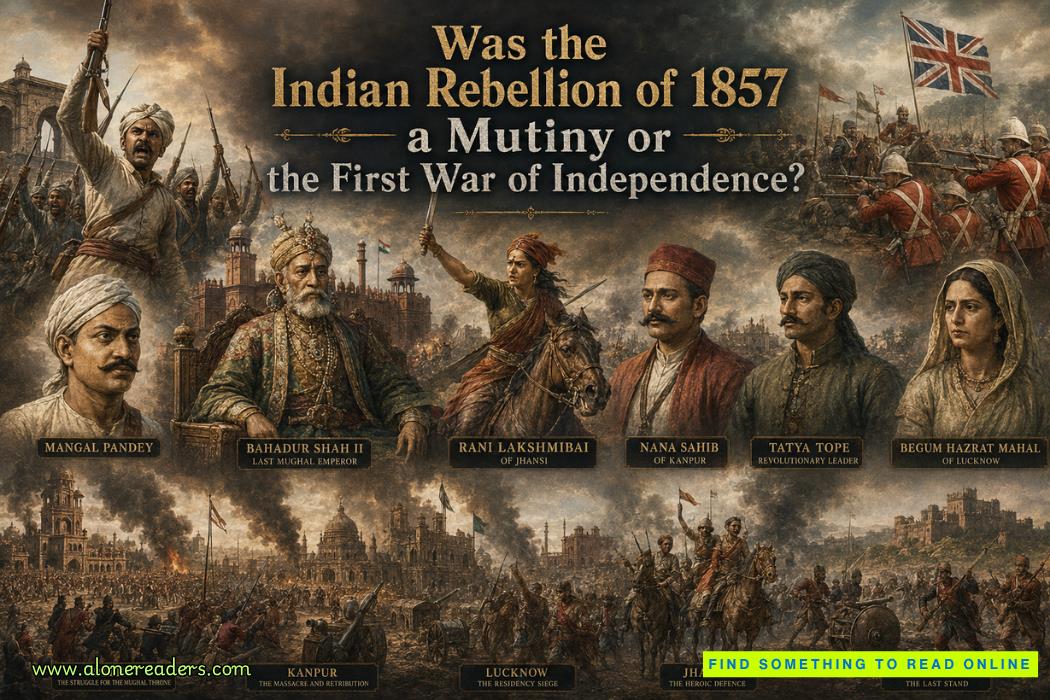
Major figures on both sides shaped these outcomes. Lord Canning pursued what he described as a policy of moderation, resisting demands for indiscriminate vengeance while nevertheless overseeing extensive military repression. Queen Victoria became the symbolic face of the new imperial order, projecting an image of benevolent monarchy intended to replace the unpopular East India Company. Among Indian leaders, figures such as Rani Lakshmibai of Jhansi, Nana Sahib, Begum Hazrat Mahal, Kunwar Singh, and Bahadur Shah II emerged as enduring symbols of resistance, although their individual political objectives often differed considerably. Some fought to preserve dynastic rights, others defended regional autonomy, while many sepoys primarily sought to protect military traditions and religious customs. Their diverse motivations illustrate why historians continue to debate whether the rebellion represented a unified national movement or a coalition of localized grievances.
Historical interpretation of the rebellion's consequences remains contested. Earlier British historians frequently described the uprising as a military mutiny whose failure justified stronger imperial governance. Twentieth-century Indian nationalist historians instead portrayed it as the First War of Independence, emphasizing shared resistance against foreign rule. More recent scholarship offers a more nuanced perspective, arguing that while the rebellion lacked a unified national program, its memory gradually became an important source of nationalist inspiration. The participants may not have envisioned a modern nation-state, but later generations interpreted their sacrifices within that emerging political framework.
The rebellion's long-term legacy extended far beyond the nineteenth century. British administrators increasingly governed through a combination of centralized bureaucracy, military strength, cooperation with princely states, and carefully managed social divisions. Simultaneously, a new class of educated Indians began questioning colonial rule using constitutional, political, and intellectual arguments. Organizations established in subsequent decades, culminating in the formation of the Indian National Congress in 1885, inherited many lessons from 1857. Nationalist leaders increasingly viewed the rebellion as evidence that resistance to foreign domination was both possible and historically legitimate, even if its methods required adaptation.
Memory of the rebellion also became deeply embedded in India's historical consciousness. Heroes such as Rani Lakshmibai evolved into national icons celebrated through literature, poetry, public monuments, and historical scholarship. Sites including Delhi, Lucknow, and Jhansi became places of remembrance where the sacrifices of soldiers and civilians continued to resonate across generations. In Britain, the rebellion likewise influenced imperial identity, reinforcing arguments for stronger military preparedness and centralized colonial administration throughout the Empire.
Ultimately, the political, economic, and social consequences of the Indian Rebellion of 1857 reached far beyond the battlefield. The revolt destroyed Company rule, established direct Crown administration, reshaped military organization, strengthened alliances with Indian princes, altered economic priorities, deepened racial divisions, and transformed imperial governance. At the same time, it planted intellectual and emotional seeds that later nourished the Indian nationalist movement. Though militarily unsuccessful, the rebellion permanently altered the relationship between Britain and India, making it one of the defining turning points in the history of the modern Indian subcontinent.



 The Hundred Days Offensive: How the Allies Defeated Germany in World War I
 The Second Battle of the Marne: The Turning Point of World War I in 1918
 The Spring Offensive of 1918: Germany's Final Gamble to Win World War I
 The Treaty of Brest-Litovsk: How Russia Left World War I
 The Russian Revolution and World War I: How War Brought Down the Tsar
 The Zimmermann Telegram Explained: Germany's Secret Offer to Mexico in World War I










