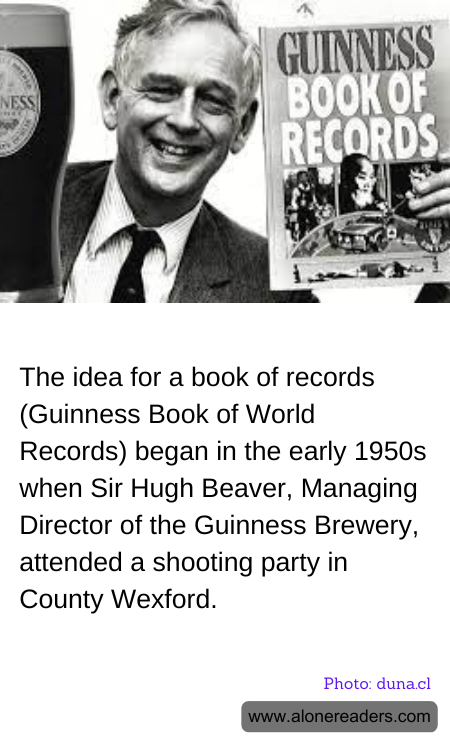
It was during a shooting party in County Wexford, Ireland, in 1951, that Sir Hugh Beaver, then the managing director of the Guinness Brewery, found himself in a debate over which was the fastest game bird in Europe. This disagreement sparked Beaver's idea for a book that could settle such disputes, a book filled with facts and records from around the world. By 1954, he had taken this concept further by commissioning Norris and Ross McWhirter, two fact-finding researchers from London, to compile what would become the first edition of The Guinness Book of Records.
The book was initially intended as a marketing giveaway to promote the Guinness brand and was handed out for free in pubs to encourage patrons to settle disputes with information rather than arguments. The first 198-page edition was bound on August 27, 1955, and to everyone's surprise, it became a bestseller. In fact, by Christmas of 1955, it topped the British bestseller lists. The success of the book demonstrated an insatiable public appetite for facts and records, and it rapidly evolved from a promotional stunt into a global phenomenon.
As the book grew in popularity, the range and types of records expanded enormously. Today, the Guinness World Records is a household name globally, publishing annually and documenting records ranging from human achievements to the extremes of the natural world. It not only satisfies curiosity but also provides a platform for the extraordinary, allowing people from all corners of the globe to attempt to have their names etched into history. The book continues to act as the ultimate authority on record-breaking achievement, inspiring people to imagine, innovate, and sometimes defy the odds and the limits of human possibility.
