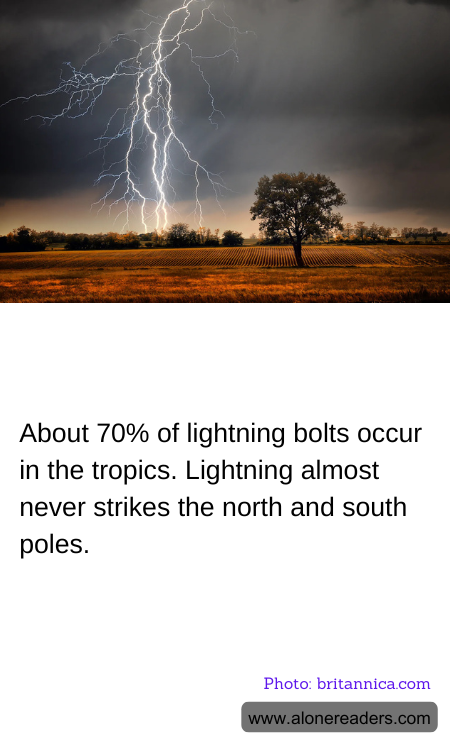
Lightning is one of nature's most spectacular phenomena, captivating and sometimes terrifying those who witness its powerful display. Interestingly, about 70% of all lightning bolts occur in the tropics, a region known for its warm temperatures and high humidity. This prevalence is largely due to the unique atmospheric conditions found in tropical areas, which are conducive to the formation of thunderstorms.
The tropics, which lie between the Tropic of Cancer and the Tropic of Capricorn, provide the perfect environment for lightning. The warm temperatures cause air to rise rapidly, creating towering cumulonimbus clouds. These clouds are the breeding grounds for thunderstorms, where the friction between ice particles and water droplets generates electrical charges. When the electrical potential between the cloud and the ground, or within the cloud itself, becomes too great, a lightning bolt is discharged.
In contrast, lightning is a rare occurrence at the Earth's poles. The north and south poles are characterized by extreme cold and dry conditions, which are not favorable for thunderstorm development. The cold air at the poles lacks the necessary warmth to rise and form the large storm clouds needed for lightning. Additionally, the polar regions experience long periods of darkness during the winter months, further reducing the chances of thunderstorms, which are more common during the day when the sun heats the Earth's surface.
The disparity in lightning activity between the tropics and the poles highlights the significant role that climate and geography play in weather patterns. While the tropics experience frequent thunderstorms, providing a dramatic display of nature's power, the poles remain relatively quiet, with their serene landscapes rarely disturbed by the crackle of lightning.
Understanding the distribution of lightning around the globe is not just a matter of curiosity; it has practical implications as well. Lightning can cause significant damage to infrastructure, start wildfires, and pose a threat to human life. By studying where and why lightning occurs, scientists can better predict and mitigate its impacts, particularly in regions where it is most common.
For those living in or visiting tropical regions, it is important to be aware of the increased likelihood of thunderstorms and to take appropriate precautions during stormy weather. Meanwhile, those in polar regions can enjoy the tranquility of their surroundings, knowing that lightning is an unlikely visitor.
In summary, the prevalence of lightning in the tropics and its rarity at the poles is a fascinating example of how Earth's diverse climates shape the natural phenomena we experience. Whether you are in a lightning-prone area or a place where it is seldom seen, the forces behind this electrifying spectacle continue to intrigue and inspire awe in people of all ages.
