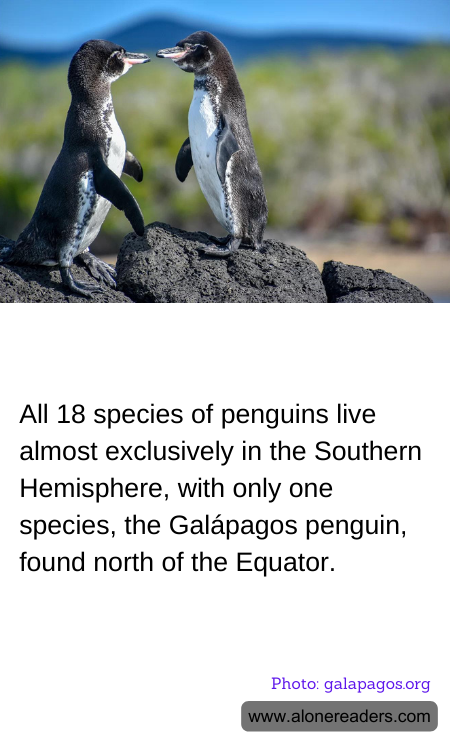
Penguins are among the most beloved and recognizable birds in the world, known for their distinctive black and white plumage and charming waddle. While many people associate these flightless birds with the icy landscapes of Antarctica, penguins are actually found across a variety of climates in the Southern Hemisphere. In fact, all 18 species of penguins live almost exclusively in this hemisphere, with a fascinating exception: the Galápagos penguin, which is the only species to venture north of the Equator.
The Galápagos penguin is a remarkable species that has adapted to life in a much warmer climate than its Antarctic relatives. Found primarily on the Galápagos Islands, this penguin has developed unique behaviors and physical adaptations to thrive in its tropical environment. Unlike other penguins that rely on thick layers of fat to insulate against the cold, the Galápagos penguin has a thinner layer of fat and engages in behaviors such as panting and seeking shade to regulate its body temperature. This adaptability is crucial for survival in the equatorial heat.
Despite their differences in habitat, all penguin species share certain characteristics that make them well-suited to their environments. Penguins are excellent swimmers, using their flippers to propel themselves through the water with remarkable agility and speed. This skill is essential for hunting, as penguins primarily feed on fish, squid, and other marine life. Their streamlined bodies and strong flippers make them formidable predators in the ocean, even if they appear clumsy on land.
The distribution of penguin species across the Southern Hemisphere is a testament to their adaptability. From the icy shores of Antarctica, home to the Emperor and Adélie penguins, to the temperate coasts of South Africa and South America, where species like the African and Magellanic penguins reside, these birds have carved out niches in diverse ecosystems. The Galápagos penguin's presence north of the Equator is a unique anomaly, highlighting the incredible range of environments penguins can inhabit.
Conservation efforts are crucial for the survival of penguins, as many species face threats from climate change, overfishing, and habitat destruction. The Galápagos penguin, in particular, is considered endangered, with its population vulnerable to changes in sea temperature and food availability. Protecting these birds and their habitats is essential to ensure that future generations can continue to marvel at their unique adaptations and charming behaviors.
In conclusion, while penguins are often associated with the cold, their presence across the Southern Hemisphere, and the unique exception of the Galápagos penguin, illustrate their remarkable adaptability and resilience. These fascinating birds continue to captivate people of all ages, serving as a reminder of the diverse and interconnected nature of our planet's ecosystems.
