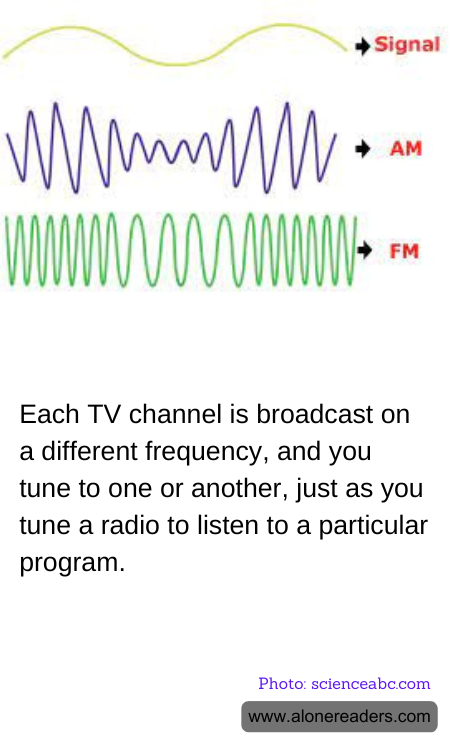
Television and radio have been integral parts of our daily lives for decades, providing entertainment, news, and educational content. At the heart of these technologies lies a fascinating process of frequency modulation, which allows us to access a wide array of channels and programs. Each TV channel is broadcast on a different frequency, much like how radio stations operate. This system of frequency allocation is what enables us to tune into specific channels or stations, offering a seamless viewing and listening experience.
When you turn on your television or radio, you are essentially engaging with a complex network of signals transmitted through the airwaves. Each channel or station is assigned a unique frequency, which acts as its address in the electromagnetic spectrum. This spectrum is a range of all possible frequencies of electromagnetic radiation, and it is divided into bands that are allocated for different types of communication, including television and radio broadcasting.
The process of tuning into a particular TV channel or radio station involves selecting the specific frequency on which that channel or station is broadcast. For televisions, this is typically done using a remote control or a digital interface, where you can enter the channel number or scroll through a list of available channels. The television's tuner then adjusts to the corresponding frequency, allowing the device to decode the signal and display the content on your screen.
Similarly, when you tune a radio, you are adjusting the device to receive signals at a specific frequency. This is often done by turning a dial or pressing buttons to navigate through the available stations. Once the radio is set to the correct frequency, it can demodulate the signal and play the audio content through its speakers.
The allocation of frequencies is carefully managed by regulatory bodies to prevent interference between channels and ensure that each broadcaster has a clear and distinct signal. This is crucial because interference can lead to poor reception, distorted audio or video, and an overall unsatisfactory experience for the viewer or listener. By assigning specific frequencies to each channel or station, broadcasters can deliver high-quality content without overlapping signals.
In today's digital age, the way we access television and radio content has evolved, with many people now using streaming services and digital platforms. However, the fundamental principle of frequency allocation remains the same. Even digital signals are transmitted over specific frequencies, albeit in a more compressed and efficient manner, allowing for a greater number of channels and higher quality content.
Understanding the role of frequencies in television and radio broadcasting enhances our appreciation for the technology that brings us our favorite shows and music. It is a testament to the ingenuity of communication systems that we can effortlessly switch between channels and stations, accessing a world of information and entertainment with just a few clicks or turns of a dial.
