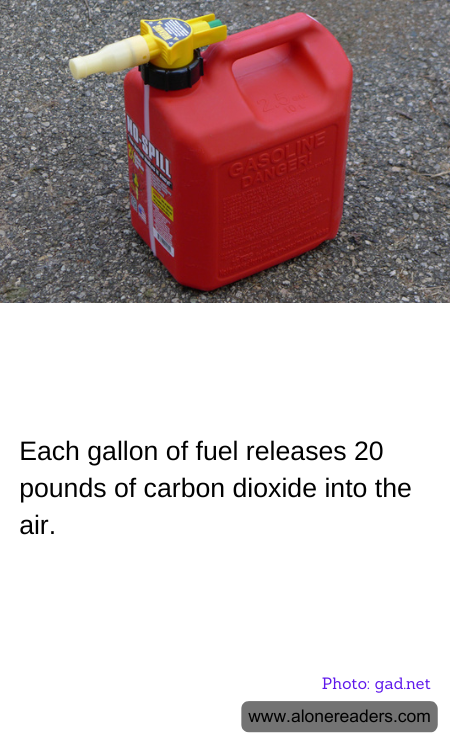
Every time we fill up our vehicles with gasoline, we contribute to a larger environmental issue that affects us all. It's a startling fact that each gallon of fuel burned releases approximately 20 pounds of carbon dioxide (CO2) into the atmosphere. This seemingly small action, repeated millions of times a day across the globe, has significant implications for our planet's health and our future.
The process begins when gasoline, a fossil fuel, is combusted in an engine. This combustion is necessary to power vehicles, but it also results in the release of CO2, a greenhouse gas that traps heat in the Earth's atmosphere. The chemistry behind this is straightforward: gasoline is primarily composed of hydrocarbons, which, when burned, react with oxygen to produce carbon dioxide and water. The weight of the CO2 produced is much greater than the gasoline itself due to the addition of oxygen from the air during combustion.
The impact of these emissions is profound. Carbon dioxide is a major contributor to the greenhouse effect, which leads to global warming and climate change. As the Earth's temperature rises, we experience more frequent and severe weather events, rising sea levels, and disruptions to ecosystems. These changes pose risks to agriculture, water supplies, and human health, making it imperative that we address the sources of CO2 emissions.
Reducing our carbon footprint is a shared responsibility. While individual actions may seem small, collectively they can lead to significant change. Simple steps such as using public transportation, carpooling, or opting for fuel-efficient or electric vehicles can reduce the amount of gasoline burned and, consequently, the CO2 released. Additionally, supporting policies and initiatives that promote renewable energy sources and improve fuel efficiency standards can drive systemic change.
Education and awareness are crucial in this effort. By understanding the impact of our daily choices, we can make informed decisions that benefit both the environment and future generations. Encouraging discussions about sustainable practices and investing in technologies that reduce emissions are vital components of a comprehensive strategy to combat climate change.
In conclusion, while the fact that each gallon of fuel releases 20 pounds of carbon dioxide into the air is daunting, it also serves as a call to action. By recognizing the role we play in this global issue, we can take steps to reduce our impact and work towards a more sustainable future. The choices we make today will shape the world we leave for tomorrow, and it's up to us to ensure it's a world worth inheriting.
