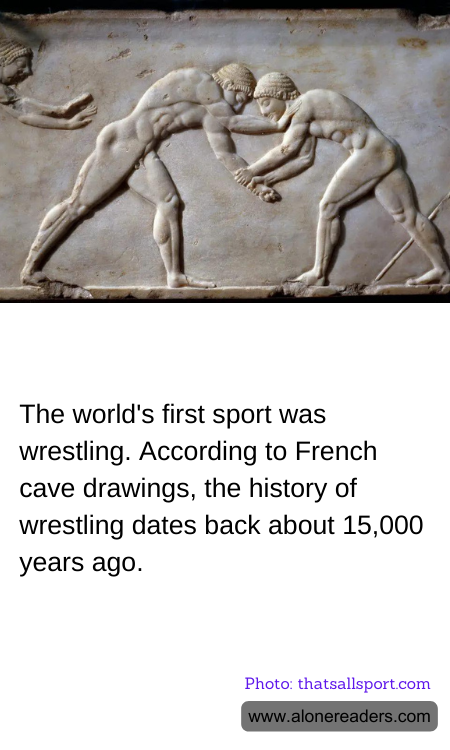
Wrestling, often considered the world's oldest sport, has roots that stretch deeply into prehistoric times. As evidenced by ancient French cave paintings that depict figures locked in grappling stances, wrestling dates back approximately 15,000 years. These early representations not only highlight the sport’s age but also its status as a fundamental physical contest in human culture.
Historically, wrestling has been more than just a test of strength and skill; it also possessed considerable significance in ancient rituals and celebrations. Many civilizations, including the Egyptians, Greeks, and Romans, embraced wrestling not only as a sport but also as a vital component of military training and a proving ground for warriors. The Greeks, in particular, elevated it to a high art form and included it in the Olympic Games as early as 708 BC, reflecting its importance in physical conditioning and tactical training.
Moreover, wrestling’s appeal is its simplicity and accessibility, requiring minimal equipment and making it widely practicable across different cultures and economic classes. This simplicity has allowed wrestling to evolve naturally over centuries into various styles observed in traditional and folk wrestling practices around the world—from the Japanese sumo to the Mongolian bökh.
In the modern era, wrestling has split into two main categories recognized internationally: Greco-Roman and freestyle. Despite the evolution and branching out of the sport, at its core, wrestling remains a direct and compelling contest of human strength, strategy, and endurance, engaging audiences and participants alike. Its ongoing inclusion in global sporting events like the Olympics attests to its enduring popularity and the universal appeal of its fundamental challenge—pitting one’s physical and mental prowess against a worthy opponent in one of the clearest expressions of athletic competition.
