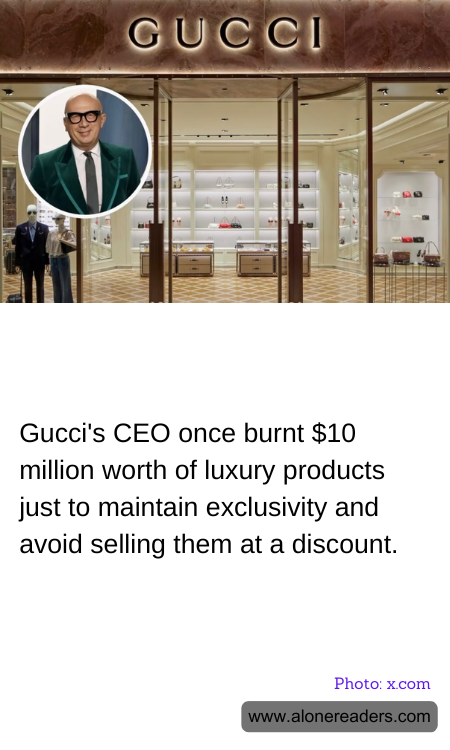
In a striking move to uphold its brand exclusivity and luxury status, Gucci, under the leadership of its CEO, took a dramatic step by burning $10 million worth of its unsold luxury products. This bold decision highlights the intense measures high-end brands may resort to in order to maintain their prestigious image and market positioning.
Gucci, renowned worldwide for its high-quality and elaborately designed fashion products, operates in an industry where the perception of exclusivity and luxury significantly drives consumer demand. High-end brands like Gucci thrive on their exclusive appeal, often justifying their premium prices with this perceived value. However, this leads to a unique challenge: managing unsold stock. Discounting products, a common practice in many sectors to clear unsold inventory, paradoxically can undermine the luxury appeal of brands in the high-end market segment.
Destroying unsold goods is a controversial practice but not uncommon among luxury brands, who often prefer this route to protect their brand identity and maintain high price points. The decision to burn $10 million worth of products is rooted in this strategy, aiming to avoid diluting the brand's luxury status which could be compromised by items appearing in discount outlets or the secondary market. The move, while drastic, is intended to ensure that the brand remains synonymous with exclusitivty and desirability.
Critics argue that such practices highlight the unsustainable aspects of the fashion industry, pointing to the environmental waste represented by such actions. Advocates for sustainability criticize the destruction of perfectly good products that could potentially be recycled or donated for charitable causes.
In response to such criticisms, some luxury brands, including Gucci, are exploring more sustainable ways of managing excess inventory, such as upcycling materials or donating to fashion schools and charitable organizations, while still maintaining their brand integrity. As the industry faces increasing pressure to address environmental concerns, the balance between sustainability and maintaining a brand's cachet is becoming a critical challenge.
The practice of burning unsold stock opens up a broader discussion about consumerism, luxury, and sustainability in the fashion industry, reflecting a complex interplay between maintaining brand value and addressing ethical concerns. The action taken by Gucci's CEO may serve as a catalyst for change, prompting the industry to look for innovative solutions that reconcile the need for exclusivity with a commitment to more sustainable practices.
