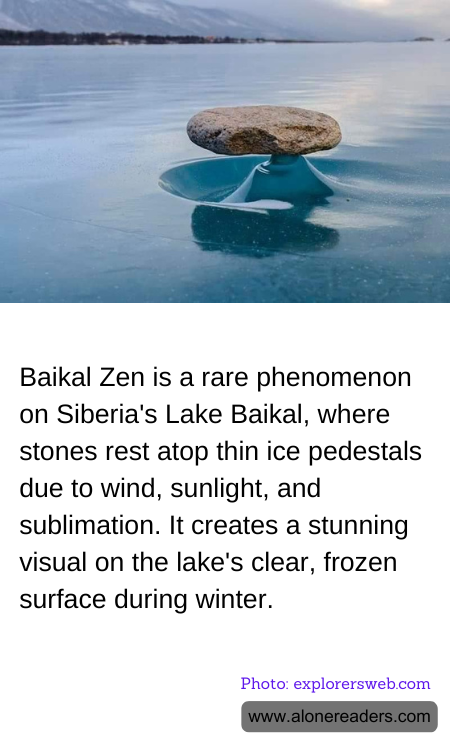
Lake Baikal in Siberia, known as the deepest and oldest freshwater lake in the world, is host to a mesmerizing natural phenomenon known as Baikal Zen. During the freezing winter months, visitors and photographers may witness a rare and enchanting sight where rocks balanced on the lake’s ice form small pedestals, elevating them above the surface as if defying gravity.
This unique occurrence arises from a delicate interplay of environmental factors. As the fierce winter wind sweeps across Baikal’s expansive, icy surface, it selectively erodes areas around the stones, which absorb solar heat more efficiently than ice. Even in the biting cold, the sunlight causes the underside of the stone to warm slightly, leading to a focused melting of the ice immediately beneath it. However, as the sub-zero temperatures persist, this melted water quickly refreezes, slowly building a narrow column or pedestal of ice that supports the stone.
The result is a striking example of natural sculpture, with each stone perched artfully atop its own icy pillar. These ephemeral formations, however, are transient by nature. The delicate balance can last only until the temperatures rise or strong winds topple the stones from their icy thrones. The limited and brief appearance of Baikal Zen adds an element of fleeting beauty to the stark, wintry landscape of Lake Baikal.
Photographers and nature enthusiasts flock to Lake Baikal during the winter months to capture this phenomenon, as each formation offers a unique aesthetic, shaped by the unpredictable environmental conditions. The clear blue ice often adds a dramatic contrast that highlights the simple yet profound beauty of Baikal Zen against the serene expanse of the lake. This scene not only provides a visual spectacle for travelers but also speaks to the intricate interactions within Earth’s ecosystems, emphasizing the delicate balance between permanence and the ephemeral in nature.
