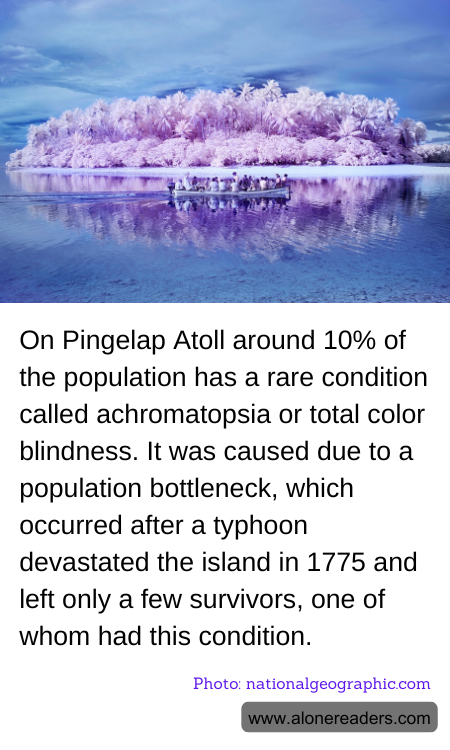
Pingelap Atoll, a small island in the Pacific Ocean, is a striking case study in genetics due to the high incidence of a condition known as achromatopsia among its inhabitants. Achromatopsia, also known as total color blindness, is a rare genetic disorder where affected individuals are unable to perceive color and have decreased vision in bright environments. Interestingly, around 10% of the population on Pingelap suffers from this condition, a rate significantly higher than the global average.
The root cause of this unusual prevalence traces back to a catastrophic event in 1775 when a devastating typhoon hit the island, dramatically reducing the population. According to historical reports, only about 20 individuals survived the disaster. This dramatic reduction in population created what is known as a population bottleneck, a genetic phenomenon where the resulting gene pool is severely limited due to a drastic reduction in numbers. Notably, one of the survivors carried the gene for achromatopsia.
As the population recovered and expanded from these few survivors, the gene for achromatopsia was passed down through generations far more frequently than would occur in a larger, more genetically diverse population. Consequently, the gene became widespread, leading to the high prevalence of the disorder observed today.
The impact of achromatopsia on the community has been profound. Many of those affected have adapted to their visual limitations by developing unique coping mechanisms. For instance, they might avoid going outdoors during the day when the sunlight is brightest or use specific techniques to recognize shapes and outlines rather than relying on color. Over time, the community has also adapted culturally and socially to accommodate those with the condition, showcasing a remarkable example of human resilience and adaptability.
The case of Pingelap Atoll provides valuable insights into how extreme events can shape the genetic makeup of isolated populations. It exemplifies the implications of genetic drift and the founder effect, key concepts in the study of population genetics. Additionally, it underscores the profound ways in which natural disasters can influence human biology and cultural evolution, leaving a lasting impact on communities generations after the event.
