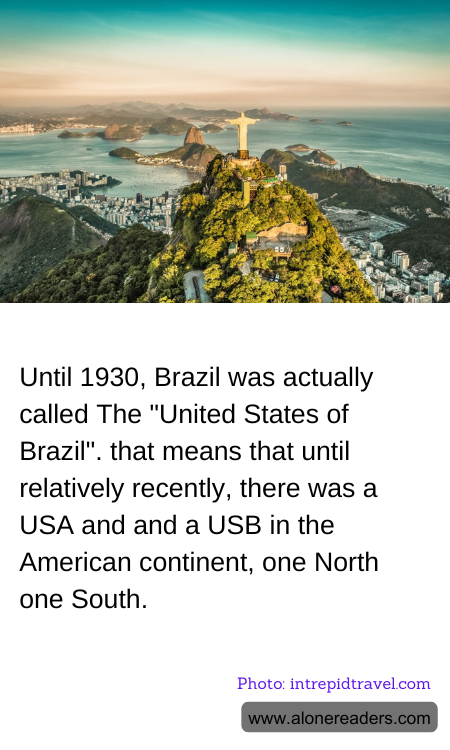
Brazil adopted the official name "United States of Brazil" or "Estados Unidos do Brasil" in Portuguese, following the proclamation of the republic in 1889, which marked its transition from an empire under Dom Pedro II to a republican state. This change reflected a new political and administrative structure, which included a federation of states, similar to that of the United States of America. The choice of name indicated not only a change in governance but also an affirmation of the country's unity and its embrace of federalism.
The name "United States of Brazil" remained until 1930, a period marked by significant social, political, and economic changes. This era was characterized by the struggles between the landed oligarchies and the burgeoning urban middle class, tensions that often led to volatile political conditions. The culmination of these tensions was the 1930 Revolution, which led to the rise of Getúlio Vargas, a central figure in Brazilian politics for the next two decades.
Following the revolution and the establishment of Vargas’ government, the country’s name was changed to simply "Brazil" or "Brasil," in an effort to promote national unity and centralization of government power, moving away from the previous federal structure. This name change was part of a larger effort to redefine Brazilian identity and align it closer with Vargas' vision for the nation.
Historically, having two nations on the American continent with similar names — the United States of America (USA) and the United States of Brazil (USB) — was an interesting coincidence that reflected the influence of United States' federalist system on Latin American political structures. However, this did not lead to any significant confusion in diplomatic or commercial relations, as each nation pursued its own distinct path toward development and national identity shaping. This particular period in Brazil’s history is an interesting example of how political changes can influence national identity and international perceptions through something as foundational as the country’s name.
