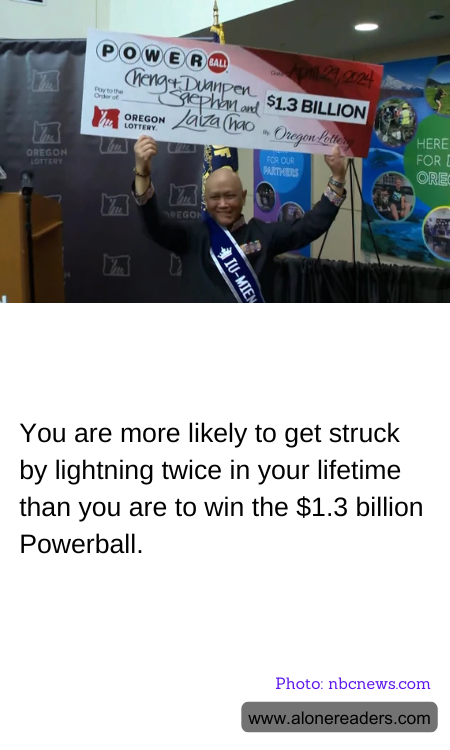
The odds of experiencing such rare events as winning a massive lottery jackpot like the $1.3 billion Powerball or getting struck by lightning are often discussed in terms of extreme improbability. However, the comparison reveals a staggering gap in likelihood that puts these events into perspective. The chance of winning the Powerball jackpot is around 1 in 292.2 million per ticket. In contrast, the odds of being struck by lightning in a given year are about 1 in 1 million. Over the course of a 70-year lifetime, this risk increases to approximately 1 in 14,300.
Remarkably, statistical analysis suggests that it is indeed more probable for an individual to be struck by lightning twice during their lifetime than to win the Powerball jackpot with a single ticket. Doubling the lightning strike odds still places them significantly ahead of the near astronomical lottery odds. These comparisons are often used to illustrate the notion of near-impossibility, educating the public about lottery expectations and the nature of chance.
Despite these daunting odds, millions of people continue to play the lottery, often disregarding the unlikelihood of victory. This phenomenon can be attributed to what is known as the "lottery’s appeal," which lies in its ability to offer a life-changing sum of money for a relatively small investment, the entertainment value of dreaming big, and sometimes the community aspect of collective playing and dreaming.
On the other hand, while lightning strikes are indeed more common in comparison, they are still rare events and predominantly serve as an interesting statistic rather than a probable danger. Safety measures and public awareness about severe weather precautions help reduce the risk of such potentially fatal incidents.
Ultimately, the comparison between these two unlikely events serves as a reminder of the complexities of probability and the human attraction to risk and reward. While people may find such long odds discouraging, the allure of "what if," continues to fuel both lottery participation and conversations about statistical outliers like lightning strikes.
