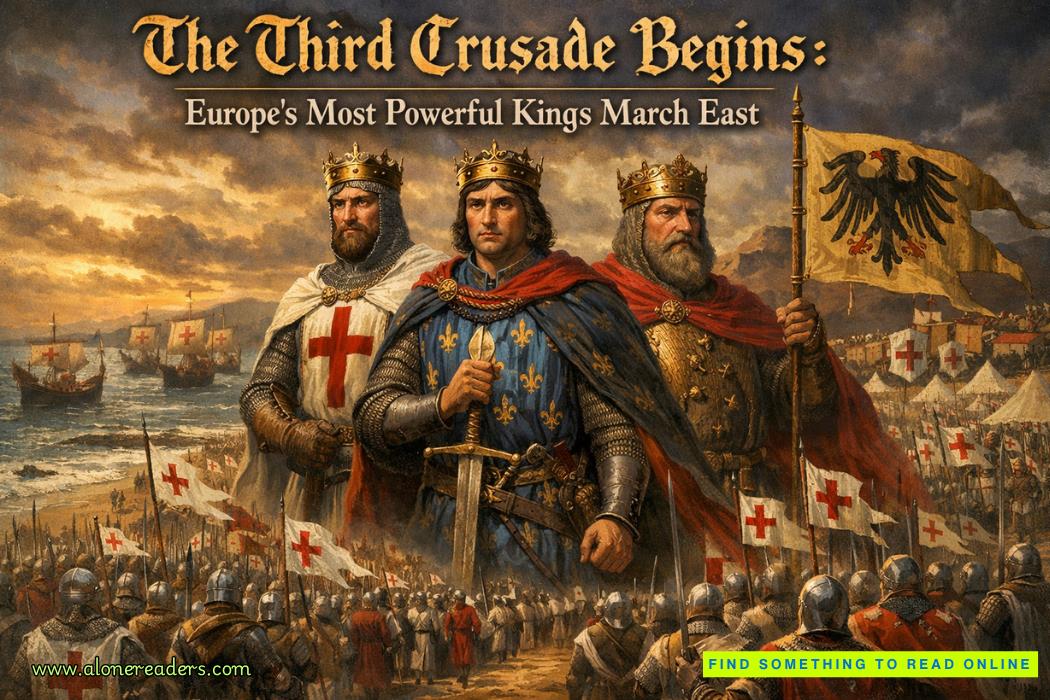
The fall of Jerusalem in 1187 struck medieval Europe like a thunderclap. News traveled slowly across continents, yet when it arrived, its impact was devastating. The holy city, captured by the Muslim leader Saladin, had been the spiritual heart of Christian rule in the East for nearly ninety years. Its loss was not merely territorial; it was emotional, symbolic, and deeply humiliating. Churches rang with mourning bells, sermons thundered with outrage, and chroniclers described the event as a punishment from God himself. Out of this collective shock emerged a crusade unlike any before it, one defined not by feudal knights or wandering zealots, but by the direct involvement of Europe’s most powerful monarchs.
The Third Crusade was born from crisis, but also from ambition. It was the first time in crusading history that multiple reigning kings took the cross simultaneously. This was not a peripheral holy war. This was the full weight of Latin Christendom mobilizing in response to defeat. Richard I of England, later immortalized as Richard the Lionheart, embraced the crusade with warrior enthusiasm. Philip II of France, calculating and politically sharp, joined partly from devotion and partly from rivalry. Frederick I Barbarossa, the aging yet formidable Holy Roman Emperor, brought with him the largest and most disciplined army ever assembled for a crusade. Their participation transformed the expedition into a geopolitical earthquake.
Behind this movement stood Pope Gregory VIII and later Pope Clement III, who framed the crusade as both penance and redemption. Preachers emphasized that Jerusalem had fallen because Christians had grown corrupt, divided, and sinful. The crusade was therefore not only a military campaign but a moral reckoning. To take the cross meant public repentance. Nobles sold lands, mortgaged castles, and emptied treasuries. Even kings strained their realms financially. England introduced the Saladin Tithe, a sweeping tax on income and property, illustrating how deeply the crusade penetrated everyday life. This was not voluntary charity; it was a civilization mobilizing for survival.
The enemy that Europe now faced was unlike the fractured Muslim states of the First Crusade era. Saladin had forged unity across Egypt, Syria, and Mesopotamia, binding his territories through diplomacy, faith, and military discipline. His victory at the Battle of Hattin had annihilated the crusader field army, capturing the True Cross and destroying the myth of Christian invincibility. Jerusalem’s surrender followed swiftly. Yet Saladin’s conduct—allowing ransoms and avoiding massacre—earned him reluctant respect even among his enemies. He was not portrayed as a barbarian tyrant, but as a formidable and honorable adversary. This made the coming struggle feel even more monumental.
Frederick Barbarossa was the first king to move. In 1189, at nearly seventy years old, he led an immense German army eastward by land, retracing the old Roman and Byzantine routes through Hungary and Anatolia. His march was methodical and disciplined, avoiding the chaos that plagued earlier crusades. Byzantine suspicion lingered, but Frederick negotiated passage with calculated firmness. His army crushed Seljuk forces at Iconium, proving that crusader power, when organized, remained lethal. For many contemporaries, Barbarossa symbolized the ideal Christian emperor—experienced, authoritative, and divinely appointed.
Yet tragedy struck before his army could reach the Holy Land. In 1190, while crossing the Saleph River in modern-day Turkey, Frederick drowned under circumstances still debated by historians. The shock was catastrophic. His death shattered morale and fragmented the German host. Many soldiers turned back, believing the crusade cursed. Others pressed on under his son, but the momentum was irreparably broken. The loss of Barbarossa removed the one leader capable of commanding the crusade as a unified enterprise. From that moment onward, the Third Crusade would be defined by rivalry rather than coordination.
While the German army marched by land, Richard of England and Philip of France prepared naval expeditions of unprecedented scale. Their fleets represented the growing maritime power of Western Europe, particularly the Angevin and Capetian realms. Ships carried not only soldiers but horses, siege engines, food stores, and immense wealth. The crusade was becoming professionalized. War was no longer a spontaneous pilgrimage; it was a logistical operation stretching from London and Paris to the Levantine coast.
Richard’s personality quickly dominated the narrative. Charismatic, fearless, and intensely martial, he embodied the crusader ideal. Chroniclers portrayed him as a knight-king who lived for battle, glory, and honor. Yet beneath the legend lay a complex ruler—strategically brilliant but politically reckless, generous yet volatile. His rivalry with Philip II simmered even before departure. Though nominally allies, the two kings distrusted each other deeply. Their shared crusade masked an underlying struggle for dominance in Europe.
The journey east was itself marked by violence and opportunism. In Sicily, tensions exploded when Richard intervened in local politics, seizing Messina and asserting his authority with force. Philip was furious, interpreting Richard’s actions as arrogance and betrayal. These early conflicts foreshadowed the internal fractures that would plague the crusade. Instead of a unified Christian front, the expedition increasingly resembled a coalition of competing agendas bound together only by the cross.
Cyprus became another turning point. When Richard’s fleet was scattered by storms in 1191, several ships wrecked on the island, whose ruler, Isaac Komnenos, treated the survivors harshly. Richard responded with swift and overwhelming force, conquering the island in weeks. This was no small event. Cyprus became one of the crusade’s most valuable strategic prizes, serving as a supply hub and long-term crusader stronghold. The episode demonstrated Richard’s military genius but also his impulsive willingness to expand the war beyond its original aims.
By the time the crusader kings reached the Levant, the focus had narrowed to the coastal city of Acre. Its siege had already dragged on for nearly two years, begun by remnants of the Kingdom of Jerusalem desperate to reclaim a foothold. When Richard and Philip arrived with fresh armies, the balance shifted dramatically. Massive siege engines battered the walls. Disease ravaged both sides. The confrontation became a grim test of endurance. When Acre finally fell in July 1191, it marked the first major Christian victory since Hattin.
Yet victory bred discord. Philip soon departed for France, citing illness but widely believed to be pursuing political advantage in Richard’s absence. His withdrawal confirmed the collapse of royal unity. The crusade was now effectively Richard’s war. What followed was a series of brilliant but incomplete campaigns along the Palestinian coast. Richard defeated Saladin decisively at the Battle of Arsuf, where disciplined infantry and devastating cavalry charges shattered Muslim formations. The victory restored crusader confidence and proved that Saladin, though brilliant, was not invincible.
Still, Jerusalem remained elusive. Each advance inland raised unbearable logistical risks. Saladin adopted a strategy of attrition, destroying wells, harassing supply lines, and avoiding decisive engagement. Richard understood the brutal truth: even if Jerusalem were captured, holding it against Muslim counterattack would be nearly impossible. This realization haunted the crusade. The holy objective lay tantalizingly close, yet strategically out of reach.
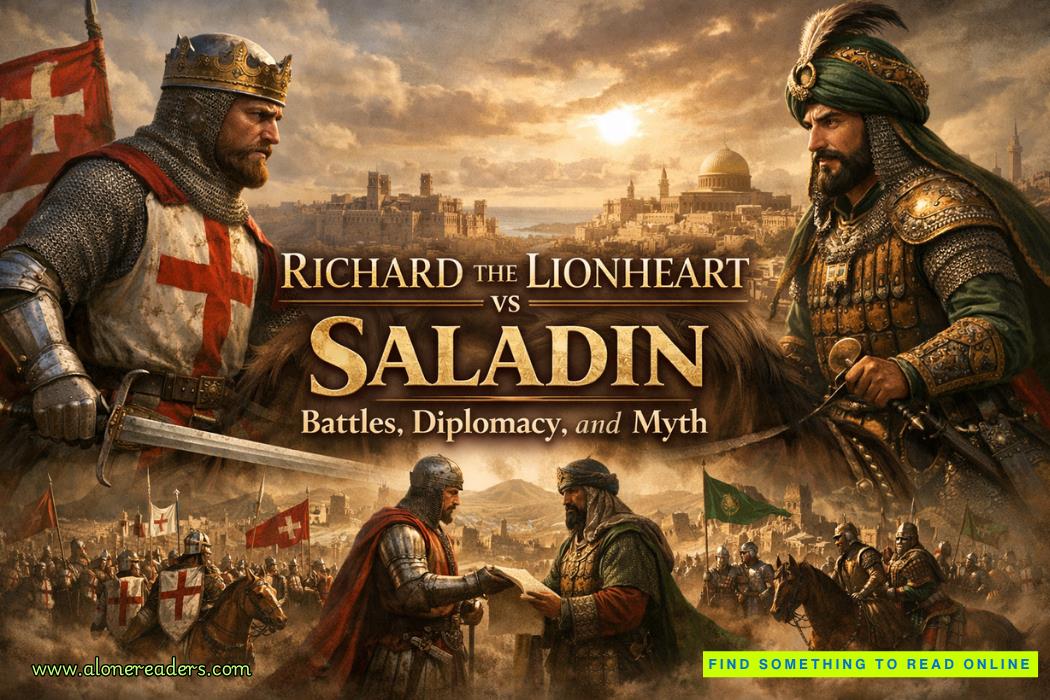
The Third Crusade thus evolved into a war of maneuver, diplomacy, and psychological pressure. Richard and Saladin engaged in a remarkable exchange of messages, gifts, and negotiations. Their mutual respect became legendary, shaping later romanticized depictions of chivalry between enemies. Yet beneath the courtesy lay relentless calculation. Both leaders knew the war could not be won outright. Compromise became inevitable.
In 1192, the Treaty of Jaffa formalized this uneasy balance. Jerusalem remained under Muslim control, but Christian pilgrims were granted safe access to the holy sites. The crusader states retained a narrow coastal strip, preserving a fragile Latin presence in the East. It was not the triumphant reconquest Europe had dreamed of, but neither was it a total failure. The crusade had stabilized the region and reasserted Christian military credibility.
The beginning of the Third Crusade stands as one of medieval history’s most extraordinary mobilizations of power. Never before had so much royal authority, wealth, and military force been directed toward a single religious objective. Yet its very scale exposed the limitations of medieval unity. Kings were not instruments of the Church; they were rulers with rival ambitions. Faith inspired the march east, but politics shaped every decision along the way.
What makes the Third Crusade endure in historical memory is not only its battles, but its personalities. Richard the Lionheart, the warrior king who never saw Jerusalem. Saladin, the unifier whose restraint elevated his legend. Frederick Barbarossa, the emperor whose death altered the fate of the entire expedition. Their convergence created a drama larger than any single battlefield, a clash not merely of armies but of ideals, reputations, and civilizations.
The crusade did not restore Christian dominance in the Holy Land, yet it redefined medieval warfare and kingship. It demonstrated that crusading had evolved from spontaneous religious fervor into a structured international campaign. It also revealed a sobering truth: even the most powerful kings of Europe could march together—and still fall short of their ultimate goal.
In that sense, the Third Crusade was both magnificent and tragic. It represented the height of crusading ambition and the beginning of its slow disillusionment. Europe marched east in unity and returned divided, carrying legends instead of Jerusalem. The echo of that march would shape the remaining crusades, casting a long shadow over the centuries that followed.



 The Hundred Days Offensive: How the Allies Defeated Germany in World War I
 The Second Battle of the Marne: The Turning Point of World War I in 1918
 The Spring Offensive of 1918: Germany's Final Gamble to Win World War I
 The Treaty of Brest-Litovsk: How Russia Left World War I
 The Russian Revolution and World War I: How War Brought Down the Tsar
 The Zimmermann Telegram Explained: Germany's Secret Offer to Mexico in World War I










