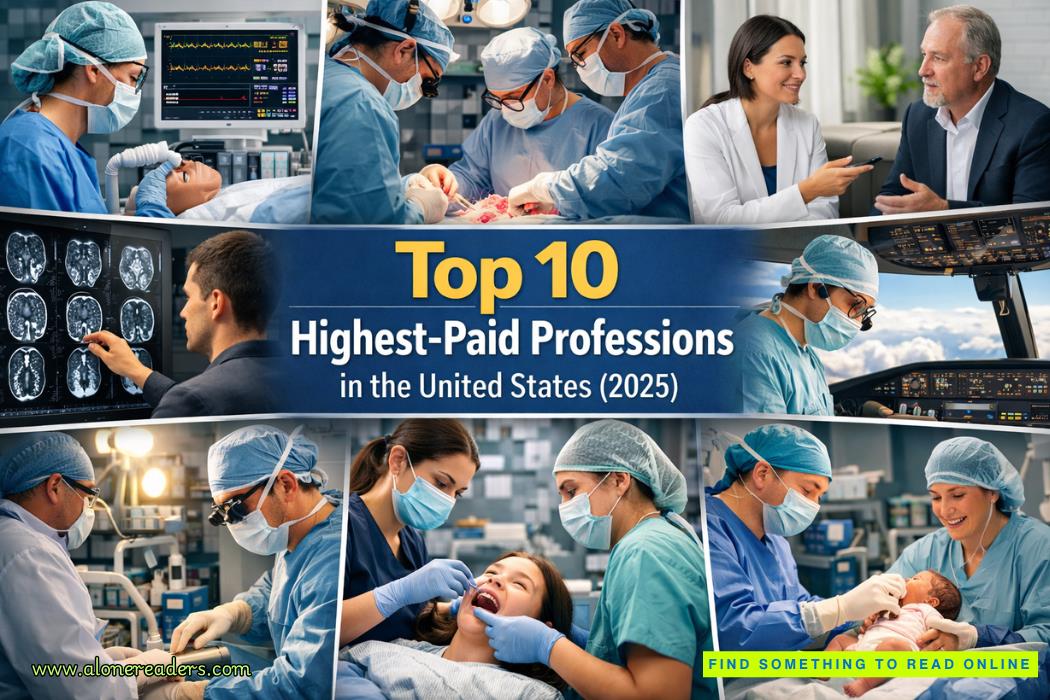
The 2025 compensation landscape in the United States reveals a striking pattern: medicine overwhelmingly dominates the upper tier of income distribution. Based on the latest Bureau of Labor Statistics–style tables (2024 data, released August 2025) and US-News-style summaries, nearly all of the highest-paid professions cluster within specialized medical practice, with one major outlier—commercial aviation.
Median annual pay figures exceeding $239,200 represent the upper band of reported salary distributions, meaning actual earnings frequently extend significantly higher depending on geographic region, years of experience, practice ownership, and subspecialization. What distinguishes these careers is not merely income potential, but intensive education requirements, liability exposure, clinical complexity, and decision-making responsibility.
Below is a detailed analysis of the top 10 highest-paid professions in the United States for 2025.
Role and Scope of Practice
Anesthesiologists are physician specialists responsible for administering anesthesia and maintaining physiological stability before, during, and after surgical procedures. Their duties extend far beyond “putting patients to sleep.” They manage airway control, cardiovascular stability, fluid balance, pain management, and emergency response.
Training Pathway
• Undergraduate degree (4 years)
• Medical school (4 years)
• Anesthesiology residency (4 years)
• Optional fellowship in subspecialties (pain medicine, critical care)
Why Income Is High
• High liability exposure
• Direct responsibility for life-sustaining functions
• Essential presence in nearly all surgical procedures
• On-call emergency coverage
Anesthesiology is often described as a “high-stakes vigilance specialty.” Every second in the operating room involves critical physiological monitoring.
Role and Scope of Practice
Cardiologists and surgeons—particularly in cardiovascular, neurosurgical, and orthopedic specialties—perform complex invasive procedures. A cardiothoracic surgeon may conduct open-heart surgery, while an interventional cardiologist performs catheter-based interventions such as angioplasty and stent placements.
Training Pathway
• Undergraduate degree
• Medical school
• Residency (5–7 years depending on specialty)
• Fellowship (2–3+ years)
Income Drivers
• Highly technical procedural work
• Limited number of specialists relative to demand
• Life-saving interventions
• Revenue-intensive hospital services
These roles represent the intersection of advanced surgical skill and acute clinical risk, making them among the most financially rewarded medical careers.
Role and Scope of Practice
Dermatologists diagnose and treat disorders of the skin, hair, and nails. While medical dermatology addresses conditions such as psoriasis, eczema, and melanoma, cosmetic dermatology—including Botox, fillers, and laser treatments—adds substantial revenue streams.
Training Pathway
• Medical school
• 4-year dermatology residency
• Optional cosmetic or dermatopathology fellowship
Income Drivers
• Combination of medical and elective cosmetic procedures
• High outpatient efficiency
• Strong private practice model
Dermatology is often considered one of the most competitive specialties due to its balance of high compensation and controlled lifestyle hours.
Role and Scope of Practice
Psychiatrists are medical doctors specializing in diagnosing and treating mental health disorders. Unlike psychologists, psychiatrists can prescribe medication and manage complex psychiatric conditions including schizophrenia, bipolar disorder, and severe depression.
Training Pathway
• Medical school
• 4-year psychiatry residency
• Optional subspecialties (child psychiatry, addiction psychiatry)
Income Drivers
• Severe national shortage of mental health providers
• Growing demand post-pandemic
• Private practice flexibility
• Telepsychiatry expansion
Psychiatry’s earnings reflect sustained demand and systemic under-supply, often resulting in long patient waitlists.
Role and Scope of Practice
Radiologists interpret imaging studies—X-rays, CT scans, MRIs, and ultrasounds—to diagnose diseases. Interventional radiologists also perform minimally invasive image-guided procedures.
Training Pathway
• Medical school
• 5-year radiology residency
• Fellowship (optional)
Income Drivers
• High technical specialization
• Imaging-dependent modern medicine
• Hospital and outpatient imaging contracts
Radiology represents the diagnostic backbone of modern healthcare. With artificial intelligence assisting but not replacing physicians, expert interpretation remains indispensable.
Role and Scope of Practice
These specialists combine dentistry and surgery to perform complex procedures involving the face, jaw, and oral cavity. Services include trauma reconstruction, corrective jaw surgery, dental implants, and facial pathology treatment.
Training Pathway
• Dental degree (DDS/DMD)
• 4–6 year surgical residency
• Optional dual MD degree
Income Drivers
• Surgical complexity
• High procedural billing
• Blend of medical and dental reimbursement systems
This specialty bridges two professional domains, making it both technically demanding and financially rewarding.
Role and Scope of Practice
Orthodontists correct misaligned teeth and jaw structures using braces, aligners, and advanced orthodontic appliances.
Training Pathway
• Dental degree
• 2–3 year orthodontic residency
Income Drivers
• High demand among adolescents and adults
• Elective cosmetic demand
• Long-term treatment plans generating recurring revenue
Orthodontics benefits from both medical necessity and aesthetic consumer demand, supporting consistently high earnings.
Role and Scope of Practice
OB-GYN physicians manage women’s reproductive health, prenatal care, childbirth, and gynecological surgery.
Training Pathway
• Medical school
• 4-year OB-GYN residency
• Optional maternal-fetal medicine fellowship
Income Drivers
• Continuous demand due to childbirth and reproductive health
• Surgical and delivery responsibilities
• On-call and emergency services
OB-GYNs often maintain demanding schedules, including overnight labor and delivery coverage, contributing to compensation levels.
Role and Scope of Practice
Certified Registered Nurse Anesthetists administer anesthesia and manage pain control in collaboration with physicians or independently depending on state regulations.
Training Pathway
• Registered Nurse (RN) licensure
• ICU experience
• Doctor of Nursing Practice (DNP) or equivalent anesthesia program
Income Drivers
• Advanced practice scope
• Surgical demand
• Physician-level procedural skill
• Rural healthcare reliance
CRNAs demonstrate that advanced nursing roles can achieve compensation approaching physician income levels, particularly in underserved regions.
Role and Scope of Practice
Airline pilots operate passenger and cargo aircraft, ensuring safety, navigation, and regulatory compliance. Senior captains on major carriers often exceed median figures substantially.
Training Pathway
• Commercial pilot certification
• Flight hours accumulation (often 1,500+ hours)
• Airline Transport Pilot (ATP) certification
Income Drivers
• Pilot shortages
• Unionized compensation structures
• Seniority-based pay scales
• International long-haul routes
This profession stands as the highest-paid non-medical career on the list, reflecting responsibility for hundreds of lives per flight.
Several structural characteristics recur across these professions:
Extensive Education and Training
Most roles require 8–15+ years of postsecondary training.
High Liability and Risk
Medical and aviation careers involve life-or-death decision making.
Barrier to Entry
Licensure, board certification, and competitive residency placements limit supply.
Revenue Generation Capacity
Procedural specialties generate substantial institutional revenue.
Scarcity of Skilled Professionals
Shortages in psychiatry, anesthesia, and aviation sustain wage pressure.
While median national salaries exceed $239,200 for many medical specialties, compensation varies based on:
• Urban vs. rural practice
• Academic vs. private sector employment
• Subspecialization
• Partnership ownership
• Cost of living adjustments
Rural practitioners often receive higher base pay due to workforce shortages, while urban academic physicians may trade compensation for research opportunities.
The 2025 landscape of highest-paid professions in the United States underscores a consistent economic principle: the combination of specialized expertise, prolonged training, high responsibility, and systemic demand commands premium compensation.
Medicine remains the dominant pathway to top-tier income, particularly procedural and surgical specialties. However, aviation demonstrates that high-risk technical professions outside healthcare can achieve comparable compensation through structured seniority systems and global demand.
For students and professionals evaluating career trajectories, these fields represent not only financial opportunity but also profound responsibility. High income is inseparable from high accountability, extended training, and sustained performance under pressure.
Ultimately, the highest-paid careers in America are not merely lucrative—they are structurally indispensable to society’s health, safety, and operational continuity.



 Top 10 Largest U.S. Companies by Revenue in 2025 (Fortune 500 Analysis)
 Top 10 Highest-Earning Global Tech Companies in 2025: Revenue, Strategy, and Market Power
 Top 10 Highest-Earning Mobile Apps in 2025: Revenue, Monetization, and Market Dominance
 ZombieAgent: Inside the Zero-Click AI Attack That Turns ChatGPT Agents into Persistent Data-Leaking Zombies
 China’s Urban Air Is a Hidden Plastic Reservoir: Inside the Microplastic Clouds Over Megacities
 John Ternus and Apple’s CEO Succession: Why the Hardware Chief Is the Leading Contender After Tim Cook










