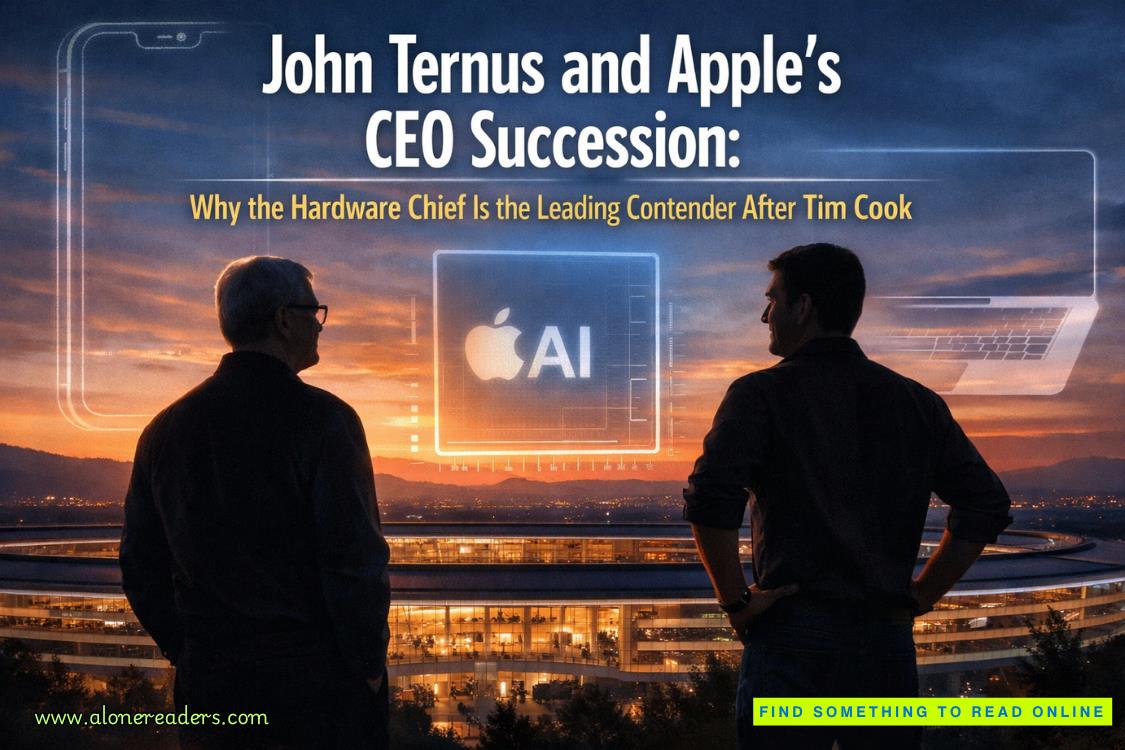
Speculation around leadership transitions at Apple has always attracted intense scrutiny, and the current discussion surrounding John Ternus reflects both Apple’s cultural opacity and its methodical approach to long-term planning. While multiple well-informed reports now point to Ternus as the leading internal contender to eventually succeed Tim Cook, it is equally important to emphasize what has not happened. Apple has announced no retirement timeline, no formal succession decision, and no impending handover. Cook remains firmly in control of the company, and by all credible accounts, he is expected to remain CEO for several more years.
The discussion around John Ternus is therefore less about an imminent leadership change and more about how Apple thinks about continuity, operational discipline, and risk management at the very top. Apple’s board and executive team have consistently favored stability over spectacle, and the current narrative fits neatly within that tradition.
John Ternus currently serves as Apple’s senior vice president of hardware engineering, a role that places him at the center of nearly every physical product Apple ships. His remit includes iPhone, iPad, Mac, AirPods, and associated hardware platforms, as well as the integration of Apple silicon across the product line. In practical terms, this means Ternus oversees the teams responsible for turning Apple’s long-term vision into manufacturable, scalable, and profitable devices.
Ternus joined Apple in 2001, a period when the company was still rebuilding itself after years of uncertainty. Over the next two decades, he rose steadily through the hardware organization, becoming a vice president of hardware engineering in 2013 and then being promoted to senior vice president in 2021. That promotion was widely interpreted internally as a signal of trust and succession readiness, even if no explicit messaging accompanied it.
What distinguishes Ternus within Apple’s leadership structure is not public charisma or marketing visibility, but operational credibility. He is known inside the company as calm, data-driven, and deeply fluent in the complexities of Apple’s supply chain. These traits matter enormously in a company where hardware margins, manufacturing yields, and supplier relationships can move billions of dollars with small changes in execution.
Multiple reports citing people familiar with Apple’s internal thinking describe Ternus as the current frontrunner among internal candidates. The reasoning is not ideological; it is structural. Under Tim Cook, Apple evolved into a company where operational excellence, cost discipline, and supply chain mastery became as strategically important as product aesthetics and software experience. Ternus’s leadership style is often described as closely aligned with Cook’s approach, emphasizing collaboration across engineering, operations, and finance rather than top-down edicts.
This alignment is particularly relevant given Apple’s scale today. Apple is no longer a company that can afford dramatic strategic pivots driven by personality. Its product cadence, global manufacturing footprint, and regulatory exposure demand predictability and institutional memory. A successor who already understands the internal mechanics of Apple’s hardware pipeline is therefore seen as a safer choice than an outsider or a leader whose expertise sits far from the company’s core revenue engines.
That said, Ternus is not the only name ever mentioned in succession discussions. Apple has an unusually deep executive bench, and several other senior leaders are routinely referenced when the topic arises. Craig Federighi, Apple’s software chief, is often admired for his technical depth and his ability to articulate product strategy publicly. Eddy Cue oversees services, a rapidly growing segment that now contributes a substantial portion of Apple’s revenue. Greg Joswiak plays a central role in product positioning and launch strategy, while Deirdre O’Brien manages retail and people operations, a critical but often underestimated domain. Sabih Khan leads operations and supply chain, an area historically close to Cook’s own background.
Despite this breadth, reporting generally frames these executives as less likely successors than Ternus. The reason is not a lack of competence, but rather the perceived need for a leader who can integrate hardware, operations, and long-term product planning under a single strategic umbrella. Ternus’s current role already forces him to operate at that intersection daily.
Occasionally, speculation extends beyond Apple’s current executive ranks. Names such as Tony Fadell, often described as “dark-horse” candidates, surface in commentary. These scenarios tend to attract attention precisely because they are unlikely. Apple has historically avoided bringing in external CEOs during periods of stability, and there is no indication that the board is seeking disruption for its own sake.
Understanding the timing of any potential transition requires separating speculation from evidence. Tim Cook is now 65 and is widely reported to be engaged in active succession planning. This is not unusual for a company of Apple’s size, nor does it imply imminent retirement. In some scenarios discussed by analysts and insiders, Cook could eventually become Apple’s board chair while remaining CEO for a transitional period, or step back incrementally over several years.
What is notably absent is any official signal that a handover is near. Coverage consistently suggests that Cook may remain CEO well into the late 2020s. Under his leadership, Apple has reached unprecedented financial scale, expanded its services business, transitioned its Mac lineup to Apple silicon, and navigated increasingly complex geopolitical and regulatory environments. From the board’s perspective, there is little incentive to rush a transition while performance remains strong.
In this context, John Ternus’s emergence as the most talked-about successor should be viewed as a reflection of Apple’s long-term planning discipline rather than an announcement in disguise. Apple prefers optionality. By elevating and empowering executives like Ternus, the company ensures that when a transition eventually occurs, it can be executed with minimal disruption.
There is also a symbolic dimension to Ternus’s candidacy. Apple’s identity has always been deeply tied to its products. While services, software, and ecosystem lock-in have grown in importance, hardware remains the visible embodiment of Apple’s brand. A CEO who comes from hardware engineering reinforces continuity with Apple’s historical narrative, even as the business model evolves.
Critically, Ternus is not perceived as a radical visionary in the mold of Steve Jobs, nor is he expected to be. Apple has long moved beyond the founder-led phase where a single personality defines strategy. The modern Apple CEO functions as a systems integrator, balancing innovation with scale, creativity with execution, and ambition with restraint. In that sense, Ternus’s low-profile, execution-focused reputation may be an asset rather than a liability.
The bottom line is straightforward. John Ternus is currently the most widely discussed internal favorite to become Apple’s next CEO when Tim Cook eventually steps aside. That status reflects his operational credibility, his alignment with Apple’s current leadership philosophy, and the board’s preference for continuity over experimentation. At the same time, nothing is confirmed. Apple has made no public decision, no timeline has been announced, and any transition will ultimately depend on Cook’s own plans and the board’s final judgment.
Until that moment arrives, Apple remains firmly under Tim Cook’s leadership, and John Ternus remains what he has been for years: a powerful but understated figure shaping the devices that define the company’s future, while quietly being positioned as a plausible steward of its next chapter.



 Top 10 Highest-Paid Professions in the United States (2025): Salaries, Roles, and Career Paths
 Top 10 Largest U.S. Companies by Revenue in 2025 (Fortune 500 Analysis)
 Top 10 Highest-Earning Global Tech Companies in 2025: Revenue, Strategy, and Market Power
 Top 10 Highest-Earning Mobile Apps in 2025: Revenue, Monetization, and Market Dominance
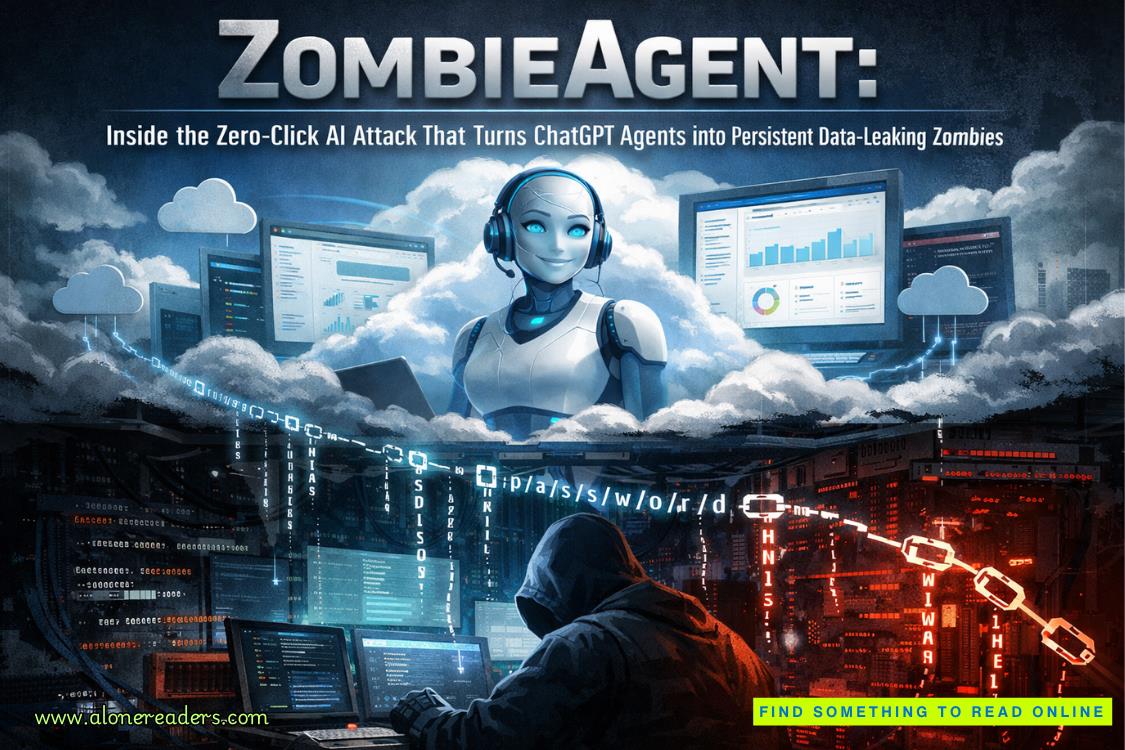 ZombieAgent: Inside the Zero-Click AI Attack That Turns ChatGPT Agents into Persistent Data-Leaking Zombies
 China’s Urban Air Is a Hidden Plastic Reservoir: Inside the Microplastic Clouds Over Megacities