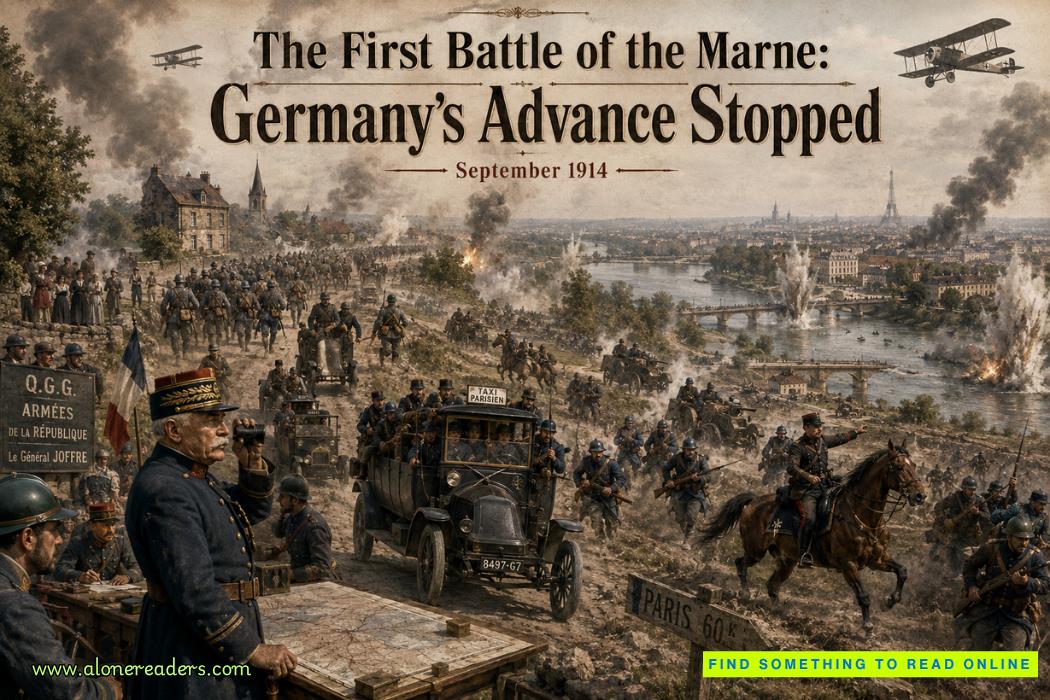
By the beginning of September 1914, Germany appeared remarkably close to achieving one of the greatest military victories in European history. After launching its massive offensive through Belgium under the Schlieffen Plan, German armies had advanced hundreds of kilometers in just a few weeks. Belgian resistance had delayed them but had not stopped them. French offensives in Alsace and Lorraine had failed, while the small British Expeditionary Force had been forced into a fighting retreat. German soldiers believed Paris would soon fall, France would surrender, and the war in the west would end before Russia could fully mobilize in the east. Yet within only a few days, this confidence disappeared. The First Battle of the Marne became one of the most decisive battles of World War I because it halted Germany's advance, saved France from defeat, and transformed the conflict into a prolonged war of trenches that would last for more than four years.
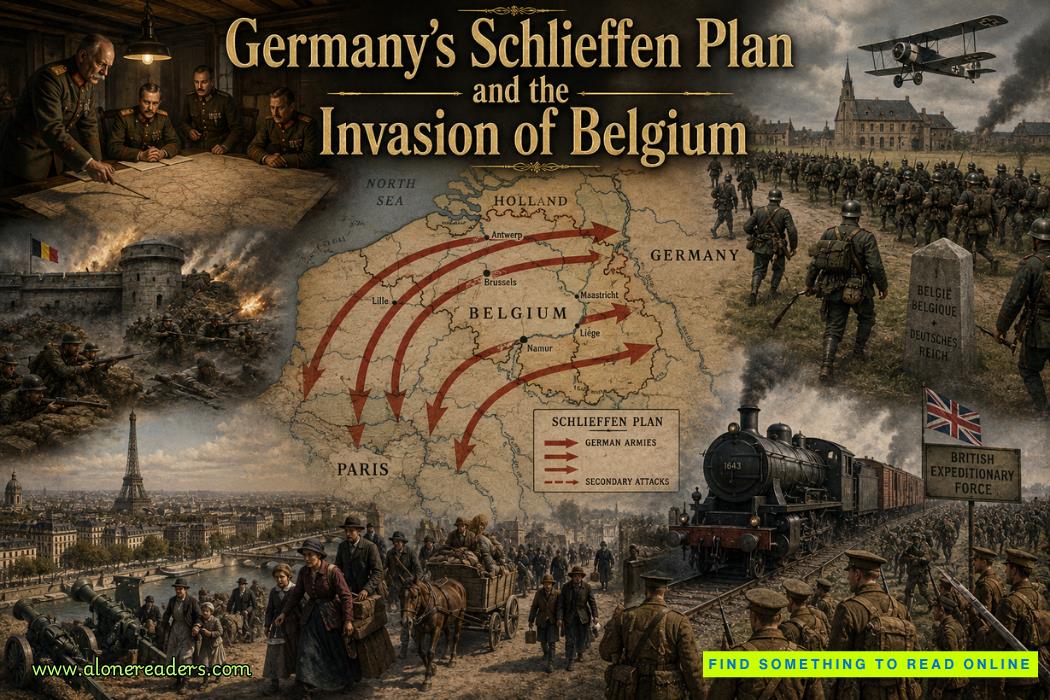
Germany entered the war believing speed would determine victory. The Schlieffen Plan required overwhelming force on the right wing of the German Army, which would sweep through Belgium, bypass French border fortifications, and encircle Paris from the west before surrounding the French Army. Every stage depended upon strict timetables and continuous forward movement. If the offensive slowed significantly, the entire strategic concept would begin to collapse.
During August 1914, Germany's advance appeared almost unstoppable. Belgian forts eventually fell under the bombardment of massive siege artillery. The British Expeditionary Force fought effectively at Mons but was compelled to withdraw alongside the retreating French armies. German victories at Charleroi and along the Belgian frontier pushed Allied forces steadily southward. Newspapers throughout Europe predicted the imminent capture of Paris, and many military observers believed France had only days remaining before complete defeat.
Despite these setbacks, the Allied armies avoided destruction. French Commander-in-Chief General Joseph Joffre demonstrated remarkable determination under immense pressure. Rather than allowing panic to spread, he systematically dismissed ineffective commanders, reorganized retreating units, shifted divisions using France's excellent railway network, and prepared for a decisive counteroffensive. Joffre understood that preserving the army mattered more than defending every mile of territory, and his disciplined withdrawals prevented Germany from achieving the decisive encirclement envisioned by the Schlieffen Plan.
Meanwhile, German commanders faced growing difficulties that were not immediately apparent. Their armies had marched continuously for weeks, covering extraordinary distances under exhausting conditions. Soldiers suffered from fatigue, worn-out boots, inadequate food supplies, and limited opportunities for rest. Horses pulling artillery and supply wagons became increasingly exhausted. Railways damaged during the invasion required constant repairs, forcing supplies to travel greater distances over congested roads. Although Germany continued advancing, the offensive gradually lost its original momentum.
The German High Command also confronted unexpected strategic problems. Russian mobilization had proceeded far more rapidly than anticipated. Russian armies invaded East Prussia in August, creating concern in Berlin. Although Germany won a spectacular victory at the Battle of Tannenberg, several experienced units had already been transferred from the Western Front to reinforce operations in the east. These reinforcements weakened the German right wing precisely when maximum strength was essential for the drive toward Paris.
Another crucial factor involved changes made to the original Schlieffen Plan before the war. General Helmuth von Moltke the Younger, who had succeeded Alfred von Schlieffen as Chief of the German General Staff, had redistributed forces to strengthen other sectors of the front. As a result, the powerful sweeping movement envisioned by Schlieffen possessed fewer troops than originally intended. The margin for error had become much smaller, and every delay or diversion increased the likelihood that the offensive would stall.
By early September, German forces approached the Marne River, located less than fifty kilometers from Paris in some sectors. The French government had already evacuated the capital for Bordeaux, fearing German occupation. Military governor General Joseph Gallieni assumed responsibility for Paris's defense and carefully monitored German movements. Reconnaissance aircraft, cavalry patrols, intercepted communications, and intelligence reports gradually revealed an unexpected development in the German advance.
Rather than continuing west of Paris as originally planned, General Alexander von Kluck's First Army turned southeast, moving inside the French capital instead of around it. This maneuver exposed its flank to potential attack from Paris while also creating a widening gap between the German First and Second Armies. The opening eventually reached approximately fifty kilometers in some areas. This gap became the greatest opportunity the Allies had seen since the war began.
General Gallieni quickly recognized the significance of the German maneuver and urged immediate action. Although some senior commanders hesitated, Joffre agreed that the moment had arrived for a general counteroffensive. On 6 September 1914, French and British forces launched coordinated attacks against the advancing German armies. The First Battle of the Marne had begun.
The battle extended across a front approximately 250 kilometers long, involving nearly two million soldiers. Unlike later trench battles, fighting remained relatively mobile. Infantry advanced across fields, forests, villages, and river crossings while artillery bombarded enemy positions. Cavalry still participated in reconnaissance and screening operations, and aircraft performed increasingly valuable observation missions by identifying troop movements and directing artillery fire. The Marne represented a transitional battle between nineteenth-century maneuver warfare and the trench warfare that soon followed.
One of the battle's most famous episodes involved the Paris taxicabs. To reinforce the front rapidly, General Gallieni requisitioned hundreds of Parisian taxis to transport approximately six thousand soldiers from the capital to the battlefield. Militarily, these reinforcements represented only a small fraction of the total forces engaged. However, the event became an enduring symbol of national determination. The image of ordinary civilian taxicabs carrying soldiers to defend France inspired public morale and entered military legend.
The British Expeditionary Force also played a significant role. Having retreated for nearly two weeks following the Battle of Mons, British troops advanced into the gap separating the German First and Second Armies. Although relatively small compared to the French armies, the British attack increased pressure on already exhausted German forces and widened the vulnerability in the German line.
German commanders initially underestimated the scale of the Allied counteroffensive. As French attacks intensified and British troops advanced, communication between German armies became increasingly difficult. The widening gap threatened to expose entire formations to encirclement. For the first time since the campaign began, German commanders feared that their own armies might become trapped instead of trapping the French.
General von Kluck attempted to respond by redirecting forces against the French Sixth Army attacking from Paris. However, every unit committed to one sector weakened another. German soldiers fought fiercely, achieving local successes in several engagements, but the overall strategic situation deteriorated steadily. Meanwhile, French commanders continued feeding fresh reinforcements into the battle using their extensive railway network.
General Moltke, directing operations from headquarters far behind the front, received increasingly confusing and contradictory reports. Communication technology in 1914 remained limited compared with modern standards. Telephone lines were frequently damaged, wireless transmissions were unreliable, and commanders often depended upon couriers traveling long distances. As a result, Moltke gradually lost an accurate understanding of battlefield conditions, making effective coordination increasingly difficult.
By 9 September, German commanders concluded that continuing the offensive risked catastrophic defeat. Rather than pressing toward Paris, they ordered a general withdrawal to positions north of the Aisne River. Although the retreat was conducted in relatively good order, it marked a decisive strategic reversal. Germany had failed to destroy the French Army, capture Paris, or force France from the war.
The immediate consequences of the battle were profound. France had survived the opening German offensive, Britain remained fully committed to the conflict, and Germany now confronted the very situation the Schlieffen Plan had been designed to avoid: a prolonged war against both France and Russia simultaneously. Instead of ending within weeks, the conflict entered a new and far more destructive phase.
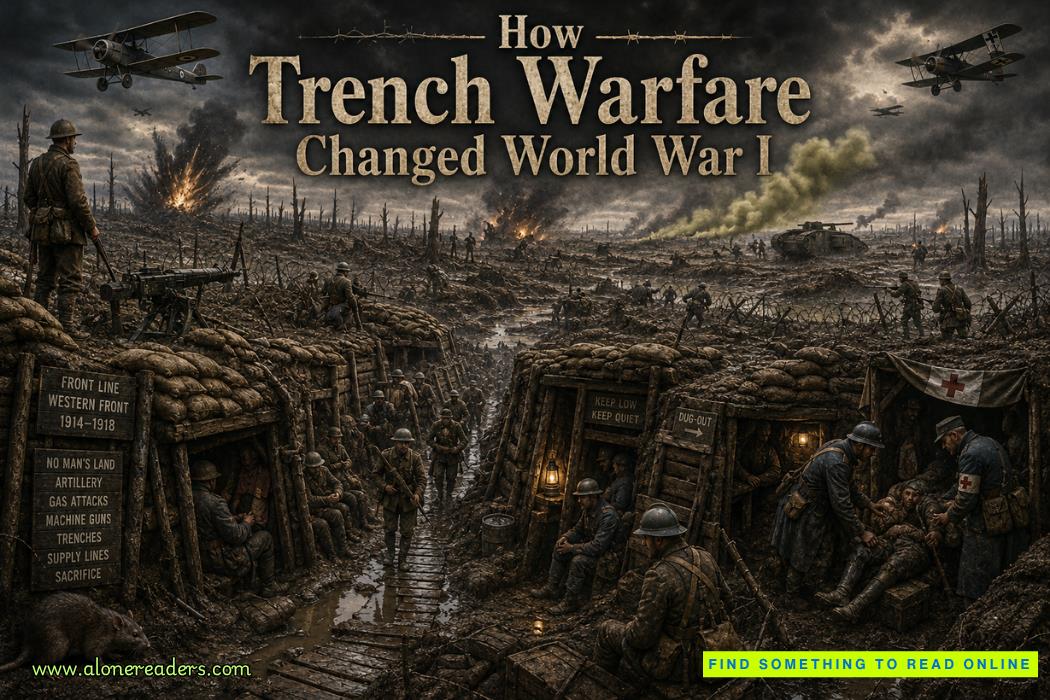
Following the German retreat, both sides sought to outflank each other in a series of operations known as the Race to the Sea. Each attempted to move around the opponent's northern flank, but every maneuver was matched by corresponding defensive movements. Eventually, continuous trench systems stretched from the English Channel to the Swiss frontier. The mobile campaign of August and early September gave way to trench warfare, where front lines changed little despite years of intense fighting.
The First Battle of the Marne also highlighted the growing importance of modern technology. Aircraft performed reconnaissance missions that revealed enemy movements with unprecedented accuracy. Railway systems enabled rapid transportation of reinforcements. Heavy artillery dominated many engagements, while machine guns made frontal assaults increasingly costly. The battle demonstrated that industrial-age warfare demanded not only tactical skill but also effective logistics, transportation, communications, and intelligence.
Casualties were enormous. Combined losses among French, British, and German forces exceeded half a million killed, wounded, or missing during the fighting and associated operations. Although no single army suffered complete destruction, the human cost shocked commanders on both sides. Thousands of villages and farms became battlefields, while civilians endured displacement, destruction, and uncertainty as armies moved through their communities.
Historians frequently describe the Marne as one of the decisive battles of world history because its outcome altered the entire course of the twentieth century. Had Germany captured Paris and forced France to surrender in 1914, the political and military landscape of Europe might have developed very differently. Instead, the battle preserved the Allied coalition, prolonged the conflict, and ultimately contributed to the entry of additional nations such as Italy, the Ottoman Empire, and the United States.
The reasons for Germany's failure remain the subject of extensive historical debate. Some scholars emphasize the weakening of the original Schlieffen Plan through Moltke's modifications. Others highlight Belgian resistance, the unexpectedly rapid Russian mobilization, logistical exhaustion, communication failures, or the determination of French and British forces. Most modern historians conclude that the German defeat resulted from the interaction of all these factors rather than any single mistake.
The leadership displayed by General Joffre also remains widely recognized. Throughout the difficult retreat in August, he resisted political pressure, reorganized the French Army, dismissed ineffective commanders, and selected the precise moment to launch the counterattack. His calm decision-making under extraordinary circumstances transformed what had seemed an inevitable defeat into one of France's greatest military victories.
Beyond its military significance, the battle became a powerful symbol of national resilience. French newspapers celebrated the defense of Paris as evidence that determination and unity could overcome apparent disaster. German confidence in a quick victory disappeared, while Allied morale increased dramatically. The psychological impact of the battle proved almost as important as its strategic consequences, shaping expectations for the remainder of the war.
Ultimately, the First Battle of the Marne marked the end of Germany's hopes for a swift victory in the west. It halted one of history's most ambitious military offensives, preserved France as a fighting power, ensured Britain's continued participation, and forced Germany into a prolonged two-front war. More importantly, it transformed World War I from a war of rapid movement into a brutal struggle of trenches, attrition, and industrialized combat. The battle's outcome changed not only the direction of the First World War but also the course of modern history, proving that a few critical days of determined resistance could alter the fate of nations for generations to come.



 The Hundred Days Offensive: How the Allies Defeated Germany in World War I
 The Second Battle of the Marne: The Turning Point of World War I in 1918
 The Spring Offensive of 1918: Germany's Final Gamble to Win World War I
 The Treaty of Brest-Litovsk: How Russia Left World War I
 The Russian Revolution and World War I: How War Brought Down the Tsar
 The Zimmermann Telegram Explained: Germany's Secret Offer to Mexico in World War I










