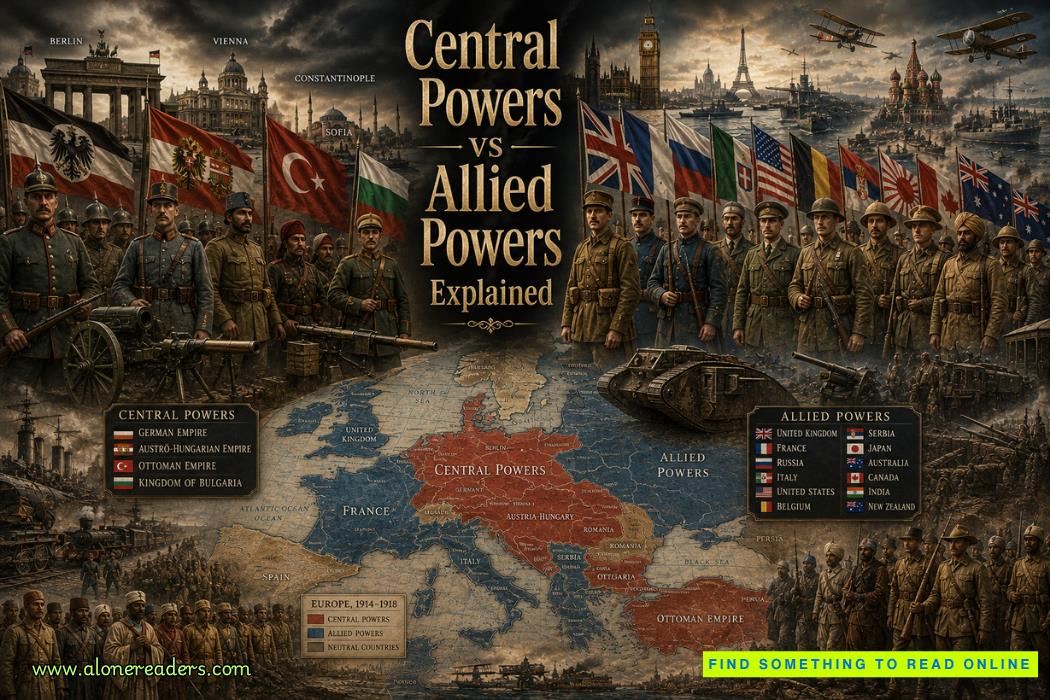
When World War I erupted in the summer of 1914, it was not simply a conflict between two neighboring countries. Within weeks, the war expanded into a struggle between two vast military alliances that eventually involved more than thirty nations across Europe, Asia, Africa, the Middle East, the Pacific, and the Atlantic Ocean. These opposing coalitions became known as the Central Powers and the Allied Powers. Their rivalry determined the course of the First World War, shaped military strategy, influenced global politics, and ultimately transformed the international order. Understanding who belonged to each alliance, why they fought, and how their membership changed throughout the war is essential for understanding the history of World War I.
The origins of these alliances stretched back decades before the first shots were fired. During the late nineteenth century, European governments increasingly relied upon diplomatic agreements to guarantee security against potential rivals. Rather than standing alone, countries sought allies who would provide military assistance if war broke out. These alliances were intended to preserve peace through deterrence, but instead they created a situation in which a regional conflict could rapidly escalate into a continental war. When Austria-Hungary declared war on Serbia in July 1914, alliance commitments ensured that many other nations soon became involved.
The coalition known as the Central Powers derived its name from the geographical position of its principal members in Central Europe. At the heart of the alliance stood the German Empire and Austria-Hungary, whose territories bordered one another. They were later joined by the Ottoman Empire and the Kingdom of Bulgaria, creating a continuous strategic bloc extending from Central Europe to the Middle East.
Germany was unquestionably the strongest military and industrial power among the Central Powers. Unified only in 1871, Germany had experienced astonishing economic growth, becoming one of the world's leading producers of steel, coal, chemicals, machinery, and advanced military equipment. It possessed a highly trained professional army, an efficient railway network for rapid mobilization, and one of Europe's most sophisticated military command structures. German leaders believed their nation deserved greater international influence and feared encirclement by France and Russia. Consequently, Germany became the principal driving force behind the Central Powers' military strategy throughout the war.
Austria-Hungary entered the conflict after the assassination of Archduke Franz Ferdinand in Sarajevo. The multinational empire governed millions of Germans, Hungarians, Czechs, Slovaks, Croats, Serbs, Romanians, Poles, Ukrainians, Italians, and other ethnic groups. Internal nationalist movements had weakened imperial stability for years, and Austrian leaders believed crushing Serbia was necessary to preserve the empire's authority. Although Austria-Hungary possessed a large army, its military suffered from logistical challenges, outdated equipment in some areas, language barriers among troops, and complex political divisions, making it increasingly dependent upon German support as the war progressed.
The Ottoman Empire joined the Central Powers in late 1914 after signing a secret alliance with Germany. Once one of the world's greatest empires, the Ottomans had declined significantly by the early twentieth century but still controlled strategically important territory stretching across Anatolia, the Middle East, and parts of the Arabian Peninsula. The Ottoman government hoped that cooperation with Germany would strengthen its military and help recover lost prestige. The empire's entry into the war dramatically expanded the conflict by opening campaigns in Gallipoli, Mesopotamia, Palestine, the Caucasus, and the Arabian Peninsula.
In 1915, the Kingdom of Bulgaria became the fourth major member of the Central Powers. Bulgaria sought to regain territories lost during the Balkan Wars and viewed cooperation with Germany and Austria-Hungary as the best opportunity to achieve these ambitions. Bulgarian forces played a crucial role in defeating Serbia and securing land communications between Central Europe and the Ottoman Empire.
Although Italy had originally belonged to the Triple Alliance with Germany and Austria-Hungary before the war, it chose neutrality in 1914. Italian leaders argued that the alliance was defensive and that Austria-Hungary had initiated the conflict. After months of negotiations, Italy concluded that the Allied Powers offered more attractive territorial concessions. In May 1915, Italy declared war on Austria-Hungary instead of supporting its former allies, demonstrating that diplomatic agreements could change when national interests shifted.
Opposing the Central Powers stood the Allied Powers, initially known as the Triple Entente before expanding into a much broader coalition. The alliance first included France, Russia, and Great Britain, later growing to encompass nations from every inhabited continent. By the end of the war, the Allied coalition represented one of the largest international military partnerships in history.
France entered the war with two principal objectives. First, it sought to defend itself against German invasion. Second, many French leaders hoped to recover the provinces of Alsace and Lorraine, which Germany had annexed following the Franco-Prussian War of 1870–1871. France possessed a large, well-trained army and one of Europe's strongest industrial economies. Throughout the conflict, the Western Front became the primary battlefield for French forces, who defended their homeland while enduring some of the war's bloodiest battles, including Verdun.
The British Empire entered the war after Germany invaded neutral Belgium on 4 August 1914, violating international treaties that Britain had pledged to uphold. Britain's greatest military strength lay not in its relatively small professional army but in the world's most powerful navy and its vast global empire. British naval supremacy restricted German trade through blockades, while troops from Britain and across the empire fought on battlefields around the world.
The British Empire's global reach transformed the conflict into a truly international war. Soldiers came not only from Britain itself but also from Canada, Australia, New Zealand, India, South Africa, Newfoundland, and numerous African and Caribbean colonies. Indian soldiers fought in France, Mesopotamia, East Africa, and Gallipoli. Australian and New Zealand troops became famous for their role in the Gallipoli Campaign, while Canadian forces distinguished themselves at battles such as Vimy Ridge and Passchendaele. These colonial and dominion forces made indispensable contributions to the Allied war effort, demonstrating that World War I extended far beyond Europe.
Russia possessed the largest army among the Allied Powers at the beginning of the war. Although less industrialized than Germany, Russia's enormous population enabled it to mobilize millions of soldiers. Russian offensives forced Germany to divide its military resources between eastern and western fronts, reducing pressure on France during the early months of the conflict. However, repeated military defeats, economic hardship, food shortages, and political unrest culminated in the Russian Revolution of 1917. The Bolshevik government subsequently signed the Treaty of Brest-Litovsk in 1918, withdrawing Russia from the war.
After Italy joined the Allies in 1915, a new front emerged along the mountainous Austro-Italian border. Fighting in the Alps proved extraordinarily difficult because soldiers battled not only enemy forces but also freezing temperatures, avalanches, and rugged terrain. Although Italy suffered heavy casualties, its participation forced Austria-Hungary to divert substantial military resources from other fronts.
Another significant Allied member was Japan, which declared war on Germany in August 1914 under the Anglo-Japanese Alliance. Rather than fighting in Europe, Japanese forces seized German naval bases and colonial possessions in China and the Pacific Ocean. Japanese naval vessels also assisted Allied operations by protecting shipping routes in Asian waters and the Mediterranean.
The most important reinforcement for the Allied coalition arrived in 1917, when the United States entered the war. Initially maintaining neutrality, the United States gradually moved closer to the Allies due to economic ties, German unrestricted submarine warfare, and the interception of the Zimmermann Telegram, in which Germany proposed a military alliance with Mexico. American industry had already become a major supplier of weapons, food, and financial assistance to the Allies. Following the declaration of war in April 1917, millions of fresh American soldiers, together with the nation's enormous industrial and financial capacity, significantly strengthened the Allied position during the final stages of the conflict.
Smaller Allied nations also played important roles. Belgium resisted Germany's initial invasion with unexpected determination, delaying the German advance. Serbia, despite eventually being occupied, tied down large Austro-Hungarian forces during the opening stages of the war. Romania, Greece, Portugal, Montenegro, Belgium, and several Latin American countries also joined the Allied side at various stages, each contributing according to their capabilities.
Beyond Europe, the war extended into colonial territories across Africa and Asia. British, French, Belgian, Portuguese, and South African forces fought German colonial troops in German East Africa, Cameroon, Togoland, and South West Africa. Colonial laborers, engineers, doctors, transport workers, and porters provided essential logistical support. The enormous contribution of colonial peoples demonstrated that World War I was genuinely a global conflict rather than merely a European struggle.
Despite being organized into two opposing alliances, the balance of power between them evolved considerably during the war. The Central Powers generally enjoyed interior lines of communication, allowing faster movement of troops between fronts. Germany's military efficiency frequently compensated for the weaknesses of its allies. In contrast, the Allied Powers benefited from greater populations, stronger naval dominance, wider access to global resources, and eventually overwhelming industrial capacity. Britain's naval blockade steadily weakened the Central Powers by restricting imports of food, raw materials, and essential supplies.
Economic strength became almost as important as military victories. The Allied Powers controlled much of the world's shipping lanes, overseas colonies, and financial markets. Access to American loans and industrial production enabled Britain and France to continue purchasing weapons, ammunition, and food even after years of exhausting warfare. Meanwhile, shortages within Germany and Austria-Hungary became increasingly severe as the conflict continued.
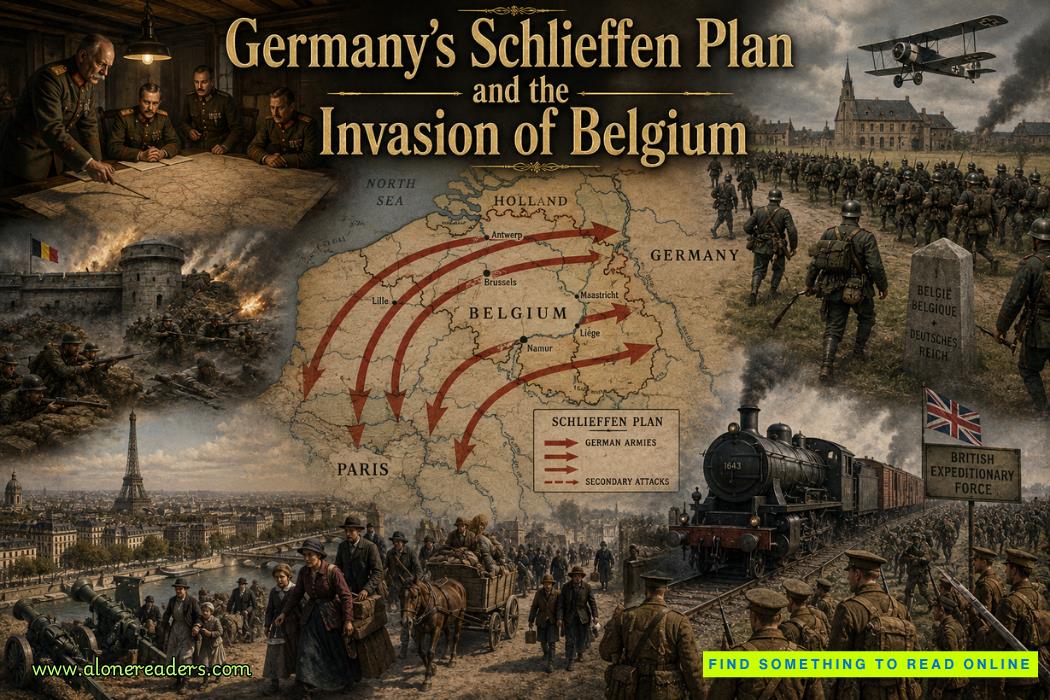
The alliance systems also influenced military strategy. Germany concentrated upon defeating France rapidly before turning east against Russia through the Schlieffen Plan, while the Allies sought to coordinate offensives across multiple fronts to stretch Central Power resources. Although coordination between Allied commanders was often difficult during the early years of the war, greater cooperation gradually developed, culminating in unified command under French General Ferdinand Foch during 1918.
By late 1918, the balance had shifted decisively. Bulgaria surrendered in September, followed by the Ottoman Empire in October. Austria-Hungary collapsed amid nationalist revolutions and signed an armistice in early November. Finally, Germany requested an armistice that came into effect on 11 November 1918, bringing the fighting to an end. The defeat of the Central Powers fundamentally reshaped Europe and the Middle East, leading to the collapse of four empires, the creation of numerous new states, and the Treaty of Versailles.
Ultimately, the struggle between the Central Powers and the Allied Powers was far more than a contest between two military coalitions. It represented a confrontation between competing strategic interests, imperial ambitions, alliance commitments, and national aspirations that had developed over decades. The alliances transformed a regional Balkan crisis into a worldwide conflict involving millions of soldiers from every continent. Understanding these two coalitions provides essential insight into how World War I became the first truly global war and why its consequences continued to shape international politics long after the guns fell silent in 1918.




 The Hundred Days Offensive: How the Allies Defeated Germany in World War I
 The Second Battle of the Marne: The Turning Point of World War I in 1918
 The Spring Offensive of 1918: Germany's Final Gamble to Win World War I
 The Treaty of Brest-Litovsk: How Russia Left World War I
 The Russian Revolution and World War I: How War Brought Down the Tsar
 The Zimmermann Telegram Explained: Germany's Secret Offer to Mexico in World War I










